
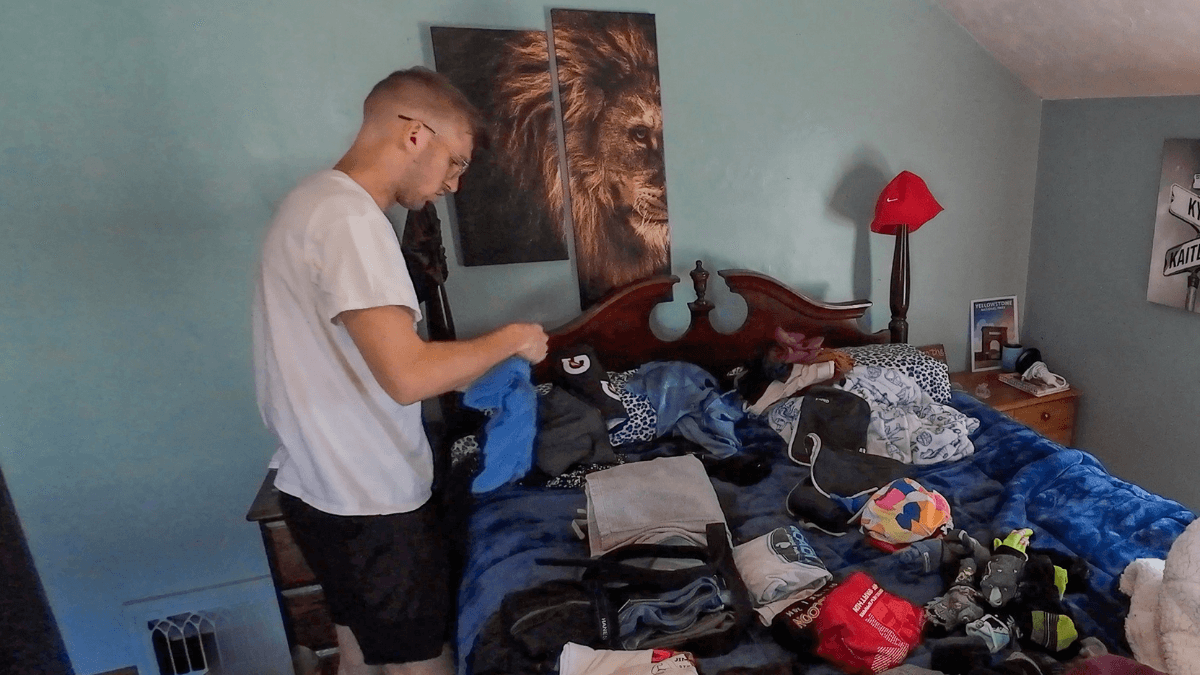
I’ve been in your shoes. Numerous times.
Races in Thailand (one a bit north of Phuket, another on Koh Samui). Two marathons in the US (Pittsburgh and Indianapolis). And countless races in between.
It’s 48 hours away from a goal race. I should be hydrating, resting, getting calories in. Instead, I’m tearing apart my house looking for my favorite pair of socks while simultaneously overnighting gels to my house because mine expired a month ago.
The problem wasn’t that I (read: we) didn’t have a list. It’s that I’m trying to pack everything all at once. And that’s not ideal. It should be done in stages, like when you board a plane (though maybe not the best example to use given the reputation).
Step-by-step, day-by-day, and absolutely no last-minute scrambles. Here’s what I do now to avoid a hard case of “maranoia” so I’m always prepared for my race or runcation.
Note: Before you start this timeline, make sure you have my Ultimate Marathon Packing List open in another tab so you know exactly what inventory we are working with.
Table of Contents
7 Days Out: The Essentials Check & Laundry
The Goal: Make sure your primary gear is clean and functional.
I don’t wait until Thursday to wash the shorts I need for Sunday. One week out is a great time to start auditing gear inventory. Here’s what I do:
- The “Air Dry” rule: I wash my complete race day kit (shirt, shorts, socks — everything) separately. Then, let them air dry. Heat can warp the elastic and shrink certain fabrics. So I hang them up and let them air dry until they’re ready to pack away. If you need tips on folding your different clothing for your trip, check out my guide on folding clothes for travel.
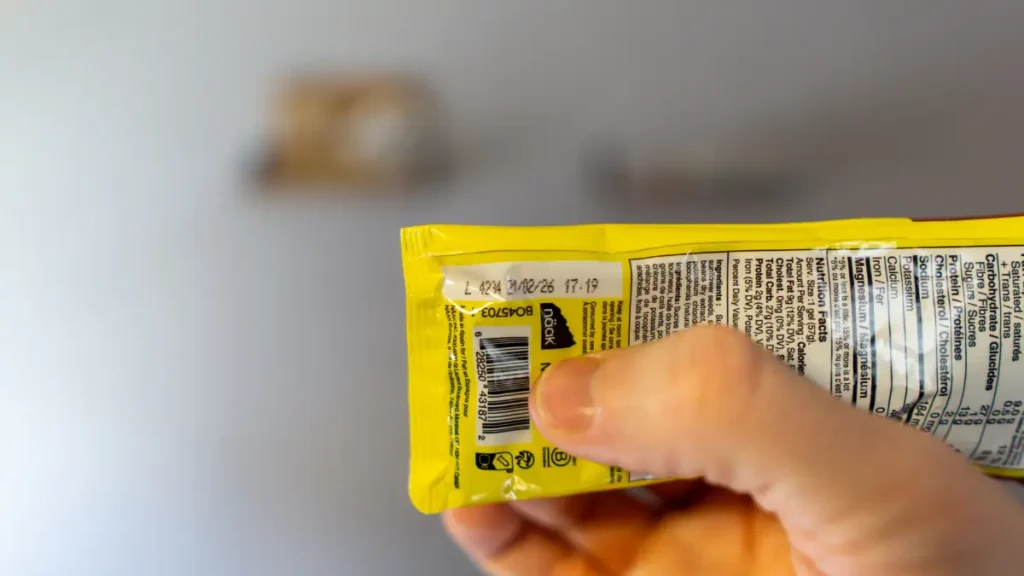
- Gel check: Next, I grab my race nutrition and flip it over. I’m checking expiration dates. The Expo at a major race may have my favorite gel, but they may not have the flavor I’ve trained with. So my biggest tip: Buy what you need in advance. Usually a week before will avoid any shipping disasters.
- Check your electronics: I find my charging cables (especially the proprietary ones) for my watch, headphones, phone, and anything else I’d need while sightrunning then plug them in and check that they work. Finding out your cable doesn’t work at home is an inconvenience. Finding out in a hotel room (then promptly having to have one sent to Germany where you were traveling through) is a disaster.
Stop guessing. Plan the trip without screwing up the run.
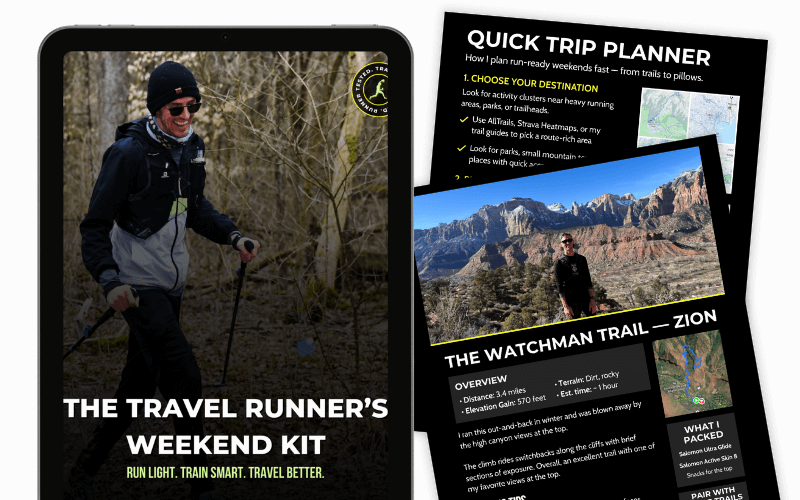
The free Runcation Kit gives you the planning framework, packing checklist, and route-finding system I use to make running part of the trip without letting it take over.
5 Days Out: The Flat Runner
The Goal: Spot any gaps before it’s too late.
This is a pretty crucial step to preventing a freak out on departure day or race day. I clear out some space on my floor, and lay out my race kit in the shape of a person…as if I was on the floor wearing it. This is the “Flat Runner.”
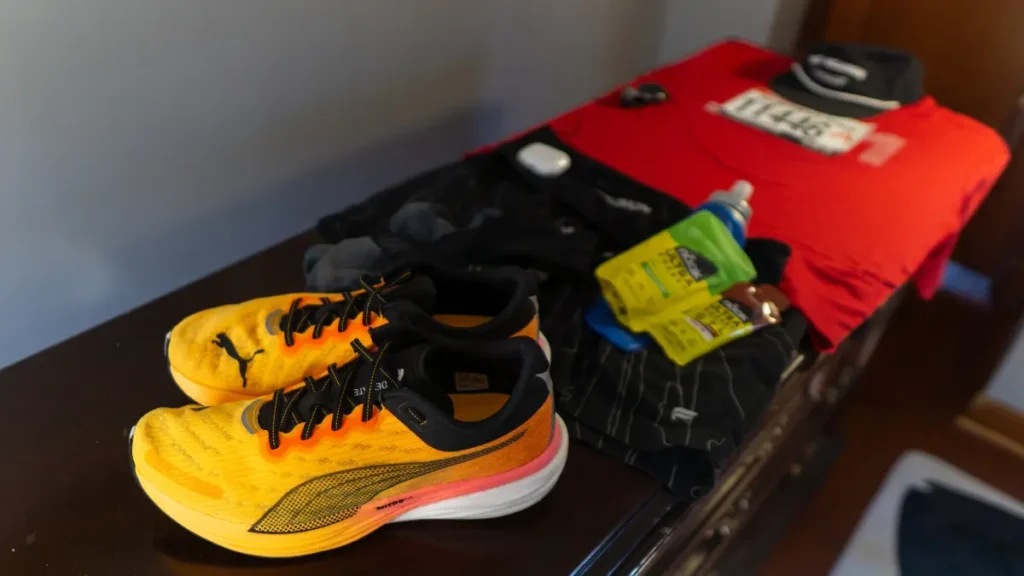
Ultimately, I need to see the entire system together:
- “Okay, I see the shorts. But where’s the anti-chafe?”
- “I see my hat, but where are my shades?”
- “I’ve got my gels, but where’s my running belt to hold them?”
3 Days Out: The Tetris Day
The Goal: Integration and compression.
Now that I have everything, it’s time to actually put things in my bag. But I don’t just throw everything in.
First, I separate by Category: Tops, Bottoms, Essentials (socks/underwear). Normally I travel with four packing cubes — one for each category, then one for a “laundry” cube. If you want to know how I use packing cubes, I recommend checking out my post on packing cubes for runners.
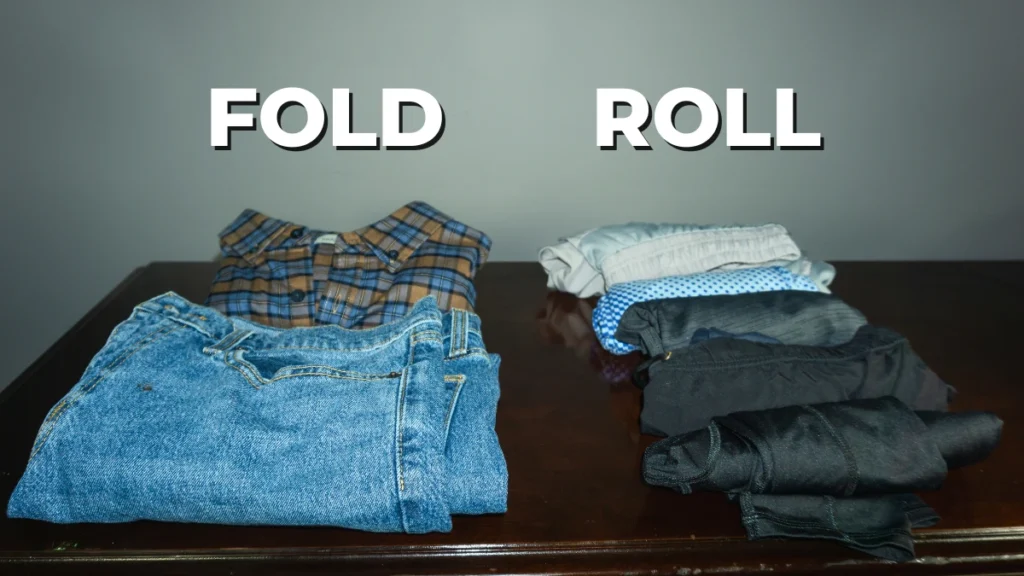
Next, I fold my clothes in two ways:
- Ranger Roll the loose clothing: Race singlets, t-shirts, and other loose clothing is perfect for rolling to save a ton of space.
- KonMari Fold the nice stuff: Jeans, dress shirts, etc. Basically anything that’s bulky and I don’t want to wrinkle. All of it needs folded.
2 Day Out: The Carry-On Rule
The Goal: Eliminate the risk of lost luggage.
This rule mainly applies if I’m flying, but it’s a sacred law of travel running: never check your race shoes.
I can buy a new shirt at the Expo. There are more gels than I can think of (though I wouldn’t try anything new on race day). But I cannot buy a pair of broken-in Puma Deviate Nitro 2’s that know the shape of my foot after many miles.
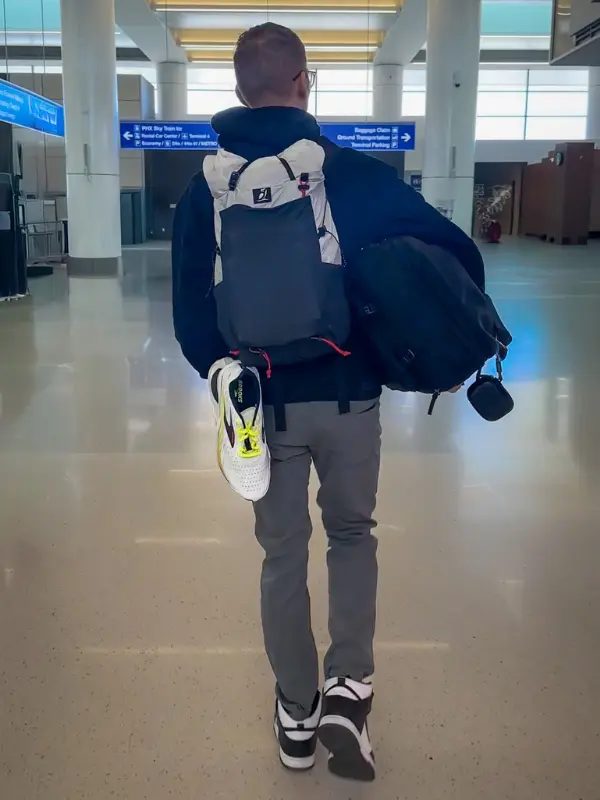
So, if I’m checking a bag, here’s how I split it up:
- Personal item: This stays with you at my feet. It has my “cannot replace” items, like race shoes, bib (if mailed), gels, GPS watch, etc.
- Checked baggage: This hold the “nice to have” items, like casual clothes, toiletries, recovery items, etc.
I think of it this way. If the item would drastically change my race day experience if I were to lose it, it goes in my carry-on. If it wouldn’t affect the race if an airline lost it (outside of stress), it goes in my checked bag. And that’s made my life of running while traveling a lot easier.
Departure Day: The Idiot Check
The Goal: Leave the house without forgetting anything.
I’ve done the work. I’m packed, and the final five minutes before I leave are the “Idiot Check.” I only need to verify I have three things:
- Wallet/ID (can’t fly without it or get my bib at the Expo)
- Phone (can’t live without it, let’s be real)
- Watch charger (The #1 most forgotten item by runners, reference my Germany story earlier)
Everything that’s important to the race should have been packed away days ago to free up any stress on my mind. Ultimately, the goal when planning any runcation is to arrive at the start line headache-free.
That way I’m doing three things on departure day: zipping my bag, walking out the door, and getting to my destination on time.
You’re Race Day Ready
The physical weight of my bag doesn’t change whether I pack it in an hour or a week.
But the mental weight is another story. By spreading the process over 7 days, I arrive at the start line more focused on my pace and fueling strategy than I am about anything I may have forgotten.
Hopefully this process will help do the same for you. And, now that you’re packed, use my guide on how to find running routes to plan your shakeout runs in your destination!


Leave a Reply