

If there’s one thing I’ve learned after running in over 20 national parks, cities around the world, and a few literal jungles, it’s this:
You don’t need to overplan a runcation. But you do need to plan the right things in the right order.
When I first started running while traveling, I mostly winged it. I’d book a random Airbnb, scroll AllTrails or Strava the night before, throw some running gear in my bag, and hope the logistics worked out.
Sometimes they did. Other times I ended up driving 90 minutes at 5 a.m. just to reach a trailhead before parking filled.
Now I plan these trips in the opposite order from how I used to:
I choose the run that anchors the trip first. Then I make sure that run actually works before I book the rest of the trip around it.
If I’m traveling for a race, the anchor is already chosen. If I’m planning my own running trip, I start by finding the route or routes worth traveling for. That’s the basic idea behind what I call my Run-First Framework. The run determines the timing, where I stay, what I pack, and how everything else fits into the trip.
This is the process I use whether I’m planning trails in Grand Teton, running around a city like San Jose, or building a trip around a destination race.
What is a Runcation?
A runcation (basically, a running vacation) is a trip where running is one of the main reasons you’re going.
That could mean traveling for a destination race, planning a trip around a trail or route you’ve wanted to run, or choosing a place specifically because you want to explore it on foot.
For me, there’s an important difference between a runcation and simply running while traveling. If I squeeze in a few morning miles during an otherwise normal vacation, I’m just running on vacation. It becomes a runcation when the run starts influencing where I go, when I go, where I stay, or how I plan the trip.
It doesn’t have to be a weeklong running camp, either. A runcation can be a weekend built around one race or a longer trip with several runs. The point isn’t how much you run. It’s that running helps shape the trip.
And once that’s the goal, I plan it using the same process every time.
The Run-First Runcation Framework
After enough running trips, I’ve learned that most of the headaches come from doing things in the wrong order.
Booking the cheapest hotel before checking where the trails are, choosing a route without thinking about the season, or building an itinerary that leaves you wrecked before the run you actually traveled for.
My solution is pretty simple: start with the run, make sure it works, and let everything else follow from there.
Here’s the process I use:
How to Plan a Runcation in 5 Steps
Start with the run. Everything else should make that experience easier, not get in its way.
- Choose the run that anchors the trip.
Start with the race, trail, route, or running experience that makes the trip worth taking.
- Stress-test the run.
Check season, weather, terrain, access, safety, elevation, and whether the route realistically works for you.
- Choose your home base around the run.
Stay somewhere that makes getting to your key run or routes easier instead of turning every run into a logistical problem.
- Build the rest of the trip around it.
Fit sightseeing, travel days, recovery, and everything else around the run that matters most.
- Pack for the run you’re actually doing.
Let the conditions, terrain, distance, and logistics determine what comes with you.
1. Choose the run that anchors the trip
If I’m planning a route-based runcation, I don’t start with hotel deals or a list of tourist attractions.
I start with the run. Always.
Usually that means opening AllTrails, Strava heatmaps, my own route database, and using the same process I use to find running routes in a new place to figure out which routes are actually worth building a trip around.
If I’m traveling for a race, this step is already done. The race is the anchor. The question becomes what the rest of the trip needs to look like around it.
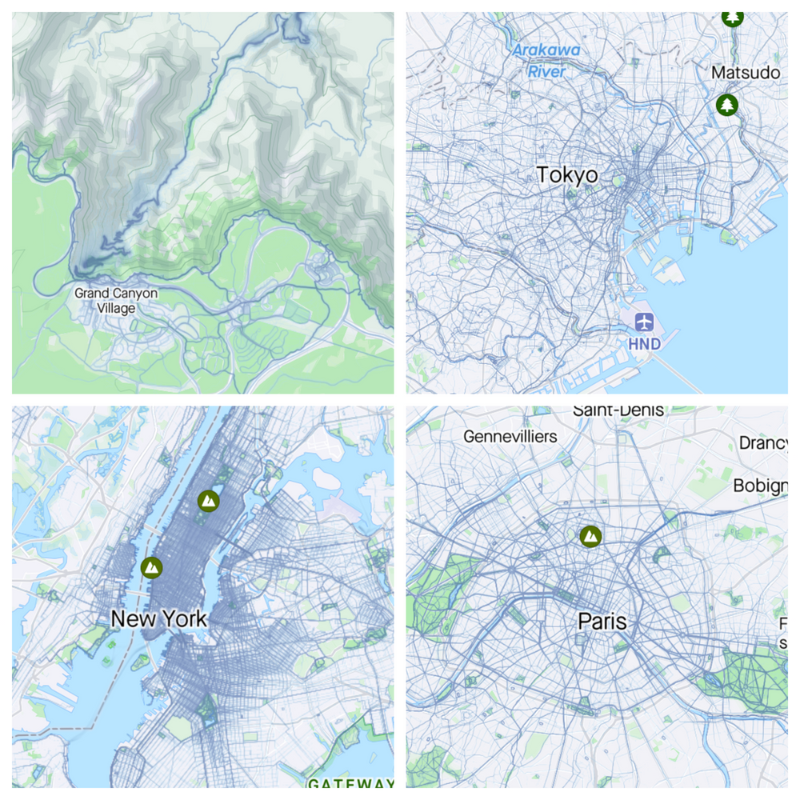
For a route-based trip, I’m usually looking for:
- a run I’d genuinely travel for
- distance and elevation that fit what I want from the trip
- terrain and surface I actually want to run on
- routes that cluster together if I want multiple runs
- access that won’t turn the morning into a logistical mess
In cities, I usually zoom in on parks, greenways, waterfront paths, and areas with obvious runner traffic. On trail trips, I care more about the route itself: scenery, terrain, elevation, access, and whether there are other trails nearby worth checking out.
I’ve used this process everywhere from national parks to major cities. The important part is that I’m choosing the running objective before the convenience of the hotel or itinerary starts influencing the decision.
Once I have one or two runs that make the trip worth taking, I move to the next question:
Will those runs actually work when I’m there?
2. Stress-test the run before you book
Once I’ve found a run that makes the trip worth taking, I try to poke holes in it before I book anything.
A route can look perfect on Strava or AllTrails and still be a terrible choice for the week you’re there. Weather, trail access, elevation, heat, daylight, parking, or your own fitness can all turn a great-looking run into a terrible plan.
This is the part where I ask: What could make this run not work?
Season and weather
In Phuket, heat and traffic changed when I could realistically run. A route that looked fine on a map became a much worse option once midday heat and road conditions were a part of the equation. And that’s before getting into the trail-specific issues Phuket can throw at you.
Terrain and elevation
Mileage alone doesn’t tell me enough. And I learned that the hard way in places like New Hampshire. A 10-mile route can look like it’d be done at a decent pace. Then add the steepness and rocks littered across trails in the White Mountain National Forest and it becomes a completely different day than a flat 10.
Access and logistics
Zion National Park is an excellent example of why I check access before I get excited about a route. Parking, shuttle schedules, seasonal conditions, and how early you need to start can matter almost as much as the trail itself. One of my best runs in Zion was in February because I timed it for when I could drive into the park without relying on the shuttle.

Safety
Take Glacier National Park, for example. Running a trail like the Highline Trail solo can sound great until you factor in grizzly country, remoteness, and what happens if something goes wrong. That’s where running with others, carrying the right safety gear, changing the route, or skipping it altogether becomes part of the decision.
Your readiness
I also ask whether the route fits the runner I am on that trip, not the runner I want to be or wish I were. Distance, vert, altitude, technicality, heat, and travel fatigue all play a role. Countless times I’ve bitten off a bit more than I can chew simply because my eyes were bigger than my endurance at that point.
3. Choose your home base around the run
Once I know which run is anchoring the trip, I choose where to stay based on how easy it makes that run.
That sounds obvious, but it’s one of the easiest mistakes to make. A cheaper hotel can stop looking like a deal pretty quickly if it adds an hour of driving every morning, makes you dependent on taxis, or puts you nowhere near the routes you actually came to run.
I usually have Strava, AllTrails, and a hotel or rental map open at the same time. I’m comparing where the best runs are with where I could realistically stay.
San Jose, Costa Rica, is a good example. I could see from Strava that La Sabana was a major running hub, so I deliberately booked near the park instead of choosing a place based only on price or tourist attractions.
That gave me easy access to running without having to solve the same transportation problem every morning.
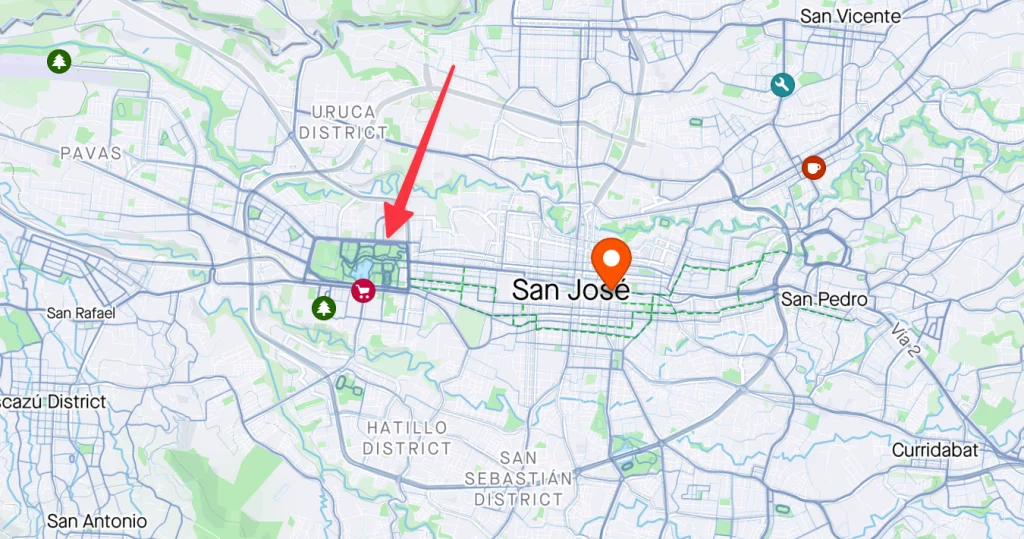
When I’m comparing places to stay, I care most about:
- Distance to the anchor run or main running area
- Whether I can walk or run directly from where I’m staying
- How early I’d need to leave to start the run
- Parking, transit, or shuttle access
- Food and recovery options nearby
- Whether the location still works for the rest of the trip
I don’t always stay directly beside the run, and I’m not trying to optimize every trip down to the minute (that’s not how I travel). I just want the logistics to support the reason I’m there instead of fighting it.
Once the home base works, I can start building the rest of the itinerary around it.
4. Build the rest of the trip around the run
Once I know where I’m staying, I start filling in the rest of the trip.
This is where I used to get myself into trouble. I’d cram in hikes, sightseeing, long drives, late nights, and whatever else looked interesting. Then I’d wonder why the run I planned the trip around felt terrible.
Now I work backward from the anchor run.
If it’s the most important part of the trip, I want to arrive with enough time to settle in, avoid stacking a huge day right before it, and leave some room afterward for some recovery time.
- Protect the day before: I try not to schedule the most exhausting part of the trip the day before the run. A six-hour hike, long travel day, or late night might technically fit the itinerary, but that doesn’t mean it belongs there.
- Think about what comes after: If I know a long trail run is going to beat me up, I’m not planning a packed afternoon that assumes I’ll be fresh. Sometimes that means an easy sightseeing day. Sometimes it means food, a shower, and lying in my bed watching some TV for a bit.
- Account for travel fatigue: Flights, long drives, time-zone changes, bad sleep, and sitting around all day can hit harder than expected. I don’t automatically assume I’ll land somewhere and feel ready for the biggest run of the trip a few hours later.
- Make it work for the people you’re traveling with: If I’m traveling with someone who isn’t there primarily to run, I also make sure the whole trip doesn’t become one giant support crew assignment. The run might anchor the trip, but it doesn’t have to swallow every day around it. I’d rather protect a few important running windows and leave the rest flexible enough that everyone still gets a trip they enjoy.
A perfect example of this last point is a 2024 western road trip I went on with my fiancee, my dad, and my stepmom. My fiancée and I fit our runs into early mornings or times when my dad and stepmom already had plans of their own. They dropped us off at the Delta Lake Trail in Grand Teton one day while they drove around the park for a few hours. It was a win-win for all of us as we all got to see and do a bit of what we wanted.
The goal isn’t to build a perfectly optimized itinerary. It’s to make sure the stuff surrounding the run doesn’t ruin the reason I planned the trip in the first place.
5. Pack for the run you’re actually doing
By this point, I already know the route, conditions, access, and where I’m staying. That makes packing a lot easier because I’m not packing for some vague idea of a running trip.
I’m packing for the run or runs I actually came to do.
A hot road run in Phuket needs a different setup than a rocky day in the White Mountains. A destination race has different priorities than a self-support trail run. The conditions and logistics should decide what earns space in the bag.
- Start with the non-negotiables: I start with whatever I’d regret not having if the run went sideways. The right shoes, hydration, fuel, navigation, weather protection, and any safety gear the route requires.
- Pack for the conditions, not the destination: “Warm place” or “mountain trip” isn’t specific enough. I care about the actual forecast, surface, elevation, exposure, and how long I expect to be running.
- Cut the “just in case” pile: Years of traveling have taught me that I almost always pack better when I stop adding gear for hypothetical situations. If I can’t explain when I’ll use something, it probably doesn’t need to come.
- Keep the irreplaceable gear with you: For race trips or runs I’ve built the whole trip around, the irreplaceable gear stays in my carry-on whenever possible. I can buy toothpaste almost anywhere. Replacing the shoes, vest, or race kit I trained in is a lot harder.
I keep a separate running-trip packing list for the full breakdown, but the rule here is simple: pack around the demands of the anchor run, not around every scenario you can imagine.
Start with the run
Planning a runcation doesn’t need to mean building a minute-by-minute itinerary.
I’ve had better trips since I stopped starting with hotels, attractions, and whatever was cheapest, and started with the run I actually wanted to do.
Choose the run. Make sure it works. Pick a home base that makes it easier. Build the rest of the trip around it. Then pack for what you’re actually going to face.
That’s the Run-First Framework. It’s not complicated, but it has saved me from a lot of the dumb logistical mistakes I made when I first started traveling to run.
And once the planning is done, go run the thing.
Still planning the details? Head to my Runcation Hub for more on finding routes, packing, race travel, and running-trip logistics.
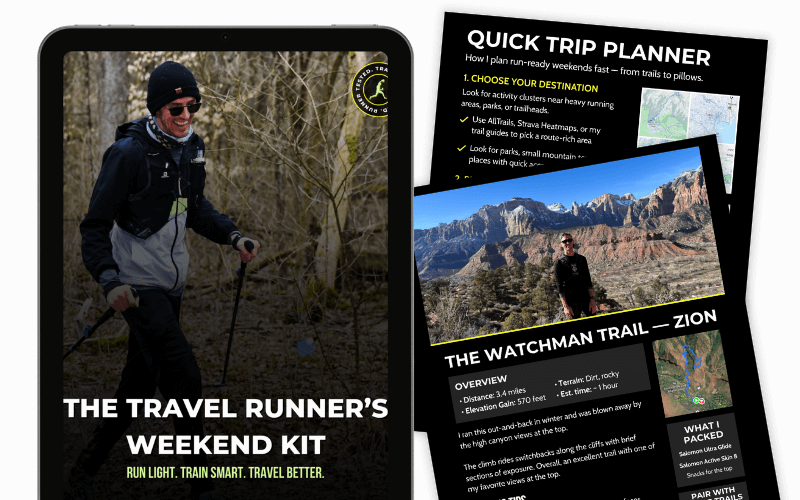
Plan your next runcation without overthinking it
A free, runner-tested weekend kit with:
- A simple trip-planning framework
- A packing checklist that actually works
- A quick decision guide for short travel runs

![My Essential Trail Running Gear [Everything I Take on Runs]](https://www.thetravelrunner.com/wp-content/uploads/2024/06/trail-running-gear-cover-300x169.png)

Leave a Reply