
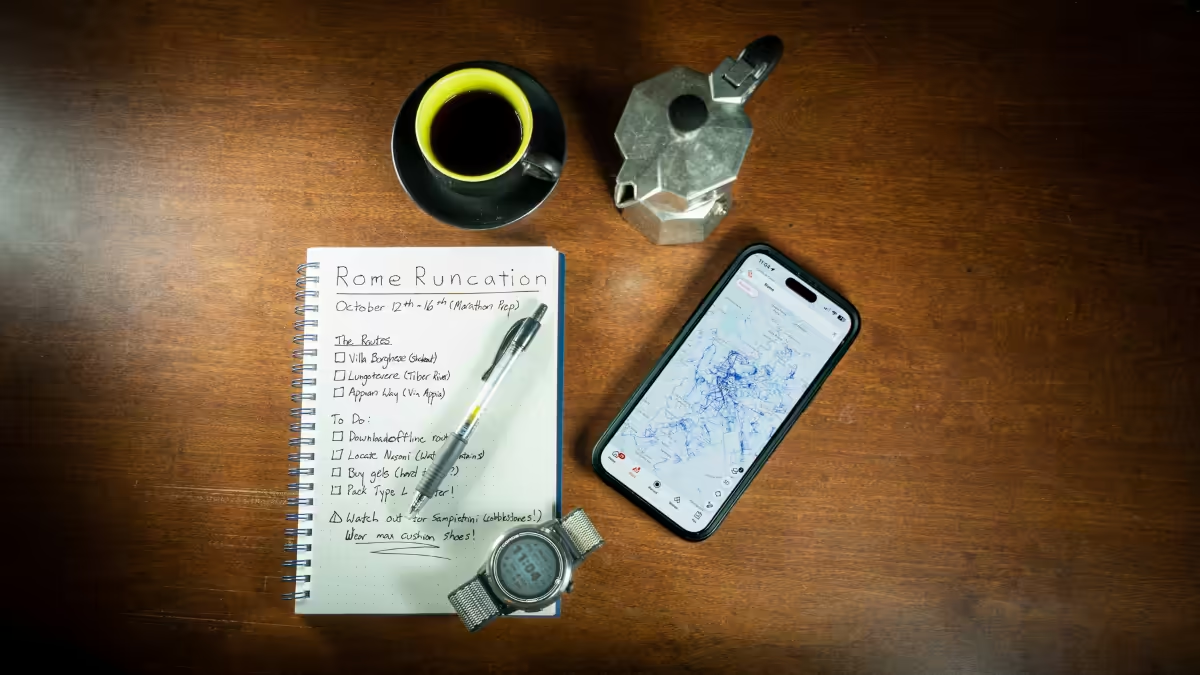
RACE TRAVEL & RUNCATION HUB
Plan Your Next Running Trip
A race you’ve been eyeing. A trail you keep saving. A city you’d rather explore in running shoes. This is where you turn that idea into a trip. I’ve planned running trips around national parks, races, and cities overseas. I’ve also booked places that left me driving 90 minutes at 5 a.m. to reach a trailhead. Start with the question you’re working through, then use my routes, trip reports, and planning guides to build your own version.
Choose your next step
Work through my planning process, explore destinations, compare actual routes, or check your race kit. Pick the resource that matches where you are in planning.

My Run-First Runcation Framework
Follow my planning process from the run you want to do to where you stay and what you pack.
Read guide →
Running Destination Guides
Explore the places I’ve covered, from national parks and the White Mountains to international running destinations.
Explore destinations →
Trail Running Route Database
Compare routes I’ve run by location, distance, climbing, and difficulty, with firsthand reviews and GPX downloads.
Find a route →
My Marathon Packing List
Check your race kit, travel essentials, and post-race items before leaving for a road race.
Read checklist →What is a runcation?
A runcation is a vacation planned around running. A destination race, a trail you want to experience, or exploring a city on foot helps shape where you go and how you spend your time.
What counts as a runcation?
- A race weekend with time to experience the destination before or afterward.
- A trip built around one memorable trail or several days of running.
- A city break where running is part of how you explore. No race entry required.
Start with the run
- Choose the running experience that makes the trip worth taking.
- You don’t need a week of big mileage. One run worth traveling for can be enough.
- Use my Run-First Framework for the full planning process, then return here for the details you need.
Who is a runcation for?
It’s for runners who want running to be part of what they remember about a place. Choose an experience that fits your ability, interests, and available time. Your pace doesn’t decide whether the trip counts.
Choose your version
- Race travelers: build the weekend around reaching the start prepared and enjoying the destination afterward.
- Trail runners: match the distance, climbing, terrain, and navigation to your experience.
- City explorers: link a few sights, make room for stops, and let the run introduce you to the place.
Make it work for everyone
- In Rome, Kaitlyn and I ran with a local who took us past the Colosseum and Roman Forum while sharing their history.
- That run was about meeting someone and seeing the city as much as getting miles in.
- If your companions aren’t running, agree on running windows and protect time for what they came to do.


How do I pick a runcation destination?
Start with the running experience you want, then make sure the destination actually works for your dates, ability, and budget. A route can look perfect online and still be a poor choice during the week you’re able to travel.
Check the fit
- Look beyond mileage: compare terrain, climbing, technical difficulty, and how long the run is likely to take you.
- Check seasonal access, likely weather, daylight, and any permits, shuttles, or reservations the run requires.
- Price the trip around the run, including accommodation and the transportation needed to actually reach the start.
Then go deeper
- Use my Run-First Runcation Framework to work through the full destination-selection and stress-testing process.
- Still deciding where to go? Browse my destination guides and firsthand running trips for ideas.
Running Destination Guides
Explore the places I’ve covered, from national parks and the White Mountains to international running destinations.
Explore destinations →
White Mountain National Forest Trail Running
Explore the routes and planning details behind a running trip to New Hampshire’s White Mountains.
Explore the guide →How do I find a running route?
Find a promising route, then verify that it works for the day and time you plan to run. A popular route or a line on a map doesn’t confirm public access, current conditions, or safety.
Check the actual route
- In cities, trace the connection from your accommodation: sidewalks, crossings, park hours, and the return journey.
- On trails, check climbing, surface, exposure, junctions, and water access as well as distance.
- Read recent condition reports and official alerts. Ask a local running club or shop about anything you can’t verify.
Then go deeper
- Use my route-finding guide to see how I research running options before arriving somewhere new.
- If you already know the area, compare firsthand routes in my Trail Running Route Database.
- For remote or unfamiliar trails, review my trail safety guide before you go.

How I Find Running Routes
Use my route research process to find running options before you arrive in a new place.
Read guide →Trail Running Route Database
Compare routes I’ve run by location, distance, climbing, and difficulty, with firsthand reviews and GPX downloads.
Find a route →
Trail Running Safety Tips
Review the preparation and decisions that matter when you head onto unfamiliar trails.
Read guide →How do I choose a hotel location?
Choose your accommodation based on how well it supports the run, not just the room price. In San José, I stayed near La Sabana after checking where people were running, which gave me an obvious place to go each morning.
Compare the full journey
- Map the actual journey from the property to your run, trailhead, or race transport.
- Factor in parking, shuttles, and local transport costs before assuming the cheapest room is the cheapest option.
- Make sure the area also works for meals, sightseeing, and whoever you’re traveling with.
Check life around the run
- Look for food options and somewhere to wash and dry your running kit.
- Make sure the location also works for sightseeing and your companions’ plans.
- For a race, compare the start, finish, and official shuttle pickup separately. They may be in different places.

What should I pack for a runcation?
Build your packing list from the runs you’re doing: terrain, expected conditions, time outside, and how often you can wash clothes. Lay out a complete running outfit and its equipment before adding the rest of your travel clothes.
Build the running kit
- Pack familiar shoes and clothing suited to the surface and conditions, including weather protection.
- Add navigation, water-carrying capacity, familiar fuel, and the safety equipment your route requires.
- Include socks, anti-chafe, chargers, and a way to separate used clothes until you can wash and dry them.
Check it before departure
- I learned about charger problems while traveling through Germany. Plug in your cables and check they work before packing them.
- Keep hard-to-replace running essentials with you when flying, where baggage rules allow.
- For races, compare your kit with the organizer’s requirements. Pack for the event and plan laundry before adding extra outfits.
My Marathon Packing List
Check your race kit, travel essentials, and post-race items before leaving for a road race.
Read checklist →
Packing Cubes for Runners
Organize your running clothes and keep used kit separate from the clean things in your bag.
Read guide →
What to Wear Running in the Rain
Work through clothing choices when wet conditions are part of your running trip.
Read guide →How do I keep training while traveling?
Decide what you need from this trip: a consistent routine, preparation for an upcoming race, or one big destination run. Put travel days and fixed commitments on the calendar first, then choose realistic windows for the runs that matter.
Plan around the trip
- Allow time for each run, food, a shower, and whatever comes afterward.
- Leave flexibility around poor sleep, unfamiliar conditions, and days with lots of walking.
- If you’re following a training plan, decide which sessions can move or be shortened before the itinerary fills up.
Make room for everyone
- On our western road trip, Kaitlyn and I ran while my dad and stepmom had their own plans. They dropped us at Delta Lake while they explored Grand Teton.
- Agree on those running windows ahead of time, and leave space afterward to recover and enjoy the day together.
- Check nearby food options and arrange familiar meals around key runs. Sightseeing still takes energy.

What changes when I’m traveling for a race?
A race adds fixed deadlines and event rules. Build the trip backward from the start, using the organizer’s current runner guide to confirm what you must do before lining up. Leave enough travel margin to meet those requirements if you’re delayed.
Confirm the event logistics
- Entry and pickup: confirmation, identification requirements, packet location, and the last time you can collect it.
- Race morning: start location, corral timing, transport reservations, road closures, and bag drop.
- Course support: aid stations, available food and drink, required equipment, and any drop-bag or crew rules.
Plan both sides of the start
- Keep your tested race kit accessible and plan breakfast around what you can actually obtain.
- Save important confirmations and transport details so you can find them without relying on a connection.
- Plan the journey from the finish, collecting belongings, and meeting companions. Leave room before ambitious sightseeing.

When to Start Packing for a Race Trip
Spread gear checks, laundry, and packing across the days before departure.
Read guide →My Marathon Packing List
Check your race kit, travel essentials, and post-race items before leaving for a road race.
Read checklist →
My Pittsburgh Marathon Recap
Read the firsthand account of my first marathon and the experience behind that race trip.
Read race recap →Put your trip plan in one place
Write down the run you’re traveling for, where you’ll stay, how you’ll reach the start, what you’ll carry, and your backup option. Add the bookings and deadlines you still need to sort out. My free Runcation Kit brings together a planning framework, packing checklist, and a decision guide for short travel runs.
Stop guessing. Plan the trip without screwing up the run.
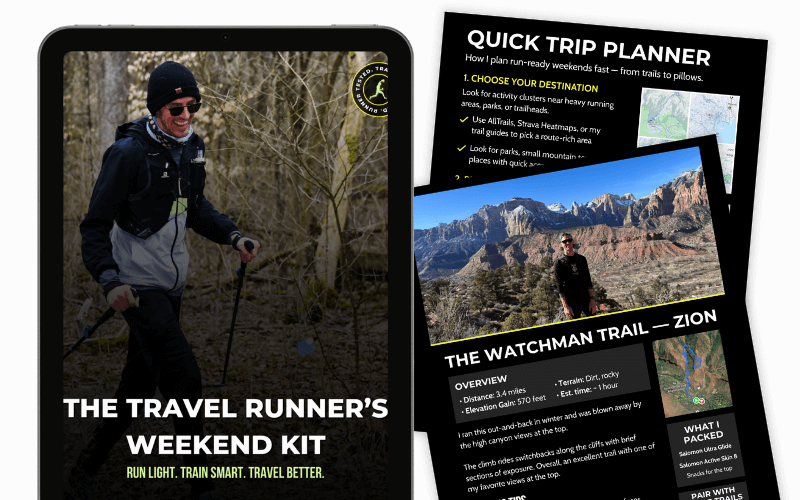
The free Runcation Kit gives you the planning framework, packing checklist, and route-finding system I use to make running part of the trip without letting it take over.