I used to be the guy checking a bag for a weekend 5K because I didn’t know how to handle the bulk of my running gear. I’d arrive with wrinkled shirts and a hydration vest jammed awkwardly against my laptop.
The problem is that standard packing advice assumes all your clothes are made of cotton and are perfect rectangular shapes. They aren’t.
Runners deal with unique variables. Technical fabrics, odd-shaped clothing, and gear that fills up a bag fast.
By treating your running gear differently than your casual clothes, you can save about 30% of your suitcase space. Here is the hybrid folding method I’ve used to travel carry-on only for all my races and when preparing for runcations.
The Standard Ways to Fold Clothes for Travel
Before I dive into my own specific system, it’s worth showing why most of the “standard” travel advice doesn’t work for runners.
There are a few primary methods for folding clothing for travel: The Bundle Method, The “Ranger Roll,” The KonMari Method, and The Classic Fold. Each one has pros and cons, but they’re not all equal in terms of space savings and avoiding wrinkles — two of the most important things for runners, in my opinion.

For runners, the best system is a mix of the Ranger Roll and KonMari Method.
The Ranger Roll has the highest space savings (especially when you pair it with packing cubes), and the KonMari Method is excellent for avoiding wrinkles.
The Bundle Method ends up with a giant mess (a literal bundle) of all your clothing and no way to organize it besides looking through every piece of clothing. And the normal fold is great for avoiding wrinkles, but you can save more space with a tighter fold like the ones in the KonMari Method.
So, in the following sections, I’ll show how I use both to pack my bag efficiently and also avoid looking bad at dinner.
Stop guessing. Plan the trip without screwing up the run.
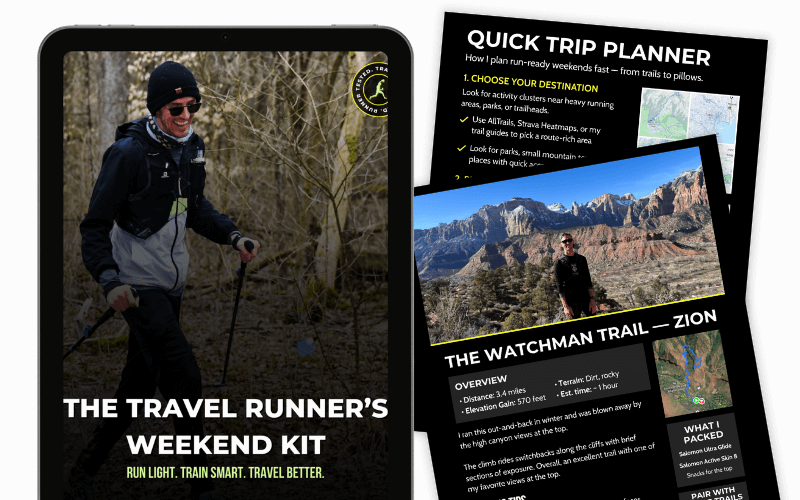
The free Runcation Kit gives you the planning framework, packing checklist, and route-finding system I use to make running part of the trip without letting it take over.
The Strategy: Sorting by Category
If you’ve read my breakdown on how packing cubes benefit traveling runners, you know I live by the Category System: one cube for Tops, one for Bottoms, one for Essentials. This avoids that “suitcase explosion” minutes into the trip and keeps gear organized.
But there’s a key to making it work, and that’s how you handle the different fabrics. Inside your Tops cube, there’s likely a mix of cotton shirts, high-tech race shirts, and nylon/spandex. If you fold them all the same, you’re wasting space.
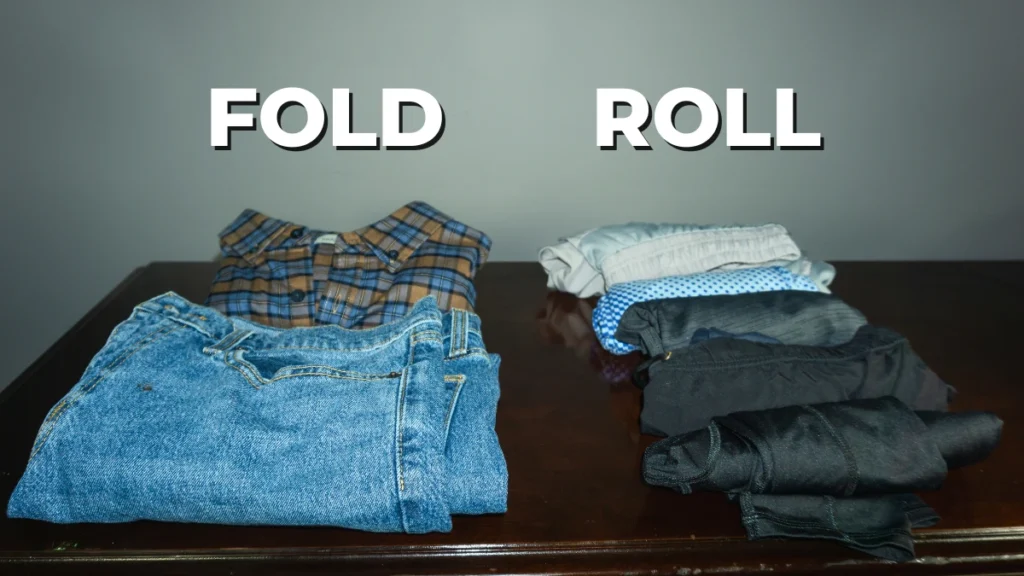
Before you start folding, separate your clothes into two piles on your bed to fold, then into their separate categories:
- Tech Fabrics (Singlets/Shorts/Training Tees) & T-Shirts: These get the “Ranger Roll.”
- Casual Fabrics (Cotton/Linen): These get the “Flat Fold” because they wrinkle.
Mixing these up is why your bag is overflowing. Flat-folding shorts is a waste of space and rolling your dress shirt just has you looking messy at a nice dinner. I used this exact method for my bag for the Pittsburgh Marathon where I’d have to pack for a 5K and Marathon (I ran the Steel Challenge) and also clothes to go out to eat with family.
How Runners Should Fold Clothes for Travel
After years of swearing by rolling my clothes (in other words the “Ranger Roll”), I’ve come around to the best way to pack for a runcation is a mix of rolling and folding. Here’s how to do both for any that don’t know.
Technique 1: The Ranger Roll (for running gear)
- Best for: T-shirts, singlets, shorts, socks, base layers.
- Why: Running gear is slippery and shapeless. If you just fold it, it the becomes a mess the moment you move your bag.
The “Ranger Roll” is a military technique that turns soft garments into tight, unravel-able “burritos.” Because tech fabric is wrinkle-resistant, you can crank these tight without damaging the gear. I even add rubber bands around them occasionally just to really keep them compact.
Note: You can decide how to handle t-shirts. I roll mine because I like keeping them organized together in my Tops packing cube. Then I deal with the wrinkles when I arrive. But, you can avoid it and simply fold them if you prefer.
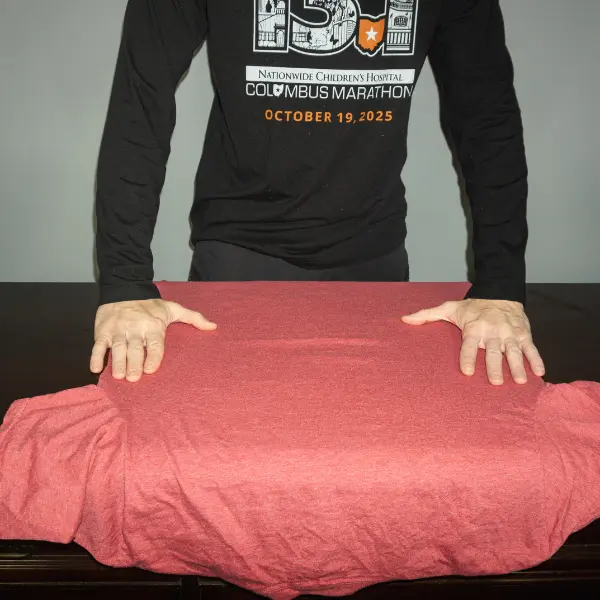
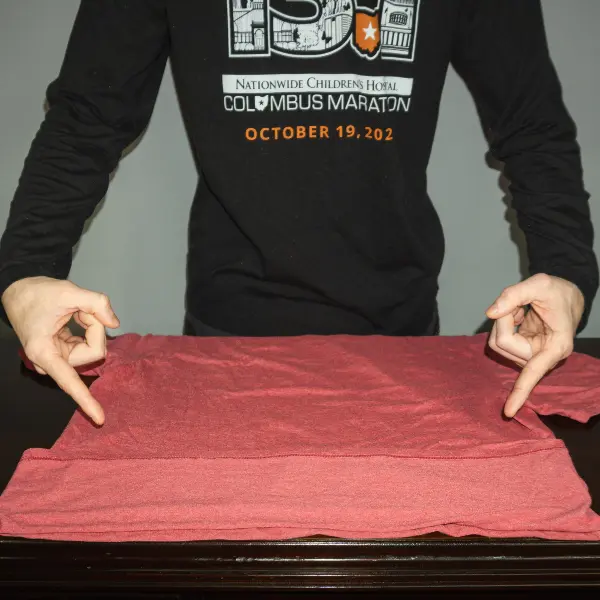
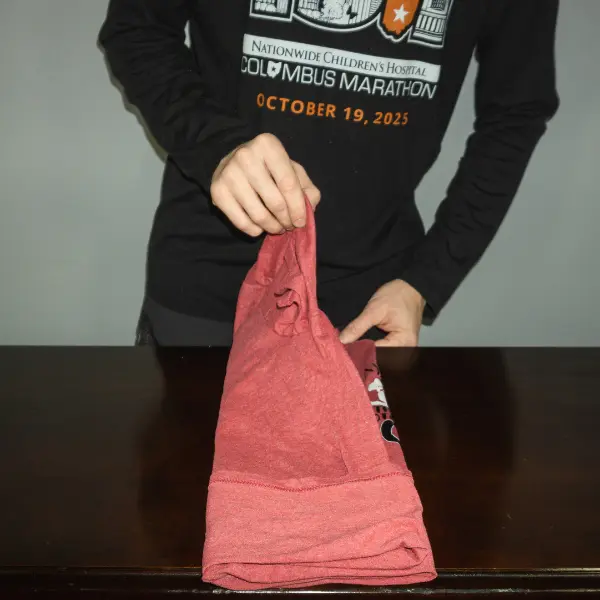
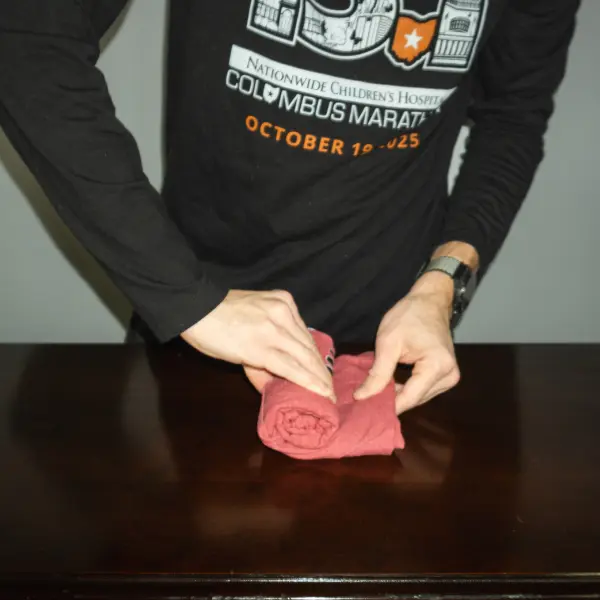
The step-by-step:
- Lay it flat: Smooth out your running shirt or singlet.
- Create the pocket: Fold the bottom 2 inches of the shirt inside out and upwards. This creates a temporary cuff at the bottom.
- Fold in: Fold the sleeves and sides inward until you have a long, narrow rectangle.
- Roll tight: Starting from the collar (top), roll the shirt down as tightly as possible toward the bottom.
- Lock it: When you reach the bottom, take that “cuff” you created in step 2 and pull it over the roll. This locks the burrito shut.
You can now throw this across the room and it won’t unroll (go ahead, play Throw, Throw Burrito with it if you have to). I stack these “logs” like firewood and stuff them into my packing cubes to keep them organized.
Technique 2: The KonMari Method (for nice clothes)
- Best for: Jeans, button-downs, nice shirts, blazers.
- Why: You can Ranger Roll a stiff pair of jeans or a linen shirt, but it’s a huge waste of space. And the wrinkles aren’t worth the headache.
The KonMari Method involves folding clothes into smooth, self-standing rectangles that file vertically like books on a shelf. This space saving so you can pack it away easily, making it the ideal low-wrinkle strategy for your button-downs and casual wear.
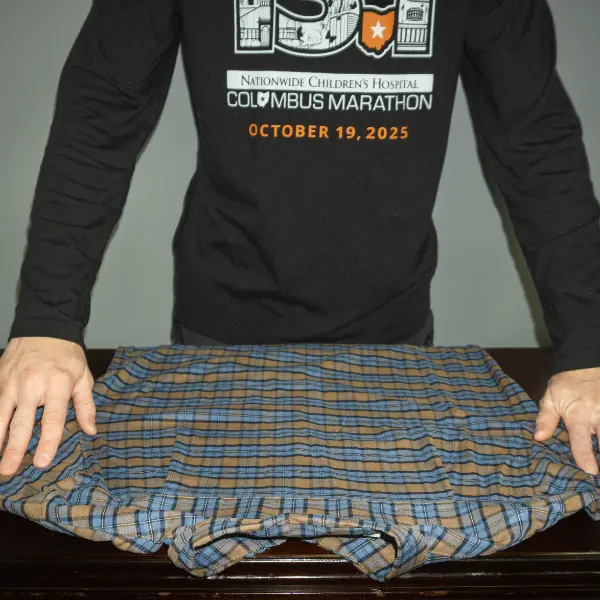
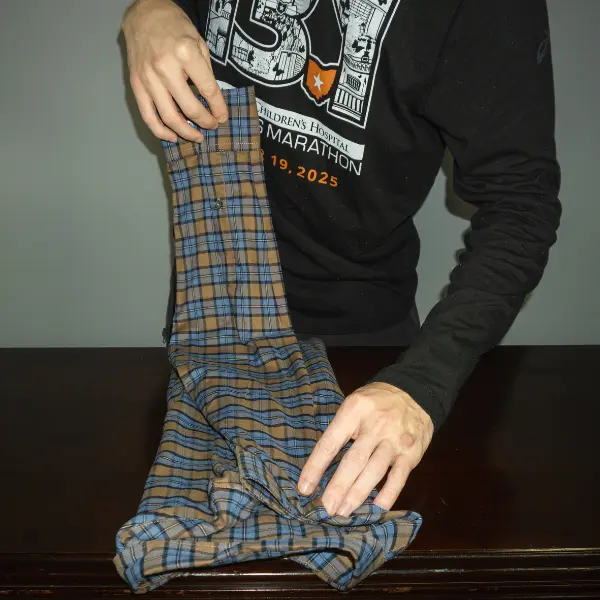
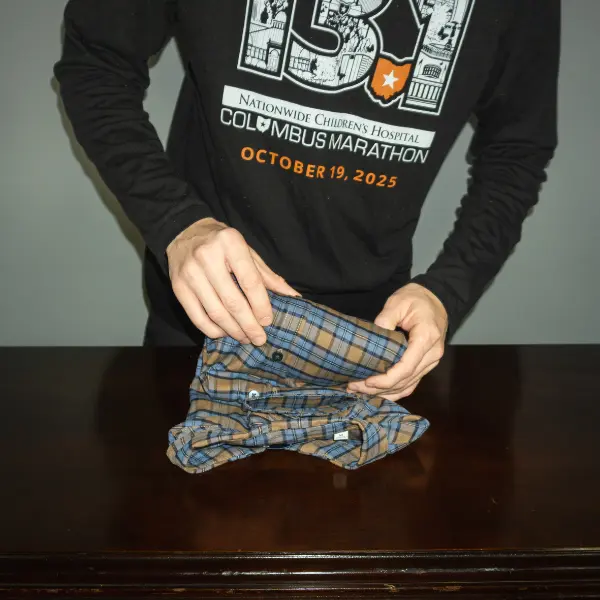
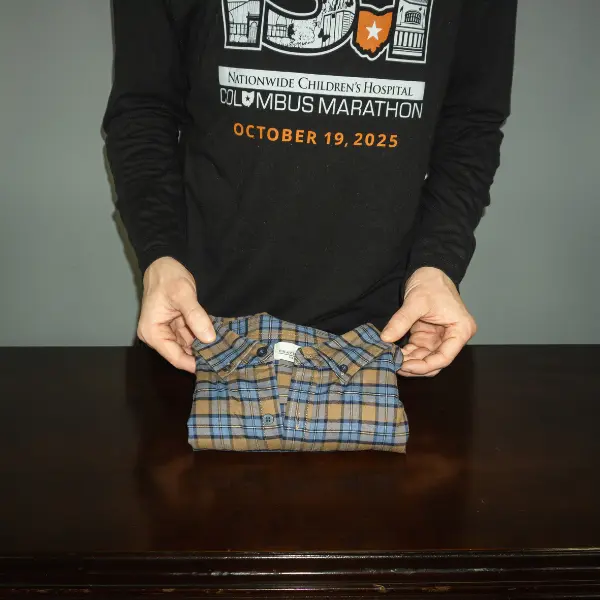
For the clothes you wear after the run, use the KonMari Method:
- Fold each side to 50%: Fold along the natural seams (shoulders/sleeves) to minimize creases. Fold them about 50% so both sides line up in the middle.
- Fold once: From the bottom of the shirt/jeans, fold up about 33% of the shirt.
- Fold again: Fold again, about another 33%, then last until you have a small, organized rectangle.
- Place on top: Put this folded clothing on top and sides of your packing cubes/rolled clothing. Not under it to avoid it getting smashed.
How to fold “awkward” running gear
This is the part most travel blogs skip, but it’s the biggest pain point for us as traveling runners.
Hydration Vests: These are a nightmare to pack because of the rigid flasks and weird straps.
- Drain everything: Ensure soft flasks are empty and vacuum the air out.
- Buckle up: Clip the front chest straps so the vest holds its shape.
- The kangaroo stuff: Most vests have a rear “kangaroo” storage pocket. Fold the side straps inward, roll the vest from the bottom up, and stuff the rolled fabric into its own rear pocket. It turns the vest into a self-contained ball. I sometimes wrap the cords around it to keep it compact.
Tights & Shorts with Liners
- Smooth the liner: Before you fold, stick your hand inside and smooth out the brief/liner. If it’s bunched up, it adds unnecessary bulk.
- Tights: I roll and fold my tights. It just depends on space and where I need to put them. If they’re going in a packing cube, roll. If I’m laying them across everything, fold.
Running Hats: Never flatten the bill or crush the crown. Instead, use the “Nesting” technique below.
The “Nesting” Technique (wasted space hacks)
When you pack running shoes, you are essentially packing two boxes of air. Don’t let that space go to waste.
Inside the Shoes: I stuff my trail shoes (which are usually the bulkiest item) with:
- Running Socks: Rolled tight. I can fit most of my socks in here.
- Gels/Nutrition: Put them in a Ziploc bag first (trust me on this) and stuff them into the toe box.
- Running Hat: Fold the back of the hat in, and nest the crown of the hat into the heel of the shoe to protect its shape.
Note: If you’re struggling to decide which shoes to wear on the plane vs. pack in the bag, check out my post on the best travel running shoes for versatile options that do both.
The “One Bag” Reality
You don’t need a bigger suitcase; you just need better compression technique.
By separating your fabrics — crushing the tech gear that can handle it and babying the cottons that can’t — you can easily fit a full marathon kit and a weekend wardrobe into a standard carry-on. It just takes a little practice and patience (as well as knowing when to start packing for a trip).
Hopefully this system will help you out.