
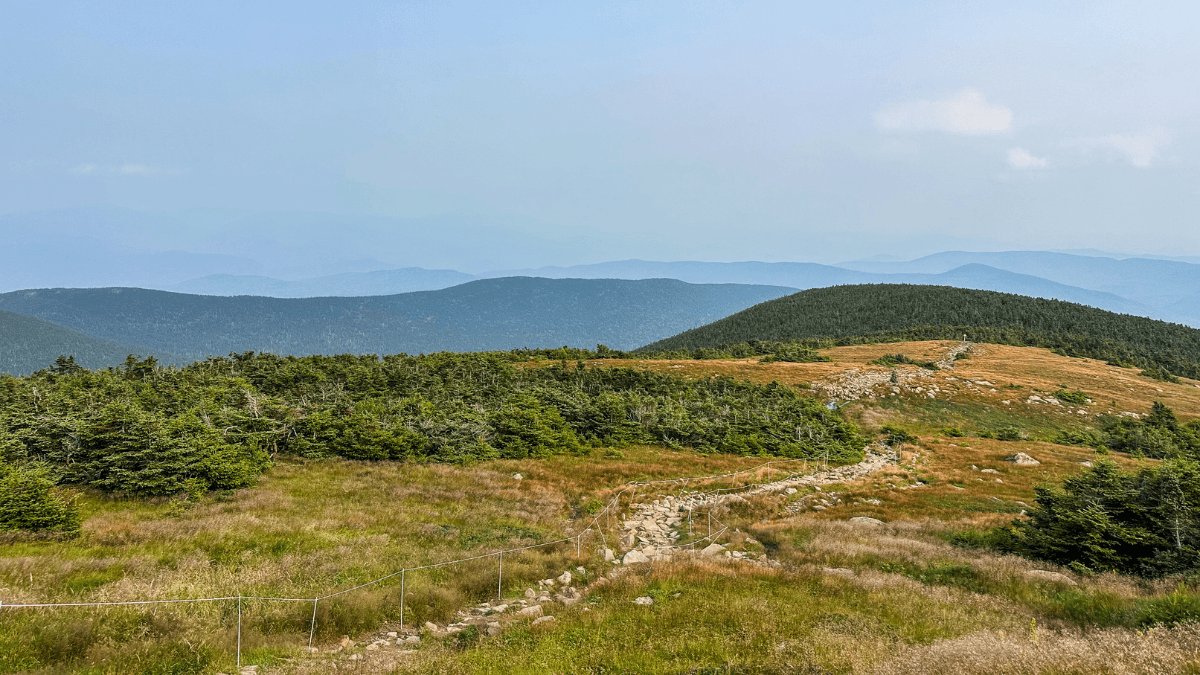
Mount Moosilauke was arguably the run in White Mountain National Forest that made me fall in love with the place.
Sure, the area was covered in wildfire smoke when I ran to the summit, which clouded any “view” that would make this a proper viewpoint, but it was the trail that made me fall in love. The roots, streams, and rocks everywhere. The way you could push at points, but the mountain would inevitably slow you to a hike at some point. And, yes, that cloudy summit with stretching views in all directions.
It gives you a taste of everything that’s great about WMNF, in my opinion.
So, I created this guide to help you enjoy it the same as I did. I see a lot of hiking guides out there, but not much on running Mount Moosilauke.
Hopefully, this will be that guide.
Table of Contents
Mount Moosilauke Trail Map
How To Get to the Mount Moosilauke Trailhead
Most runners begin at the Ravine Lodge Trailhead.
Its just off NH Route 118, about 7 miles south of Warren. There’s a dirt lot, but it can fill up fast so your best bet is to arrive early, especially during busier seasons. There is also parking along the dirt road, which is what we had to do on our visit.
From there, we followed the road, which split off toward the lodge and then descended down to the trailhead.
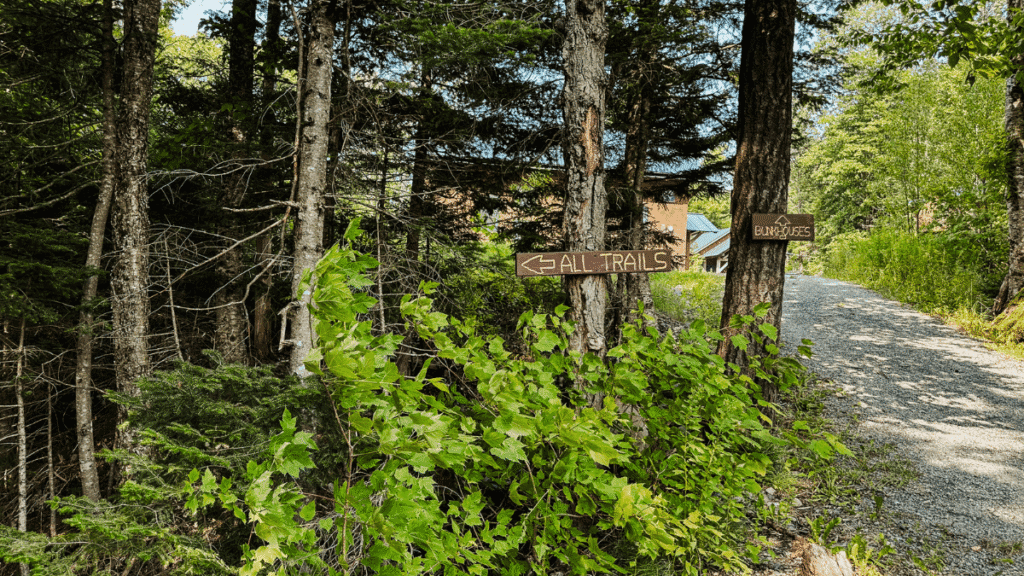
Cell service is spotty in the area so if you’re using Google Maps or something similar to get you there, download the route offline to save you any headaches.
Running Mount Moosilauke
The most popular option to the summit is the Gorge Brook Trail.
From there, you have multiple options to return to the trailhead. I chose the South Peak Loop and came back down so that’s what I’ll highlight in this section.
Gorge Brook Trail (Ascent)
There’s a small sign-in book at the start of the trail and then it goes across a small bridge to start. You’ll see a sign listing the various trails.
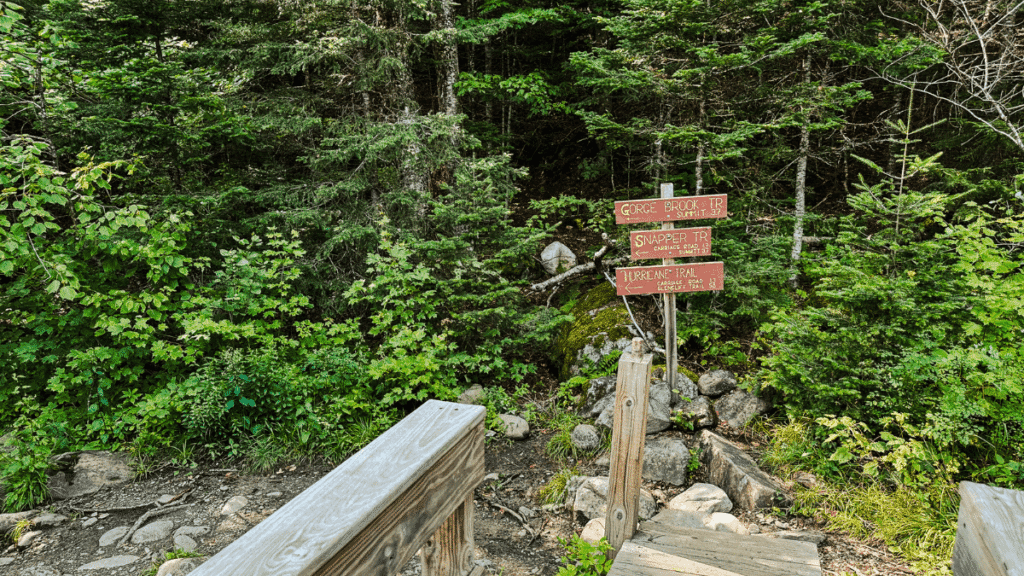
The first quarter-mile or so is gentle as you head deeper into the forest. Then, you’ll quickly start climbing (averaging a minimum 9-10% grade for the next 3.5 miles).
But that doesn’t mean you won’t have chances to run.
I opened it up when I could on some flatter sections. But, the roots, rocks, and streams will slow even the fastest runners down. To save energy, I often just switched to power hiking. I found it easier and I arguably maintained a similar pace.
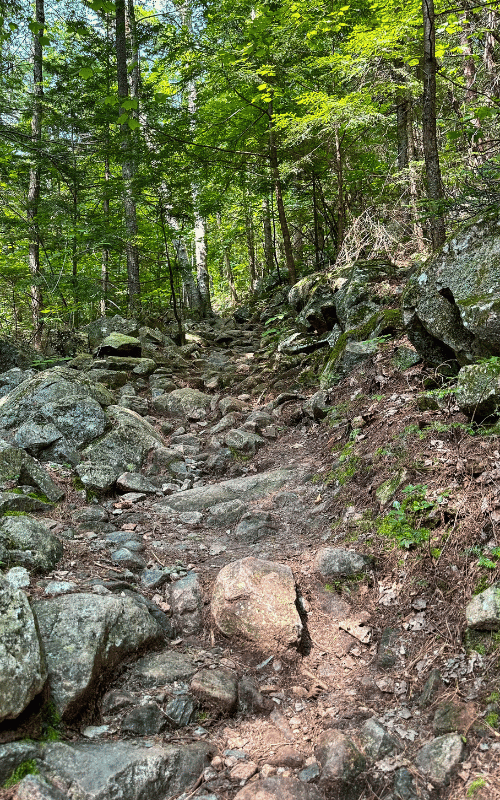
Personally, I love these types of trails. The mix of running, power hiking, and an occasional scramble keeps the run interesting.
As I neared the top, the trees started thinning out and the views started opening up.
As I mentioned, I knew they were spectacular having seen the AllTrails photos before the run. Unfortunately there was a massive amount of wildfire smoke in the area and obscured pretty much every view there would be.
This also had one of my favorite parts of the entire run.
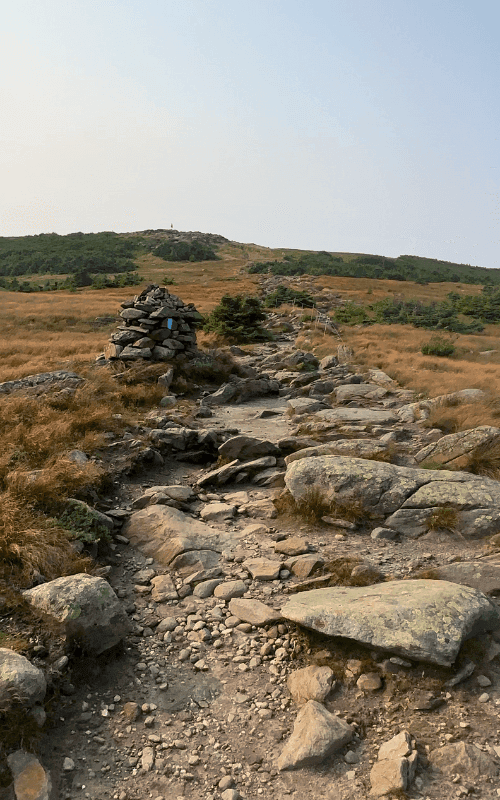
Once above the treeline, there’s just a rocky path that winds to the summit through high golden grass on both sides. I hadn’t seen this picture beforehand and it was honestly such a beautiful path to the summit. I took my time through this section. It was a mix of being exhausted after pushing myself on the way up and just enjoying it.
Also, as I arrived to the summit, I was also greeted with something I largely avoided for most of the run.
Mount Moosilauke Summit
As soon as I climbed to the summit, the wind quickly slapped me in the face. Literally.
I quickly reached to grab my hat as I felt it loosen on my head. Because of the way I came up, I knew there was wind, but I had avoided it because of the mountain. Now that I was on the summit, I realized just how strong it was.
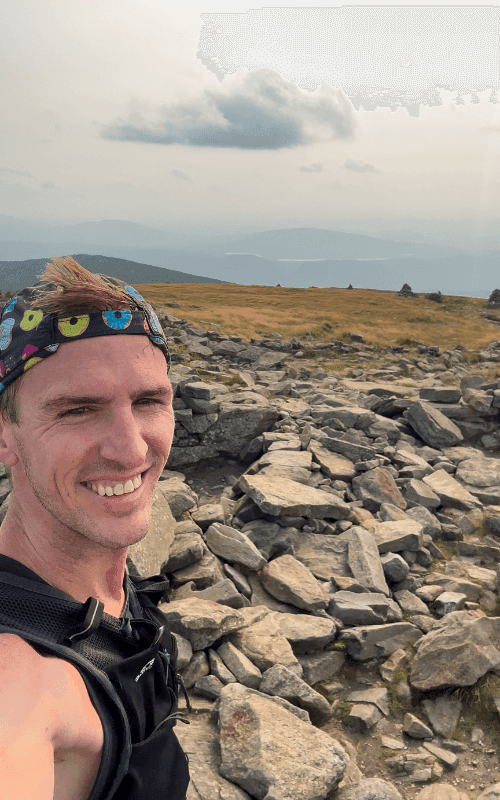
It also didn’t help a storm in the distance was pushing in, so I knew I was on limited time.
If you get the time to properly enjoy the summit, definitely do it. I wanted to stay longer because of just how scenic it was (even with the smoke), but my fiancee was coming up the opposite way to meet me and I knew I needed to get going. Plus, the dark clouds in the distance were a constant reminder.
South Peak Loop (Descent)
The descent is relatively uneventful.
You start out on the Carriage Road which, yes, used to be used by actual carriages. This part was fun, though I was running through puddles after some rain showers the previous days.
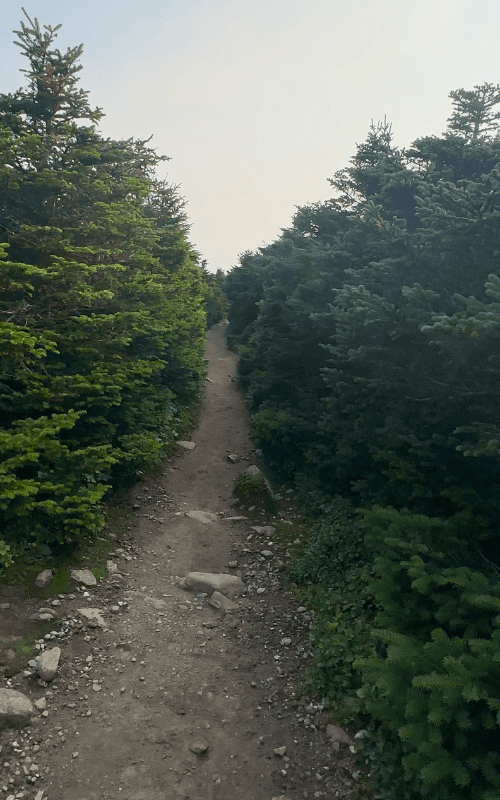
I still enjoyed the 7ish foot high trees (bushes?) on either side. Then it’s down following the Snapper Trail back to where you started.
I met with Kaitlyn, my fiancee, with around a mile or so left and jogged to the end with her.
Mount Moosilauke Trail Details
- Distance: 7.7 miles
- Elevation gain: 2,500+ feet
- Trail type: Loop
- Time: ~1.5-2.5 hours
Plan your next runcation without overthinking it
A free, runner-tested weekend kit with:
- A simple trip-planning framework
- A packing checklist that actually works
- A quick decision guide for short travel runs
What To Bring on the Mount Moosilauke Trail
From my understanding (and own experience), it can get windy on Mount Moosilauke. Plus, like everywhere in the Whites, the weather can change fast.
So it’s better to be prepared and have all the necessary gear, just in case.
With that said, here’s what I took with me:
- Base layer
- Top layer (depending on season)
- Rain jacket (if necesssary)
- Running shorts
- Brooks Cascadia shoes (great with grip)
- Salomon pack/Outdoor Vitals pack
- Injinji socks
- Two 500mL water bottles
- Snacks
- Bug spray
As always, remember to follow Leave No Trace and keep the trail as nice as you found it!
Best Time To Run Mount Moosilauke
You can run Mount Moosilauke year-round…technically.
But each season comes with a trade-off, and some are far better than others. And some will require you to have skis or snowshoes.
If I had to pick one season, it’d be fall (Late September-Mid October). The foliage is world-class, and running the ridge with a backdrop of reds, golds, and oranges would be something else.
| Season | Best For | Pros | Cons | Kyle’s Take |
|---|---|---|---|---|
| Fall (Late Sep–Mid Oct) | Good temps and colors are beautiful | Crisp air, great for running | Heavy crowds, parking fills fast | Best time to visit; just wake up early |
| Summer (Jun–Aug) | Longer days, more adventures | Snow-free trails, better weather windows | Heat, humidity, and bugs | Great for longer days. Just bring plenty of water. |
| Spring (Late Apr–Early Jun) | Quieter trails, cooler air | Fewer crowds, scenic | Mud, some snow, unpredictable weather | Good crowd/weather ratio — but expect slower sections |
| Winter (Nov–Apr) | No crowds, snow-covered | Unique and peaceful | Cold, ice, higher skill required | Great if you’re winter-ready; skip if not |
No matter what, be sure to check the weather forecast up until the time you hit the trail (and even on the trail). If you’re planning to climb above treeline, like on the Presidential Traverse, use websites like Mountain Forecast and the Mount Washington Observatory for reliable forecasts.
Great Trail Options Nearby
There are still so many trails in White Mountain National Forest that I have to run/write about, but here are a few I’ve covered so far that I highly recommend:
- Franconia Ridge Loop (8 miles)
- Mount Willard Trail (3 miles)
- Presidential Traverse (19 miles)
Grab Your National Park Running Kit
I’ve been lucky enough to lace up in some of the most beautiful public spaces in the US (and some abroad). And each one gave me something different — beatiful forest, killer climbs with better views, and sometimes the occasional letdown.
And that’s why I created a resource to help you visit them on your own (excluding the letdowns).
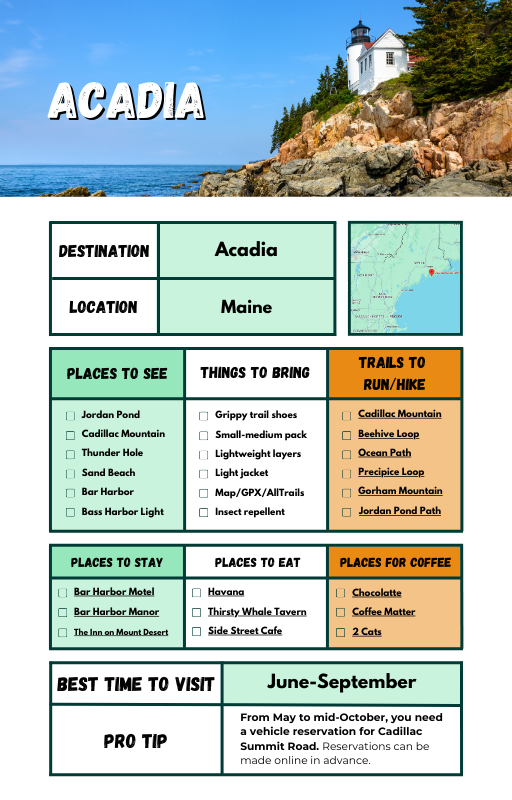
10+ mini itineraries, all runnable national parks, and in different parts of the US. From Zion to Acadia, I’ve got you covered. So, if you want it, grab it below!
Get free guides to 12 national parks — including trails, gear tips, and can’t-miss sights.
![8 Best National Parks for Trail Running [Runner-Tested]](https://www.thetravelrunner.com/wp-content/uploads/2024/01/wheeler-peak-mailerlite-300x169.png)


Leave a Reply