
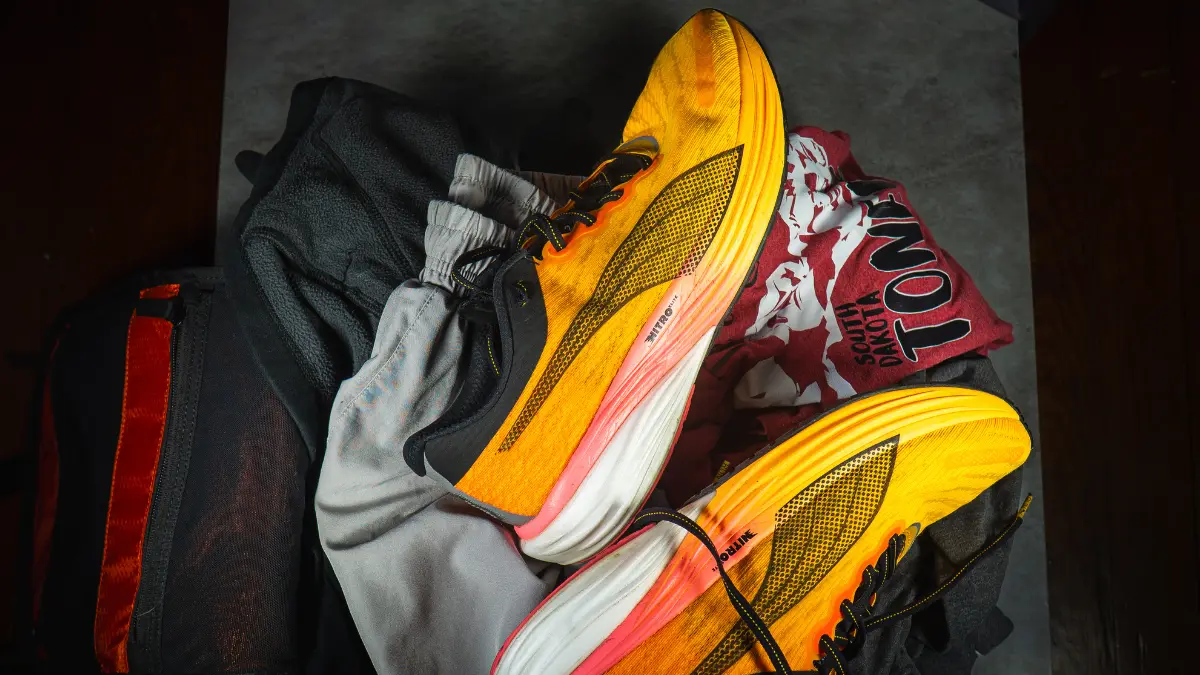
For runners, packing cubes are essential not just for space, but for hygiene. They compress bulky layers and quarantine sweaty post-run gear from clean clothing. While general travelers use them for organization, runners need them to manage odors and damp clothes.
When I Google “are packing cubes worth it,” you get a thousand articles telling you how to organize button-down shirts, roll your socks, or save millimeters in space.
And that’s all fine for a casual vacation or business trip, but it ignores the messy reality of what I do.
I run. A lot. And I run almost everywhere I travel. When I started running across the world — from humid trails in Thailand to road tripping for marathons in the US — I realized that “general travel” packing advice didn’t work for me. It didn’t factor in my different shoes or space for the running gear I needed to bring.
And the problem wasn’t only organizing my clothes; it was quarantining them.
Traveling for a race or planning a runcation comes with an entirely different set of variables: mud, sweat, and damp technical fabrics. If that combo does anything, it stinks. And there’s nothing worse than being the runner on the plane with the stinky suitcase.
So if you’ve ever played Tetris trying to make all your gear fit, this post is for you. Here’s why packing cubes are a non-negotiable in my running kit, and why you should stop looking at them as just “organizers” and start seeing them as “gear management.”
Why Packing Cubes Are Worth It for Runners
Packing cubes are one of my favorite travel items.
Not only do they help me condense a ton of clothing into a small bag (I’m a big fan of traveling light). But they also separate out all my…less desirable smelling clothing.
Here’s what I mean:
Benefit 1: Organization
When you’re packing for a race weekend or runcation, “suitcase explosion” is real. If you don’t fold your clothes for travel properly, then you pull out a pair of socks and a shirt and suddenly your clothing is spread everywhere.

For me, the most efficient way to use my packing cubes is by Category. I typically have three primary compression cubes:
- Tops: Running singlets, t-shirts, and casual shirts.
- Bottoms: Running shorts, tights, and pants.
- Essentials: Socks and underwear.
This system works because it mimics most people’s dressers at home. If I need a fresh shirt, I know exactly which block to grab. I don’t have to unzip five bags to find it.
To see more on what I pack, check out my marathon packing list for a full breakdown for road races. If you’re more of a trail runner, you’ll like my essential trail running gear.
If you want more runcation packing and planning advice, check out my Runcation Tips page for everything you need!
Stop guessing. Show up to your race without missing a step.

The free runcation kit gives you a proven planning framework, a runner’s packing checklist, and a quick-decision guide for finding safe routes anywhere — so trip planning stops feeling like a threat to your training.
Benefit 2: Compression
Let’s be honest here: running shoes take up an insane amount of your packing space.
If you’re traveling for a destination race, then you likely have your race shoes, a pair of walking/recovery shoe, and maybe another pair for a shakeout run. And don’t get me started if you have a formal event as that adds yet another pair. And that’s before you’ve even added your clothes.
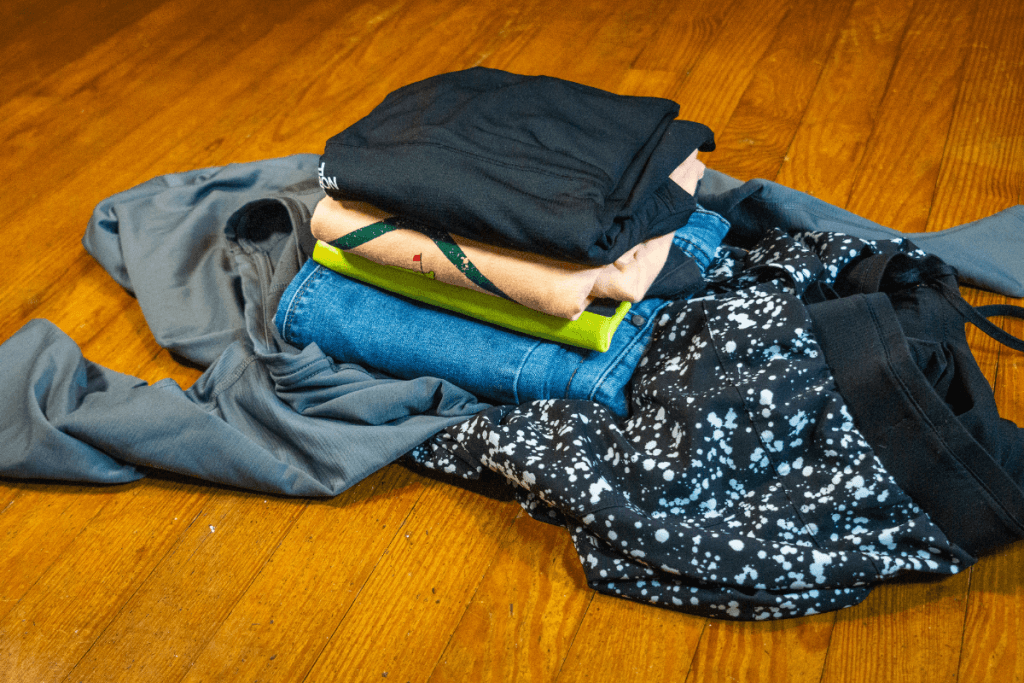

This is where compression becomes non-negotiable. Running gear — especially cold gear and warm ups — is full of air. And by compressing this softer clothing, I make room for any pair of travel running shoes I want to take.
Luckily, using my Gonex compression packing cubes, I squeeze every bit of air out of my clothes. This buys me that bit of space I need for larger items, like my shoes, foam roller, etc.
Benefit 3: The laundry cube (the runner’s best friend)
This is the feature that answers “are packing cubes worth it?” for runners with a definitive YES.
The problem with travel running is that by day two, you have wet, sweaty gear…and all it’s doing is taking up space and making everything smell horrible. You can’t put it back in with the clean stuff, and plastic bags trap moisture, leading to mildew.
My solution is the 4th cube.
I always pack one large, empty, mesh packing cube. This is my mobile laundry hamper.
- Day 1: It starts flat, empty, and packable.
- Day 2+: As I finish a run, the dirty kit goes into the mesh cube.
Because it’s mesh, the gear can breath and air out (preventing that puke-worthy smell), but it keeps the smelly chaos confined to one area. By the end of the trip (or week), my “Clean” cubes are empty/flat, and my “Laundry” cube is full and ready to take to the laundromat.
Comparison: Which cubes do you need?
To make this work, it’s best to have two different types of cubes. It’s not a “one-size-fits-all” solution.
| Feature | Compression Cubes | Mesh/Standard Cubes |
|---|---|---|
| My Use Case | The Clean Gear (Shirts, Pants, Socks) | The Laundry (Dirty running kit) |
| Why? | Squeeze air out to maximize space | Maximum airflow prevents mildew |
| The “Runner” Benefit | Pack more layers without upsizing luggage | Quarantine zone for locker room smells |
Best Packing Cubes for Runners I Recommend
I’ve tested tons of packing cube brands at this point and there are a few I’ve narrowed down as the best (in my opinion).
Here are the three brands/systems I use and recommend:
1. Gonex Compression Packing Cubes
Upgrade your travel kit with these Compression Packing Cubes, featuring durable rip-stop nylon and a space-saving double zipper design. Perfect for compressing puffy running gear and organizing essentials, ensuring you maximize every inch of your carry-on.
Buy NowI earn a commission if you make a purchase, at no additional cost to you.
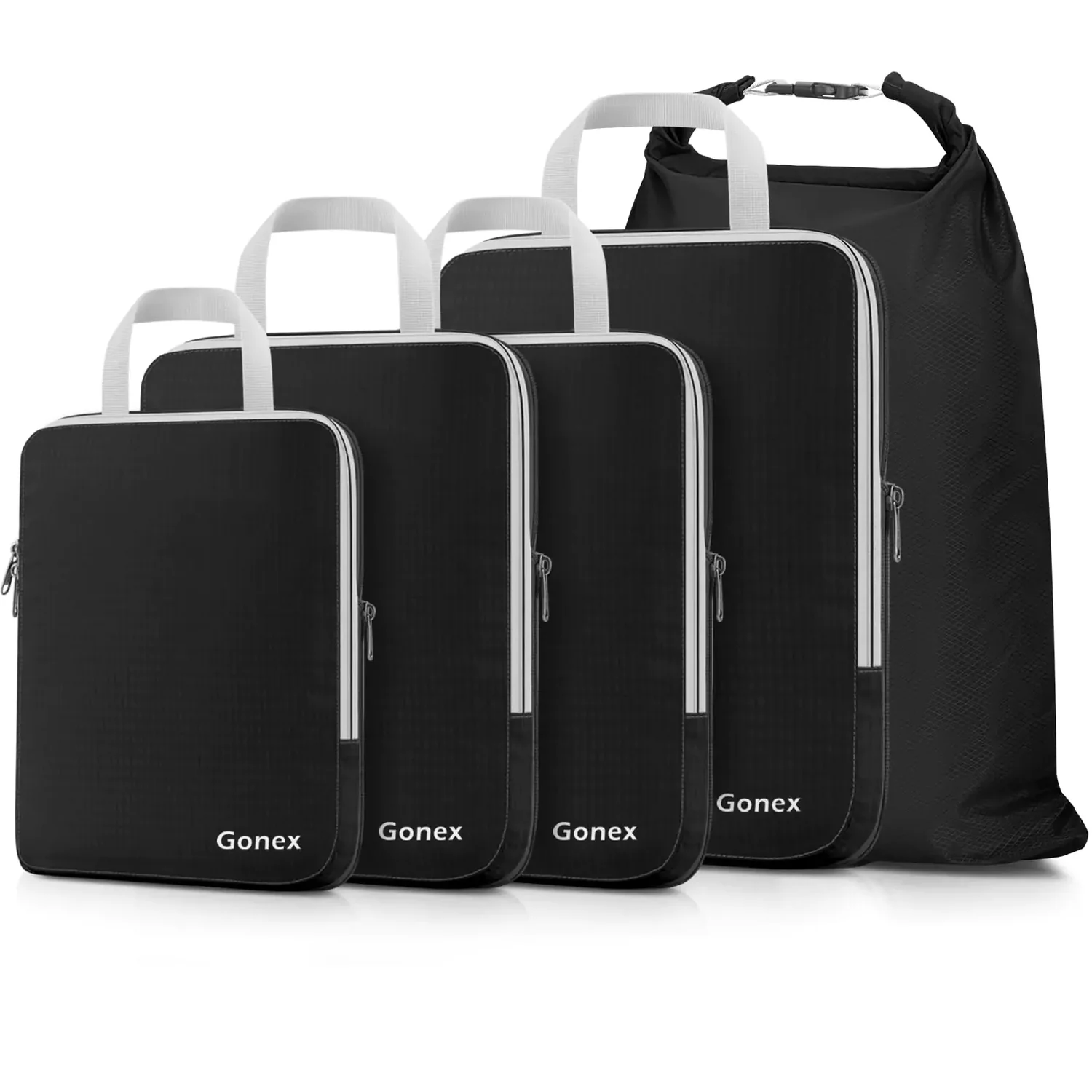
These are the cubes I’ve used for years, and the ones you’ll see me packing away most frequently. These came in clutch when I packed for my Pittsburgh Marathon as I scrambled to get my gear together. They strike the perfect balance between durability and price.
- Why I love them: They feature a double-zipper compression system that actually works. You can pack a puffy clothes, zip the compression zipper, and watch it shrink to almost nothing. The nylon is tough enough that I’ve never had a zipper bust, even when I’m aggressively overpacking.
- Best For: Your “Clean” kit. Use these to compress your shirts, shorts, and warm-up layers to make room for your shoes.
2. Olarhike Compression Mesh Packing Cubes
Maximize your packing efficiency with this 2-Piece Compression Set, crafted from high-density, tear-resistant polyester. Featuring a “mini vacuum sealer” double-zipper design, these cubes effortlessly compress bulky winter layers and race kits, ensuring you fit every essential without upsizing your carry-on.
Buy NowI earn a commission if you make a purchase, at no additional cost to you.
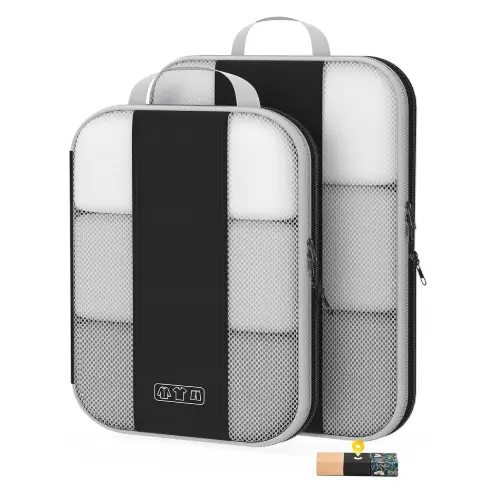
If you are a heavy sweater or you’re traveling for a race in a humid climate, these are a worthwhile upgrade for your “Dirty” cube.
- Why I Love Them: They’re made with an antimicrobial fabric to fight odor-causing bacteria. They’re incredibly lightweight but hold odors in well.
- Best For: Your post-race laundry. I use the cube specifically for the clothes I wear during the race to ensure the smell doesn’t bleed into my clean clothes.
The Verdict: Are Packing Cubes Essential?
At the end of the day, packing cubes aren’t just about keeping your shirts folded. For runners, They’re about logistics.
They’re the only tool that fits a foam roller, two pairs of shoes, and a week’s worth of running kit into a carry-on without it exploding. More importantly, they create a barrier between your clean clothes and dirty ones.
If you are just flying to a beach to sit by the pool, maybe you can skip them. But if you are traveling to run? They’re as essential as your race belt.



Leave a Reply