

There’s nothing worse than having shoes that don’t fit the terrain.
Whether it’s rocky paths, muddy trails or urban parks, the right pair of travel running shoes makes all the difference. I’ve been there. Lugging around shoes I never used. Providing nothing but extra weight in my bag and a sore back and shoulder.
I hated it.
These five shoes cover different kinds of trips, from long trail days to a few runs squeezed in between everything else. I’ll start with the pair I’d pack myself. Where I’ve worn an earlier version, I’ve kept that experience separate from what the current shoe offers.
Let’s find your perfect pair.
Disclosure: Just a heads-up, The Travel Runner earns a little commission if you buy through some links here, but it won’t cost you anything extra. Thanks for your support!
1. Altra Olympus 275 HiLo
Altra Olympus 275 HiLo
The Olympus 275 HiLo pairs 33 mm of EGO MAX cushioning with a roomy fit and Vibram Megagrip traction. In my testing, the lighter ride is the biggest upgrade for me, especially on long training runs and ultras.

I may earn a commission if you buy through this link, at no additional cost to you.
The HiLo would be my first choice for a trip with trail running involved. I get the cushioning, space up front, and grip I want without the weight feeling excessive.
The tradeoff is its size. It feels light on my feet, but the shoe still has a bulky profile. I can pack it easily enough in a checked bag. If you’re trying to squeeze everything into a small carry-on, though, the amount of room it takes up is worth considering.
It’s a zero-drop shoe, so give yourself time to get used to that if you normally run in something with a higher heel. You can read my full Olympus 275 HiLo review for how it’s held up.
Altra provided the HiLo pair I tested.
Pros
- Roomy toe box and cushioning I trust on long runs
- Vibram Megagrip traction
- Noticeably lighter feel than my original Olympus 275
Tradeoff
- Bulky profile takes up luggage space
- Zero drop is worth getting used to before a trip
2. Salomon Ultra Glide 4
Salomon Ultra Glide 4
A cushioned trail option with optiFOAM, a 6 mm drop and Contagrip rubber with 4 mm lugs.

I may earn a commission if you buy through this link, at no additional cost to you.
I still have a few pairs of the Ultra Glide 2 and wear them from time to time, although Altras get most of my runs now. The cushioning and versatility are what made those shoes useful for travel. The current model is the Ultra Glide 4; my running experience is with the 2.
On the 4, Salomon’s relieveSPHERE outsole geometry is designed to spread pressure underfoot, while Quicklace lets you adjust the laces with one pull. The appeal here is cushioning for those days when a short outing turns into a longer loop.
It still takes up space in a bag, and I wouldn’t choose a trail outsole for a trip made up mostly of road miles. For more cushioned options, see my long-distance trail shoe guide.
Pros
- Cushioning for longer trail outings
- Quicklace adjustment
- 6 mm drop for runners who don’t want zero drop
Tradeoff
- Cushioned profile still takes up room
- Trail-focused tread isn’t a substitute for a dedicated road shoe
3. Altra Lone Peak 9
Altra Lone Peak 9
A lower-stack, zero-drop trail shoe with a roomy Original FootShape fit, Altra EGO foam and MaxTrac rubber.

I may earn a commission if you buy through this link, at no additional cost to you.
If the HiLo looks like more shoe than you want to pack, the Lone Peak 9 is worth comparing. It has a 25 mm stack height rather than the HiLo’s 33 mm, with zero drop and Altra’s roomy Original FootShape fit. That gives you a lower platform without giving up the space up front that draws people to Altra.
The regular Lone Peak 9 uses Altra EGO cushioning, a StoneGuard layer for underfoot protection, and a MaxTrac outsole. Don’t confuse it with the Lone Peak 9+, which uses Vibram Megagrip.
For a mix of hiking and running, pay attention to the whole fit, not just the space around your toes. You still want your heel and midfoot held securely. My trail shoes for wide feet guide goes into that a little more. And if you normally run in a higher-drop shoe, get comfortable in zero drop before taking it on a trip.
Pros
- Roomy toe box
- 25 mm stack for runners who prefer less cushioning
- StoneGuard underfoot protection
Tradeoff
- Less cushioning for runners who prefer a plush ride
- Zero drop may take an adjustment period
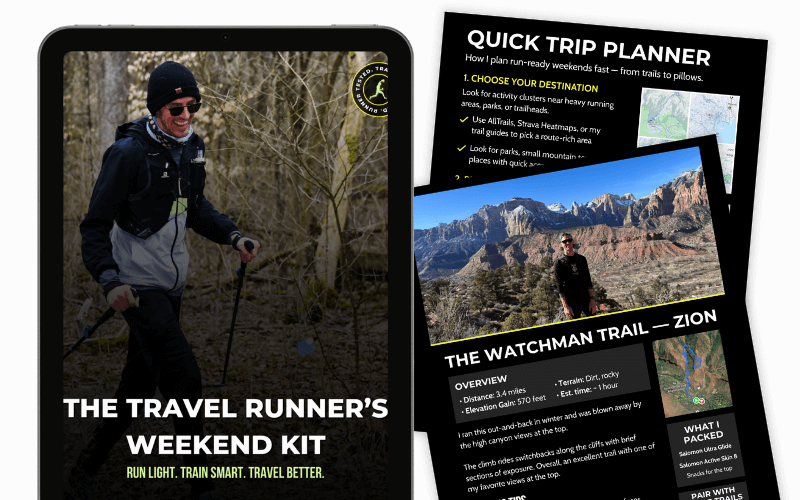
Get the free Weekend Kit
Plan your run, the stops around it, and what to pack. The free Weekend Kit includes a trip planner, packing checklist, and three example itineraries.
4. Brooks Cascadia 20
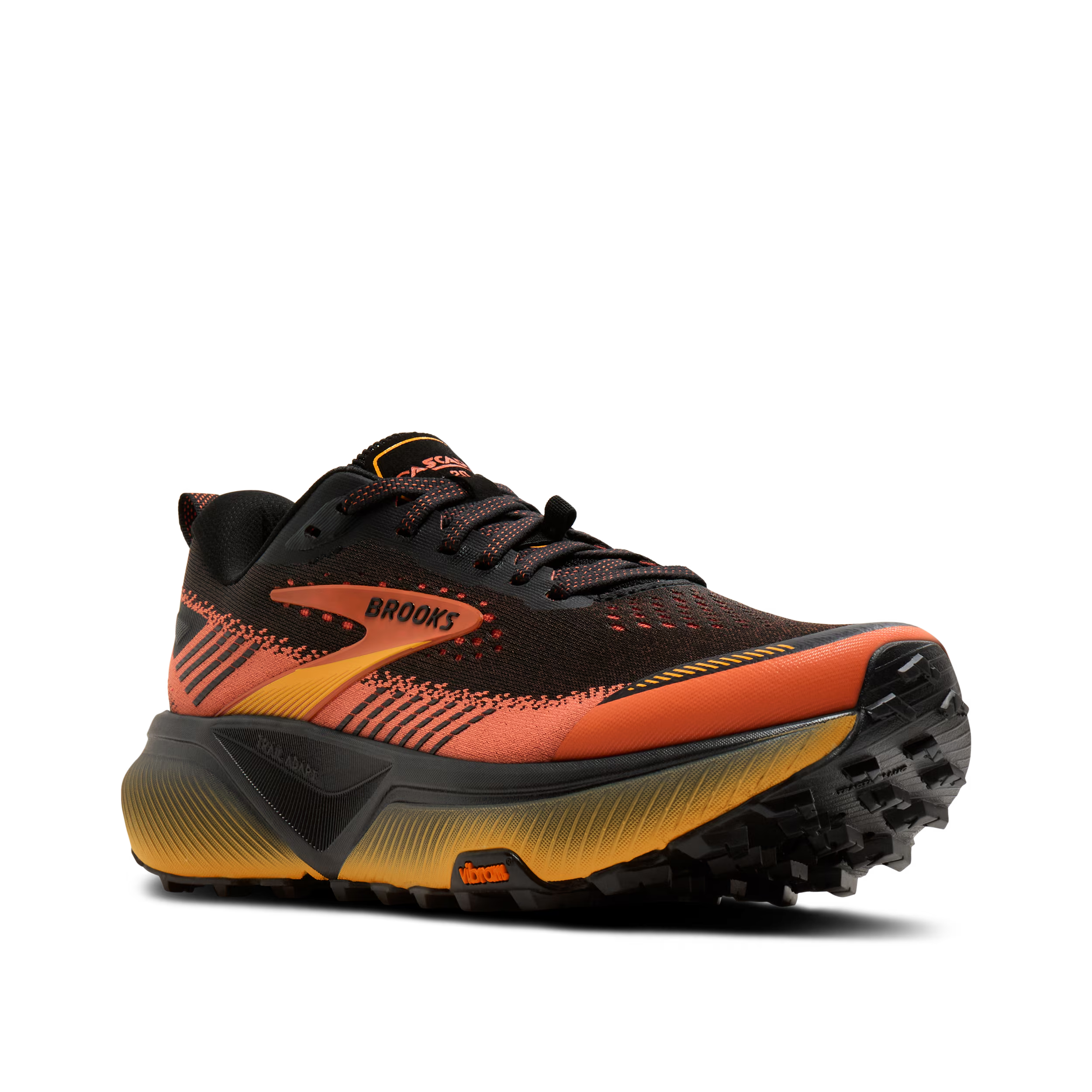
Brooks Cascadia 20
DNA FLASH v2 cushioning, a 6 mm drop and Vibram Megagrip rubber in a trail-focused design.
I may earn a commission if you buy through this link, at no additional cost to you.
I ran in the Cascadia 17. The 20 has a different setup, including DNA FLASH v2 cushioning and Vibram Megagrip rubber. Its TrailAdapt design combines a wide base of support with adaptable lugs for uneven ground.
The Cascadia’s appeal is protection on rougher trails. A toe cap and mudguard cover the front of the shoe, with 4 mm lugs underneath. If your itinerary includes rocky hikes and runs, that’s more useful than saving a little room in your suitcase.
For one easy run on a smooth path, though, this may be more shoe than you need. The extra protection comes with a more substantial build.
Pros
- Vibram Megagrip outsole
- Toe cap and mudguard coverage
- TrailAdapt design for uneven terrain
Tradeoff
- More substantial build than a stripped-down trail shoe
- Not a minimalist packing choice
5. Salomon Pulsar
Salomon Pulsar
optiFOAM² cushioning, a 6 mm drop and Contagrip rubber with 4 mm lugs for your trail-running plans.

I may earn a commission if you buy through this link, at no additional cost to you.
Available colors may differ from the pair shown.
The Salomon Pulsar makes sense for runnable trails and shorter outings. Along with its optiFOAM² cushioning and Contagrip outsole, it has Quicklace for a simple, one-pull adjustment.
Not every run on a trip starts directly on dirt. A route might take you from your accommodation, along a bit of pavement, and onto a trail. That’s the kind of mixed outing I have in mind for this one, rather than treating it as a dedicated road shoe.
Check the toe-box space before buying, especially if you prefer a wide fit. The cushioning and tread can suit your plans, but neither helps much if your toes feel cramped.
Pros
- optiFOAM² cushioning and a 6 mm drop
- Contagrip outsole with 4 mm lugs
- Quicklace adjustment
Tradeoff
- Check toe-box space carefully if you prefer an Altra-style fit
- Trail tread is a compromise if most of your mileage is on pavement
Which pair of trail running shoes will you choose?
I’m not a fan of huge lists with 25+ shoes, all comparing trail features and shoes that offer mostly the same thing.
Think about the trails you’ll actually run, how much cushioning you like, and whether you’re checking a bag or squeezing everything into a carry-on. The shoe that works for your trip matters more than picking the lightest one on paper.
Try them on before you commit, then get a few runs in before you leave. What pair do you usually take on trips? Let me know in the comments.
If you want more, be sure to check out my post on how to continue running while traveling to enjoy your trips even more.
Last, follow me on Instagram and YouTube for more travel running content!
Leave a Reply