
- Total Distance: ~5.7 miles (including road)
- Elevation Gain: ~1,500 feet
- Terrain: 60% runnable, 40% scrambling/hiking
- Best For: Runners who want variety, vertical training, and don’t mind crowds
- Skip If: You want smooth flow, solitude, or classic singletrack
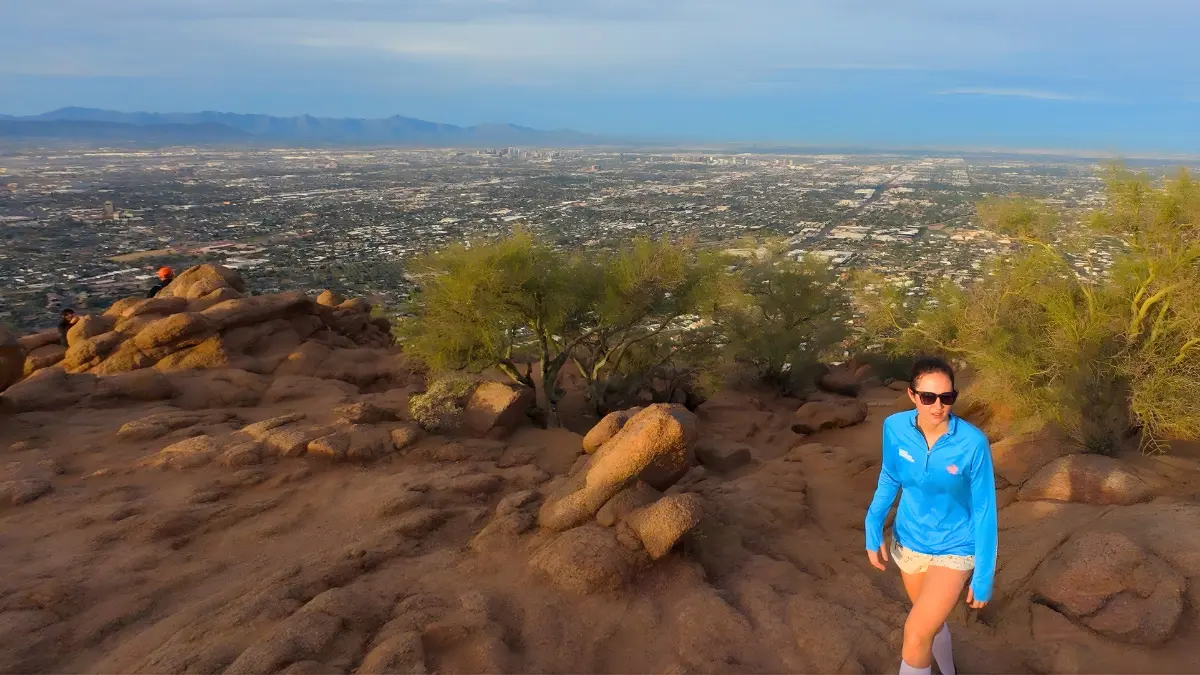
We climbed the final stretch of the Echo Canyon Trail to the summit of Camelback Mountain in Phoenix, the sun having risen about 15 minutes before. It was still lighting up the sky, though, as it fought to poke through some clouds in the distance.
I was slightly ahead, breathing slowly and calmly. Kaitlyn was behind me, breathing a bit faster and, well, less calm. We found a nice spot off to the side, snapped a selfie, then headed toward the slanted rock that led to the Cholla Trail. We didn’t stay at the summit long. It wasn’t why we were here. Instead, we set out with the intention of running all of Camelback Mountain, forming a loop by joining the Echo Canyon Trail and Cholla Trail, and ending at our car on N Invergordon Road.
The key word there is we had the “intention” of running it.
Camelback Mountain, however, and its giant rocks, uneven terrain, and steep climbs made it clear we wouldn’t be running as much as we thought.
It was a good goal, after all. To run one of the most iconic trails and mountains in the Phoenix area. But here’s the thing about “iconic” — it doesn’t always mean “best for running.” I’d already hiked the Echo Canyon Trail a few times. And I’d run the Cholla Trail before as well. So, why not bring them together as a loop? Run up one side, cross the summit, bomb down the other. Seemed like a good plan.
But is it worth running on your runcation? Or should you ultimately just hike it and save your run for another place in the Phoenix area?
Should You Run Camelback Mountain?
To be honest, and I know everyone hates this answer, but it honestly depends.
If you are looking for a pure run, then this isn’t the trail for you. It’s too steep, rocky, and technical for a consistent run (unless you’re Kilian Jornet, in which case it’s an easy run). But, if you want a fun, varied run with iconic views, then it’s definitely for you.
In my opinion, there are a few different people who’d love running Camelback Mountain. Runners who:
- Love variety
- Want elevation training
- Want a bit of sightseeing and running at the same time (I call it sightrunning)
The mix of scrambling, hiking, and running is enough to entertain anyone with ADHD (like myself). And the climbing (around 1,200 feet across a mile) is excellent to build glutes and thighs that will make even the thiccest IG models jealous. But, above all, it’s one of the best hikes in the Phoenix area, in my opinion. I know it gets crowded, but that’s because the view at the top is that good.
Now, on the opposite end. If you’re a runner who:
- Wants a 100% run
- Doesn’t want to deal with people
SKIP THIS TRAIL. It’s not for you. Period.
The terrain, elevation gain, and steepness will slow even the best runners. So if you’re hoping for a nice, flowy run where your Strava moving time perfectly matches the elapsed time, you’re gonna be disappointed. And if the terrain doesn’t slow you down, the crowds will. It’s a popular trail, so you’ll see others there at almost all times of day.
Overall, I’m glad I ran it. The variety was fun, the views are were incredible, and linking the two trails made it a nice loop. Would I run it every week if I lived in Phoenix? Probably not.
But as a bucket list run in Phoenix? For sure worth it.
Stop guessing. Show up to your race without missing a step.
The free runcation kit gives you a proven planning framework, a runner’s packing checklist, and a quick-decision guide for finding safe routes anywhere — so trip planning stops feeling like a threat to your training.
Running Camelback Mountain (Full Route Overview)
Here’s how the loop works:
- Park on North Invergordon Road (parallel parking along the street, right next to the Cholla Trail trailhead)
- Run north on Invergordon, then west on E McDonald Drive to warm up and reach the Echo Canyon Trailhead
- Climb Echo Canyon Trail (1.2 miles, technical scrambling, steep)
- Summit Camelback Mountain (2,706 feet — panoramic views)
- Descend via Cholla Trail (1.3 miles, still technical but slightly less crowded)
- Run back to your car on Invergordon Road
Now, you may wonder why start at Invergordon instead of the Echo Canyon parking lot. There are two reasons for this.
First, the Echo Canyon parking lot can be a nightmare. If you show up after 6:00 AM, you’re likely fighting for a spot. By 8:45 AM, it’s bumper-to-bumper chaos (even on N Invergordon Road). But, starting on Invergordon gives you more parking options early in the morning and far less stress at the start.
Second, the road miles from Invergordon to the Echo Canyon trailhead are a nice warm-up. You’re not going straight from your car into steep climbing and scrambling. You ease into it with a couple miles of pavement first.
Running the road and ascending the Echo Canyon Trail
The first three miles or so are on super flat pavement. This may sound like a boring way to start, but you run through Paradise Valley, which is definitely one of the more scenic areas in Phoenix, especially as the sun is coming up.
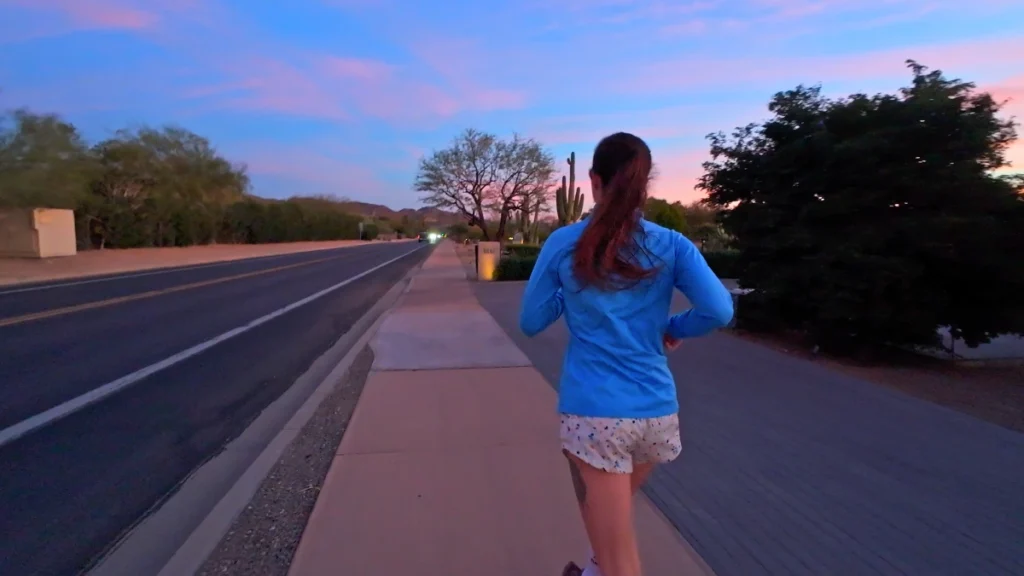
You follow N Invergordon for a bit, then head onto E Mcdonald before turning left at a roundabout into the Echo Canyon parking lot. There’s a sign pointing right to the parking lot, so you can’t really miss it.
The Echo Canyon Trail is the more popular of the two routes up Camelback, and you’ll understand why within the first quarter mile: it’s relentless.
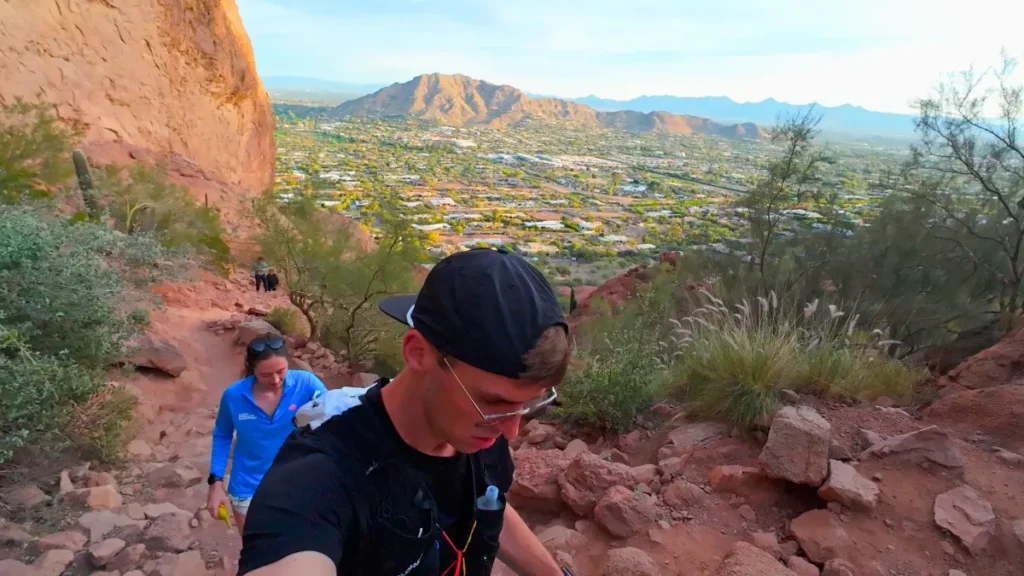
The trail starts off innocent enough. Wide, smooth, and gradually uphill. You can run this section no problem. But then the real climbing starts, and it doesn’t let up until you’re at the top. The first clue you’re about to be in for it is when you approach the rocky climb with a fence on one side and railing on the other. This is just the first taste of what’s to come.
This isn’t a trail “run” in the traditional sense. It’s more like a mix of power hiking, scrambling over boulders, and occasionally jogging short sections between the technical bits.
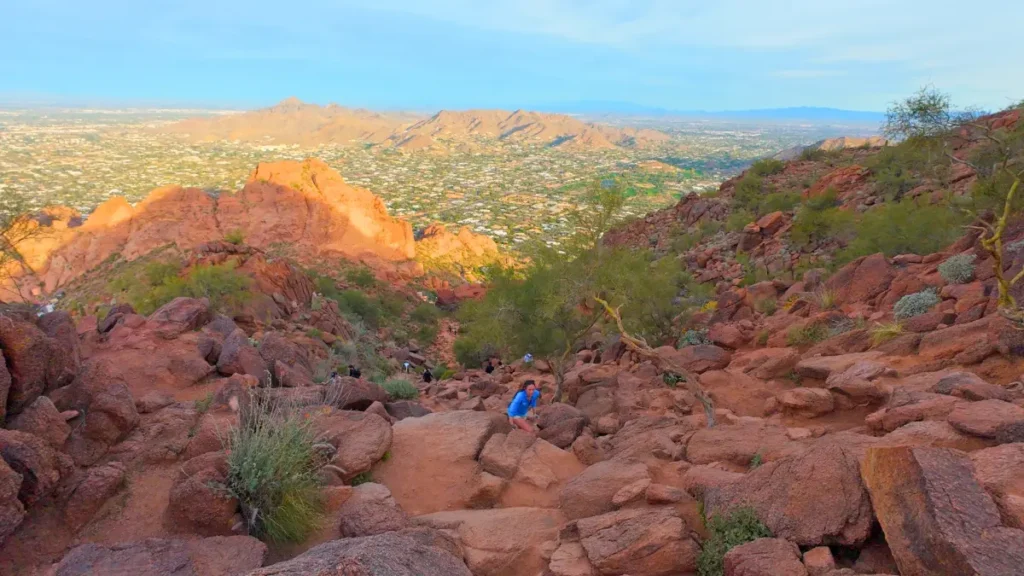
But that’s also what makes it interesting.
You’re constantly engaged. Picking lines. Scrambling up rock faces. Using your hands as much as your legs. It’s a full-body workout, and honestly, it’s kind of fun if you’re into that sort of thing.
The crowds, though? That’s the part that slows you down.
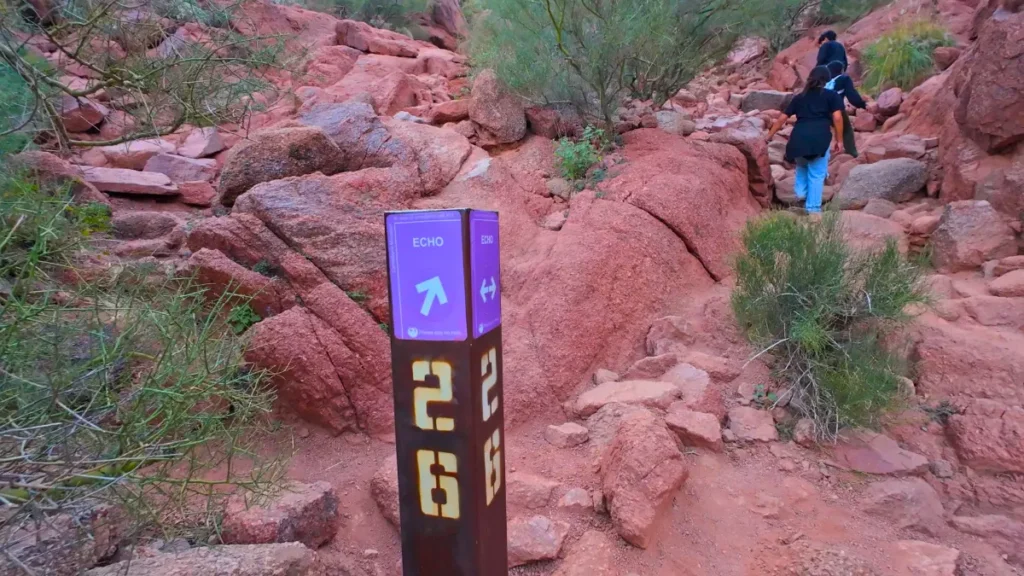
Even if you arrive early (which you should), you’ll pass hikers. Families. People taking Instagram photos at every switchback. So you’ll spend a fair amount of time stepping aside, saying “excuse me,” and waiting for groups to move.
That’s just the reality of running one of the busiest trails in Phoenix.
What I Liked About Echo Canyon:
- The climbing is challenging and rewarding
- Great warm-up for your upper body and core
- The views start early and just keep getting better
- Handrails and trail markers make it nearly impossible to get lost
What Frustrated Me:
- The crowds (even early in the morning)
- The constant stop-and-go
- Zero flow — you’re never in a rhythm for more than 30 seconds
The Camelback Mountain summit
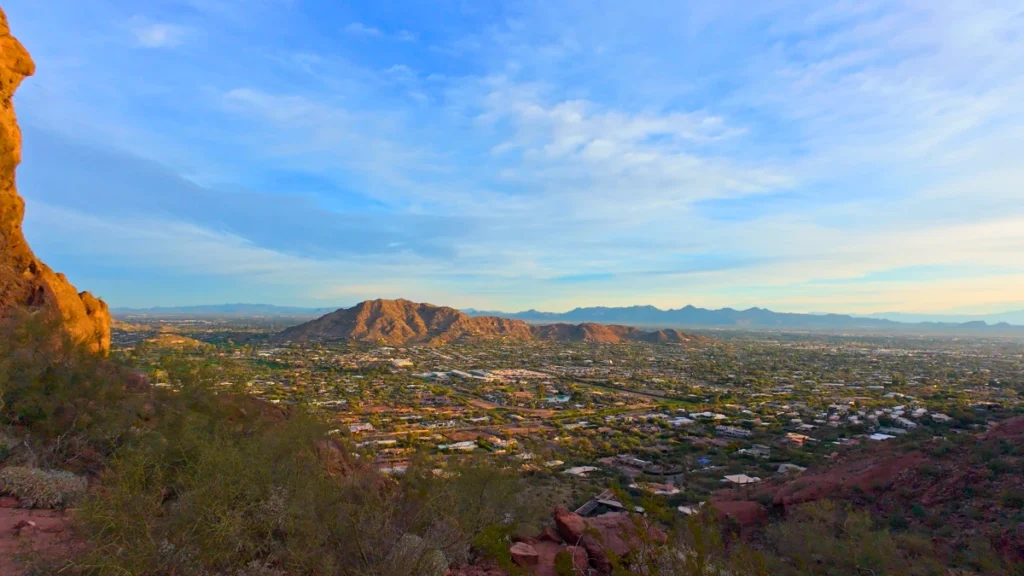
At the top, you get a 360-degree view of the Phoenix valley. And it’s good. One of my favorite views in the area.
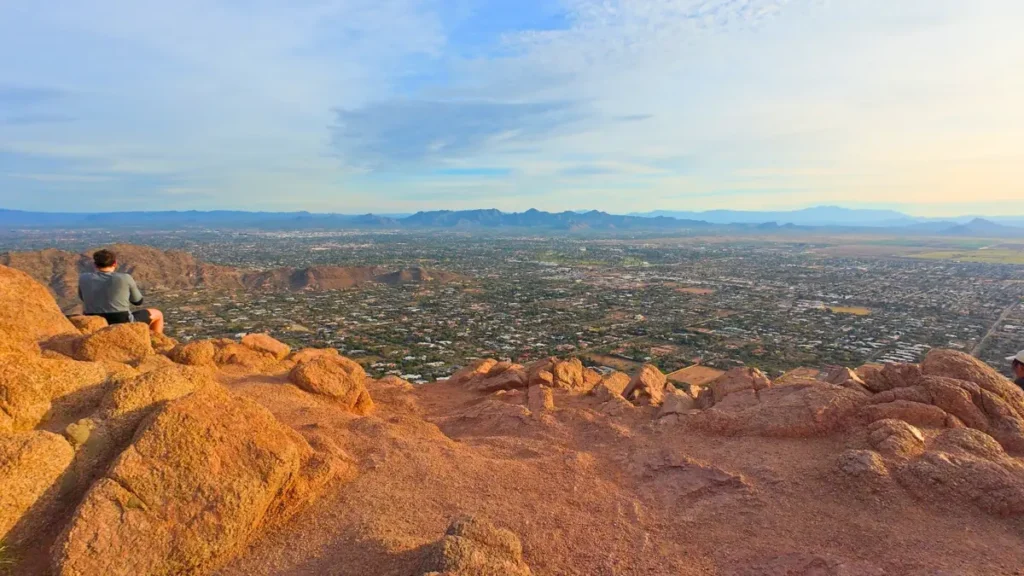
You can see the sprawl of the city in every direction, South Mountain in the distance, and on clear days, you can even make out the mountains beyond that. It’s one of those views that makes the climb worth it, even if the trail itself was frustrating at times.
There’s plenty of room at the summit to sit, catch your breath, and take some photos. When I went, it wasn’t too crowded yet (thanks to the early start), but I could see more people arriving from both Echo Canyon and Cholla every few minutes.
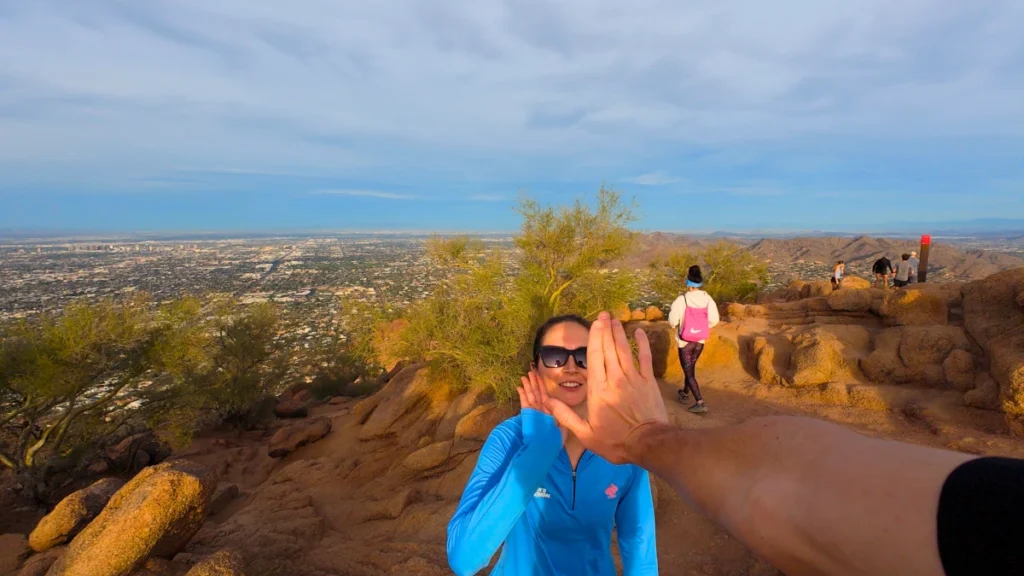
This is where the two trails meet, so you’ll have hikers coming from both directions. If you’re running the loop, you’ll cross over from Echo Canyon to Cholla here.
Take a few minutes. Enjoy the view. Drink some water. Because the descent is still technical, and you’ll want to be focused for it.
Descending the Cholla Trail
The Cholla Trail is the lesser-known of the two routes, which is ironic because I actually think it’s the better trail for running.
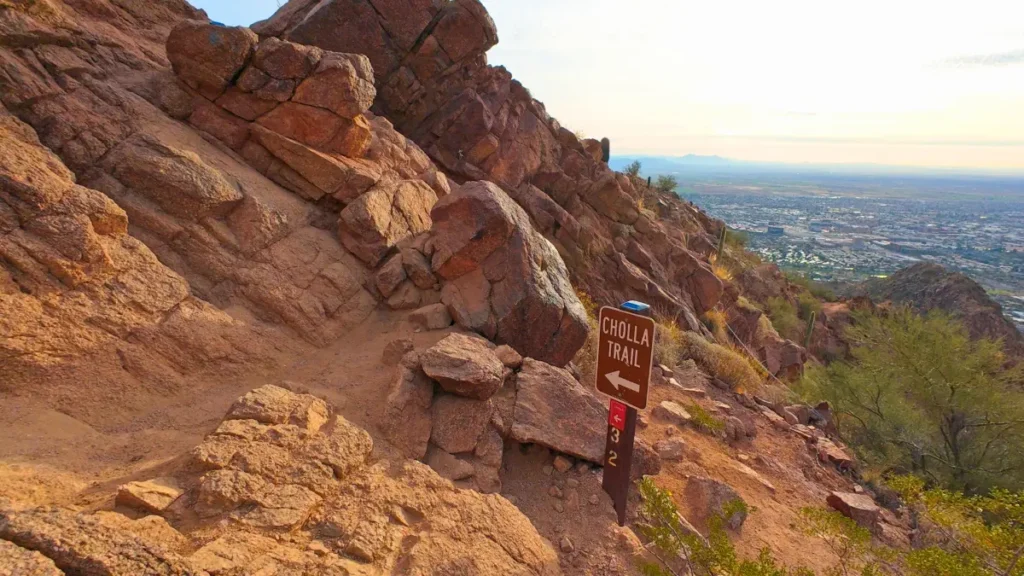
It’s still technical, don’t get me wrong. The top section has some sketchy scrambling, loose rocks, and a few steep drop-offs that’ll make you slow down if you’re not comfortable with exposure. But overall, it feels a bit less chaotic than Echo Canyon.
Part of that is the crowds. Cholla gets traffic, but not nearly as much as Echo Canyon. You’ll still pass people, but you’re not playing human Frogger the entire way down like you are on the ascent.
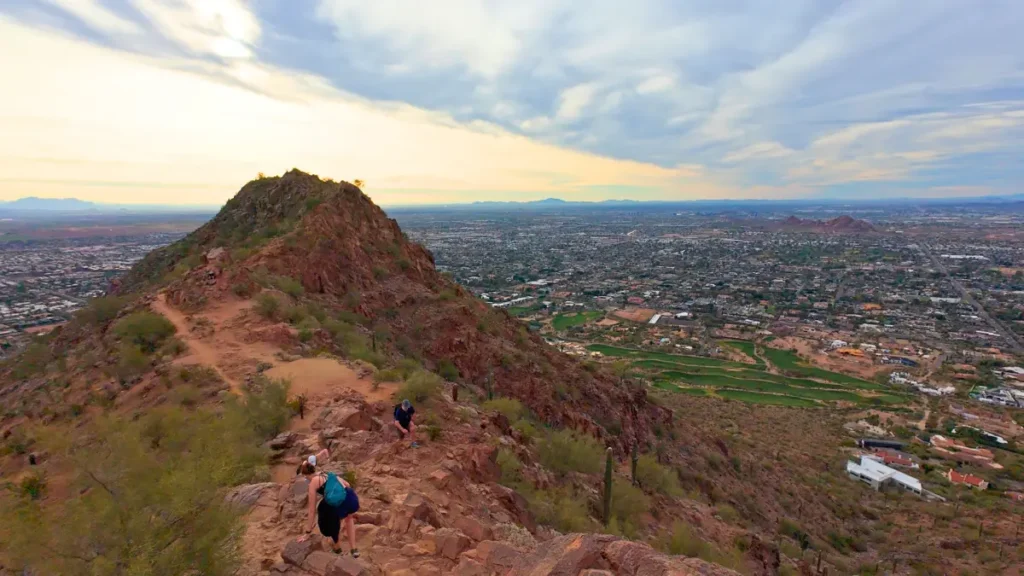
The trail itself is similar to Echo Canyon in terms of difficulty.
Some sections are runnable. Others require careful footing and a bit of scrambling. Near the top, there are a few spots with unstable boulders and steep terrain that had me slowing to a walk. But once you drop below the upper third of the trail, it opens up and you can actually run for longer stretches.
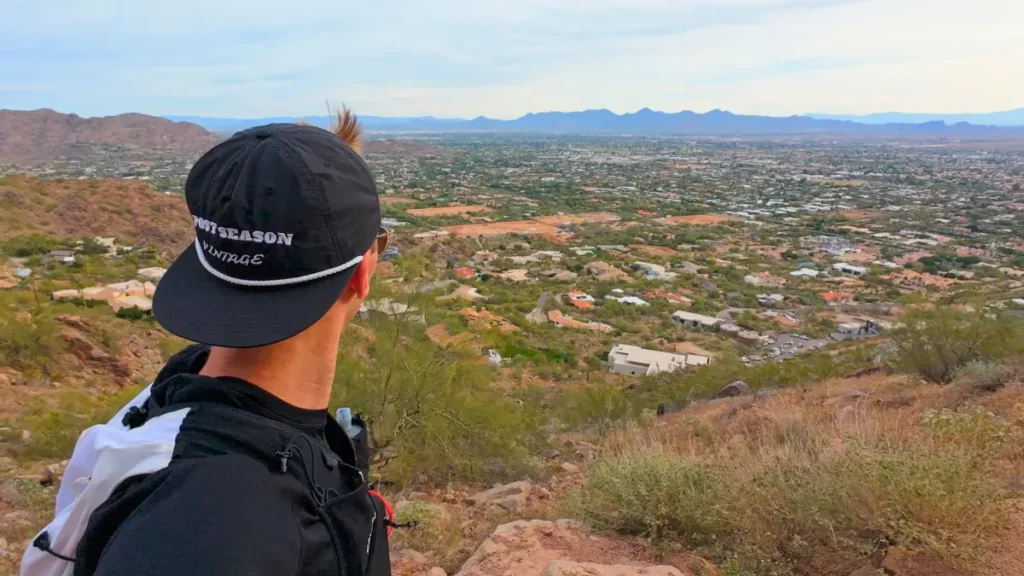
I enjoyed this descent way more than I expected. The views to the side are just as good as Echo Canyon, the footing is manageable if you pay attention, and the gradient is just steep enough to let gravity do the work without feeling out of control.
By the time you hit the lower section, the trail mellows out and you can really open up your stride. That’s when it starts to feel like an actual trail run instead of a rock scramble.
Sadly, this is just as the trail is ending and you’re reaching the Cholla trailhead.
What I Liked About Cholla:
- Fewer crowds than Echo Canyon
- Better flow once you’re past the technical top section
- Slightly more runnable overall
- Great views without the chaos
What to Watch Out For:
- The top section is sketchy — loose rocks and exposure
- Trail markers are clear, but footing can be tricky
- Still crowded enough that you’ll be pulling off for hikers
Camelback Mountain alternatives to check out
There are two other places I’d recommend if you want an alternative to the Camelback Mountain chaos.
Not because they’re necessarily the best. But because they’re accessible and have great trails while still within Phoenix for the most part.
The first is South Mountain. It’s in the southwest corner of Phoenix and has a decent amount of trail options. This is typically my choice when I’m visiting because it has so many connecting trails. I can do a short loop for some easy miles, or I can link up a few of the trails with elevation to build a bit better. All depends what I’m looking for. If you want more info on how to find more routes, then check out my guide to finding running routes in any city.
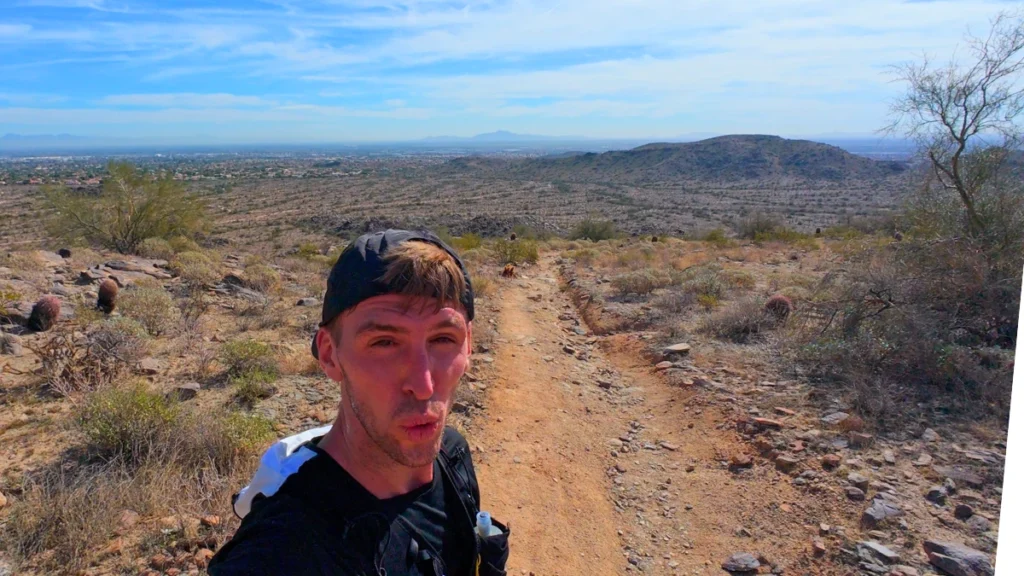
Papago Park is another, closer option. You can actually see it from Camelback once you near the top. This is a bit flatter but still has a few trails worth checking out on a longer trip to the area. It may seem a bit crowded when you first park, but once you get a few miles into your run the crowds drop away and you’ll mostly be by yourself.
Logistics for Running Camelback Mountain
The biggest tip and thing I can’t stress enough: Get. There. Early.
I’d recommend arriving by 6:00-6:15 am depending on sunrise. I started around 6:45 AM and the parking on Invergordon Road was fine — plenty of spots available. But by the time I finished, it was bumper-to-bumper with people waiting for spots to open up. Echo Canyon trailhead? Even worse.
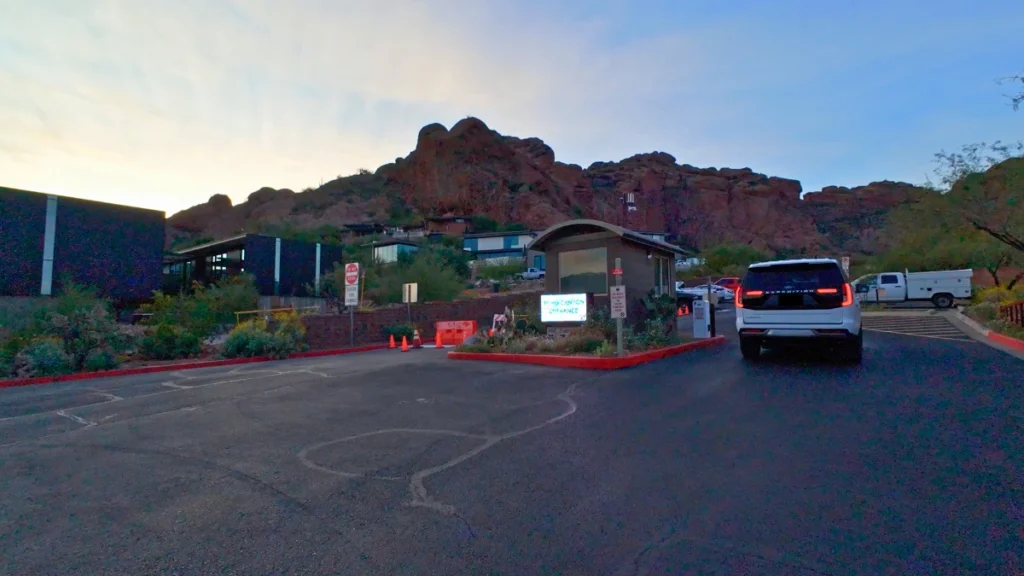
So, if you want to avoid the parking chaos and reach the summit around sunrise, aim for 45 minutes or so (depending on your speed) before sunrise. Just bring a headlamp for the early dark sections.
It took me around two hours with stops, enjoying the views, getting videos/photos, etc. But this depends on how long you want to enjoy it.
If you want to get the run in and be done, aim for around an hour and a half. If you want to enjoy it more, then budget longer. Kaitlyn and I took our time and enjoyed it as we had nothing else planned for the day but our flight home in the afternoon.
Also, bring more water than you think you need, especially if it’s during the summer. Arizona heat is no joke, even in the morning. And you don’t want to be one of those people the locals are talking about that had to get a helicopter to get them off the trail. I brought around 1-1.5 liters and went through most of it. There are water fountains at both trailheads as well.
Last is all about safety and courtesy.
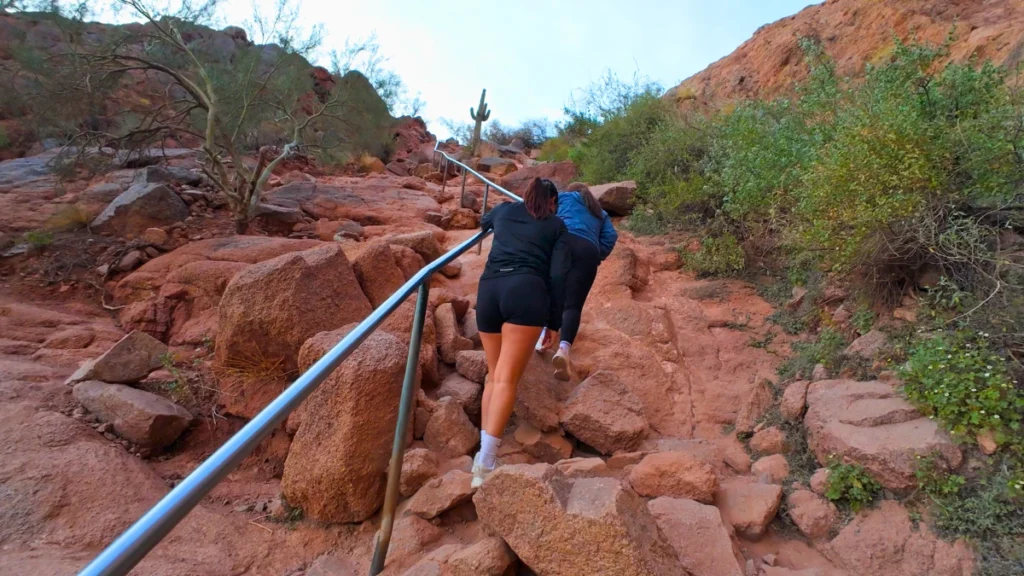
Don’t rush the technical sections. I know the temptation is to push through and keep moving, but the scrambling sections are legit. Loose rocks, steep drop-offs, and sketchy footing. Take your time. A rolled ankle isn’t worth it. Again, you don’t want to be one of those people the locals are talking about that had to get a helicopter to get off the trail. Just saying it twice for emphasis.
And be courteous to other trail users. There will be lots of hikers. Say “excuse me,” or “On your left,” wait for safe spots to pass, and remember that uphill traffic technically has the right of way. Not everyone follows that rule, but let’s all do our best to start, sound good?
Wrapping Up
Camelback is iconic for a reason. The views are incredible, the climbing is legit, and running the Echo Canyon to Cholla loop gives you the full Phoenix experience in one go.
So, if you decide to do it, get there early, bring plenty of water, and don’t expect it to feel like a “normal” trail run.
Because it’s not. And honestly, that’s kind of the point.
Hope you all enjoyed this trail review! Before you heading out though, be sure you’re using the right trail apps to navigate the trail. And drop your thoughts in the comments, or the next Phoenix trail I should check out and review.

![8 Best National Parks for Trail Running [Runner-Tested]](https://www.thetravelrunner.com/wp-content/uploads/2024/01/wheeler-peak-mailerlite-300x169.png)

Leave a Reply