
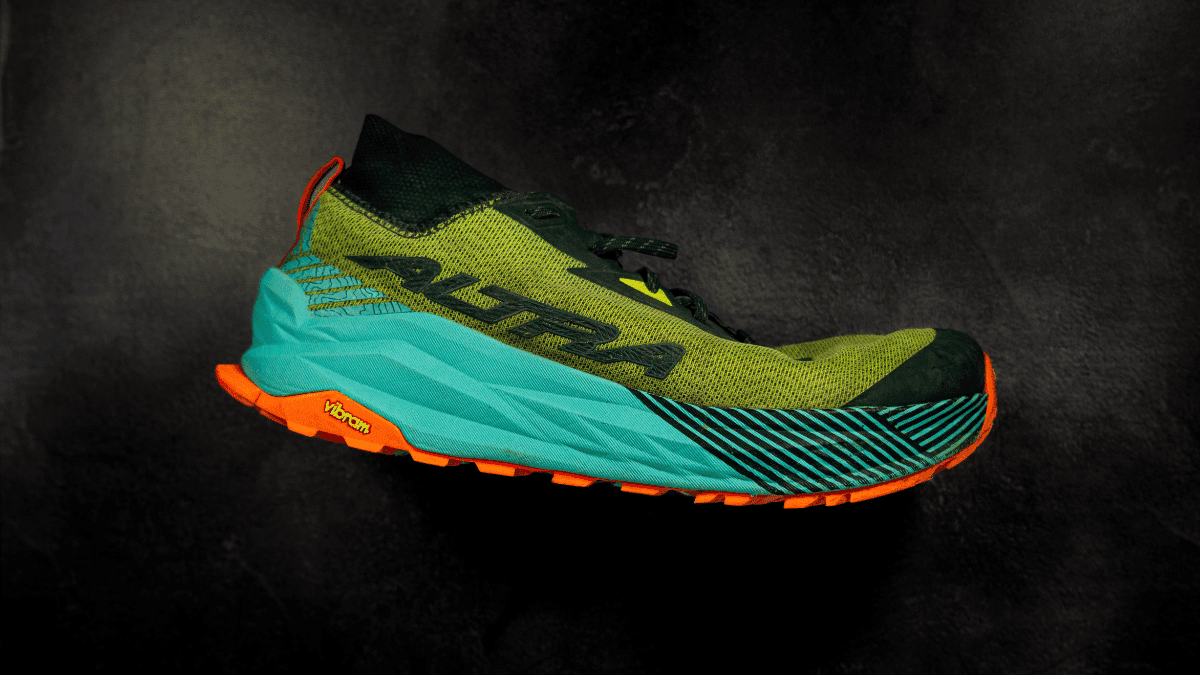
It was Day 3 of the Ultra Trail Forillon when the Altra Olympus 275 converted me.
I was standing at the start line, third consecutive morning, legs carrying two stages of trail, and I did what I always do before a run: bounced on my heels a few times to wake everything up.
Here’s the thing about running in a shoe for back-to-back (and beyond) long efforts: most of them start to feel dead. Not broken-down exactly, just gone. Like you’re putting your feet into an old bag of mashed potatoes. The cushion is technically still there, but it’s not doing anything for you anymore.
The Olympus 275 still had bounce on Day 3. Not just held-together bounce. The same bounce I felt on Day 1. After back-to-back stages on rocky singletrack and wet trail, it still felt ready to go. Probably more ready than I was. I’d wanted to try Altra for years. I’m glad the Olympus 275 was the pair that finally got me there.
Now with 300+ miles in them across multiple races, here’s what I actually think.
Disclosure: Altra sent these at no cost after I asked to review them. No payment. Opinions are mine.
Table of Contents
Altra Olympus 275 Overview
- Buy if: you want max cushion + legit grip for long trail days and you’re okay with a tall stack.
- Skip if: you want ground feel, hate tall shoes, or don’t want to ease into zero-drop.
- Best thing: Vibram grip = less second-guessing on technical trails.
- Big tradeoff: the height + zero-drop combo feels like a lot at first.
- Platform: 0 mm drop (zero-drop)
- Stack: ~33 mm (max-cushion class)
- Outsole: Vibram Megagrip, lugs ~3.5 mm
- Upper: MATRYX® one-piece with built-in scree sleeve
- Listed men’s weight: ~11.9 oz
- Price at launch: $195 USD
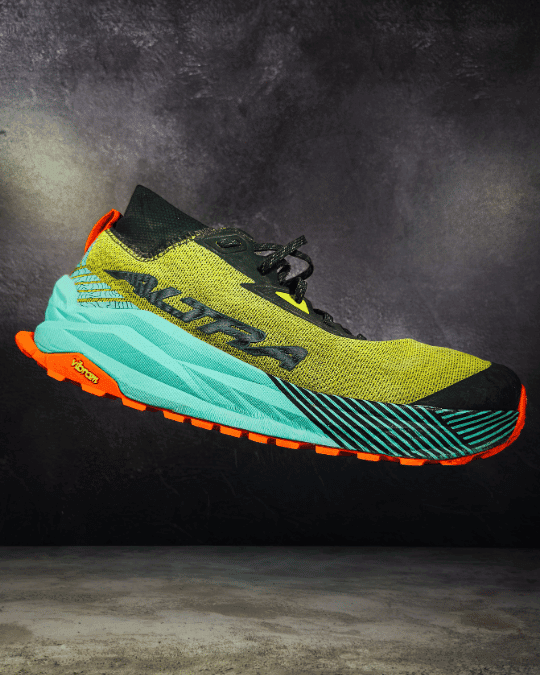
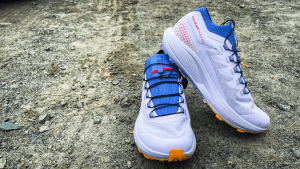
The Altra Olympus 275 gets your attention right away, especially in the Nickelodeon colorway (at least that’s what I’m calling it).
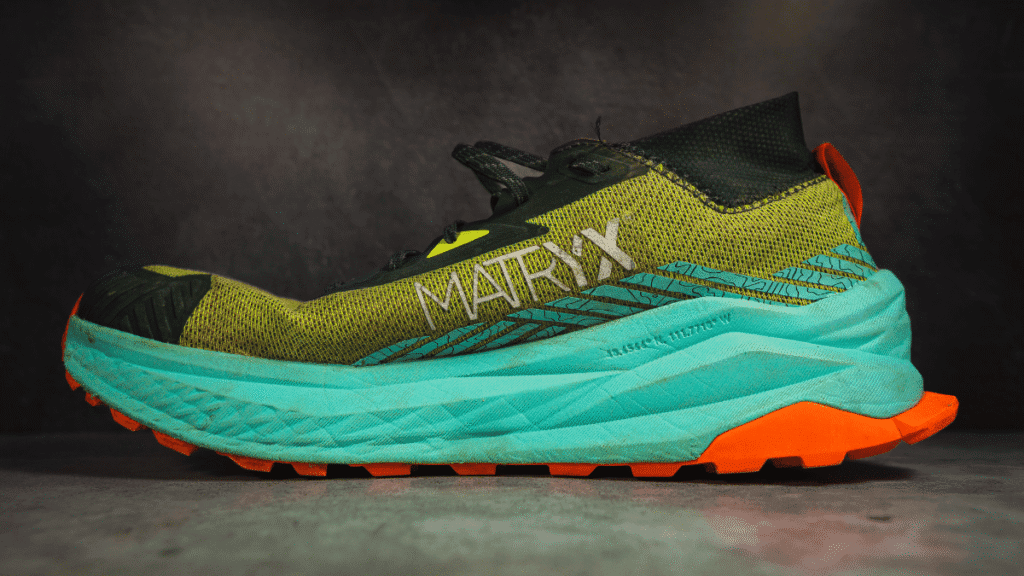
It comes in two colorways for men: the green, blue, black, and reddish-orange option I have, and a taupe/black. Women’s options include coral/black and black/lime green.
The stack height is the first thing you notice. At 33mm, the cushion platform is hard to miss, especially compared to other Altra shoes. But despite the height, Altra sticks to its signature zero-drop platform and FootShape toe box that the brand is known for.
The upper is built with MATRYX, a material that’s more rip- and tear-resistant than standard mesh, which adds some durability against rocks, roots, and general trail abuse. It also includes a built-in scree sleeve at the ankle to help keep debris out on the trail.
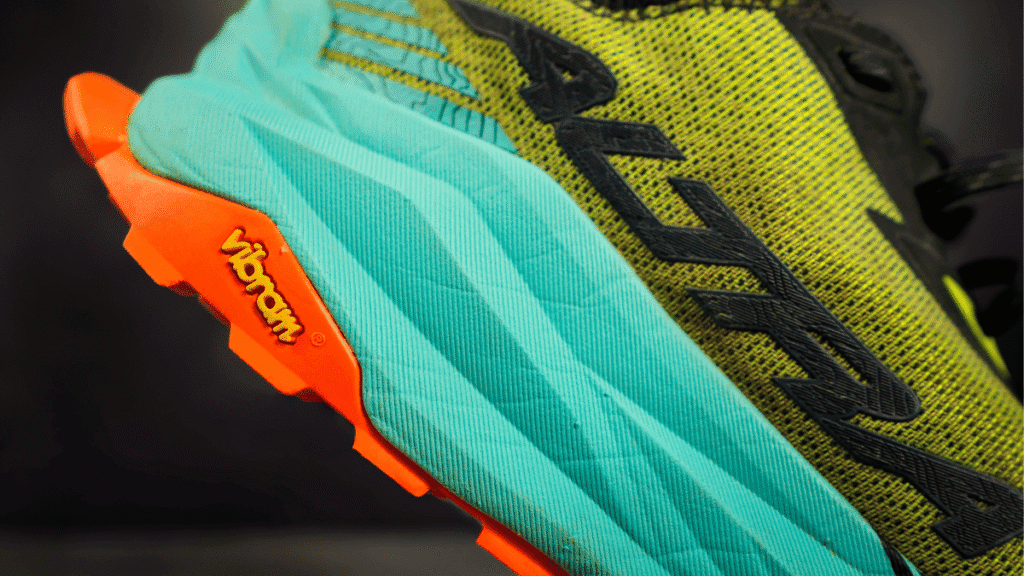
Underneath, you’ve got a Vibram Megagrip outsole with approximately 3.5mm lugs designed for traction across varied terrain.
Altra Olympus 275
The Altra Olympus 275 is a max-cushion trail shoe built for long days in the mountains. With a 33 mm stack, Vibram® Megagrip outsole, and Altra’s signature FootShape fit, it delivers plush comfort without sacrificing confidence on varied terrain.
Buy NowI earn a commission if you make a purchase, at no additional cost to you.
What I Like About The Olympus 275 👍
(If you skipped here: I’ve put 300+ miles on these across technical trail and long efforts — this is the short version.)
1. Grip that removes second-guessing
Most of the shoes I’ve run in, the grip has been okay at best. And coming from Salomon, I know their shoes have never been known for great grip, especially on wet rock and roots.
Once I put the Olympus 275 on and hit those same kinds of surfaces, everything changed.
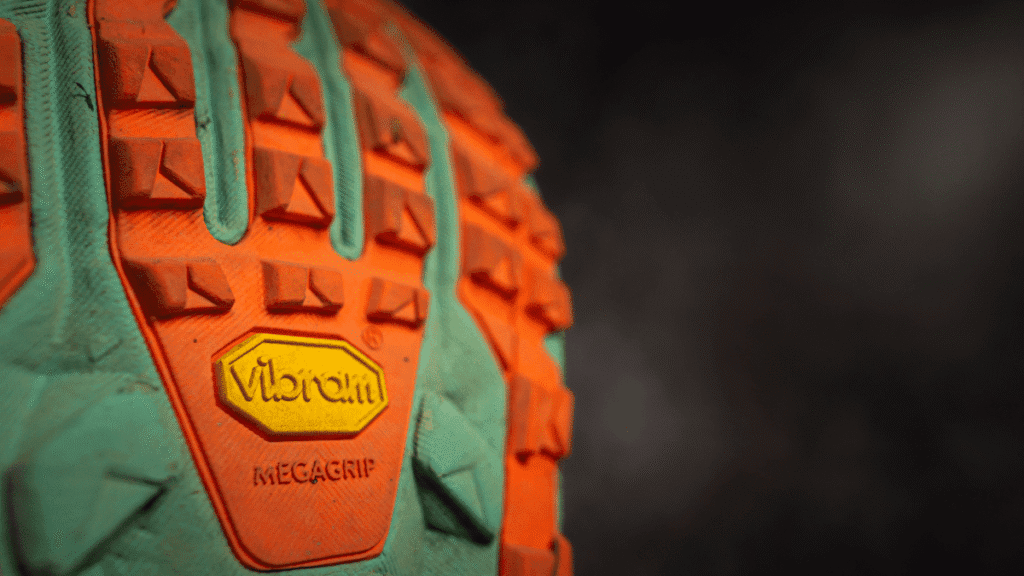
I’ve put the Vibram Megagrip outsole through its paces across 300+ miles of wet trail, mud, roots, rocky singletrack, and desert hardpack. It has performed on every single terrain I’ve thrown at it. At this point, I honestly don’t know if I can go back to a shoe without it.
The reason is simple: it removes the second-guessing. There’s nothing worse than being in a shoe where you don’t know how it’s going to react on unstable terrain, where you feel nervous with every step. With the Olympus 275, I’m not even thinking about my footing, because I know the grip is going to hold as long as I’m placing my foot in the right spot.
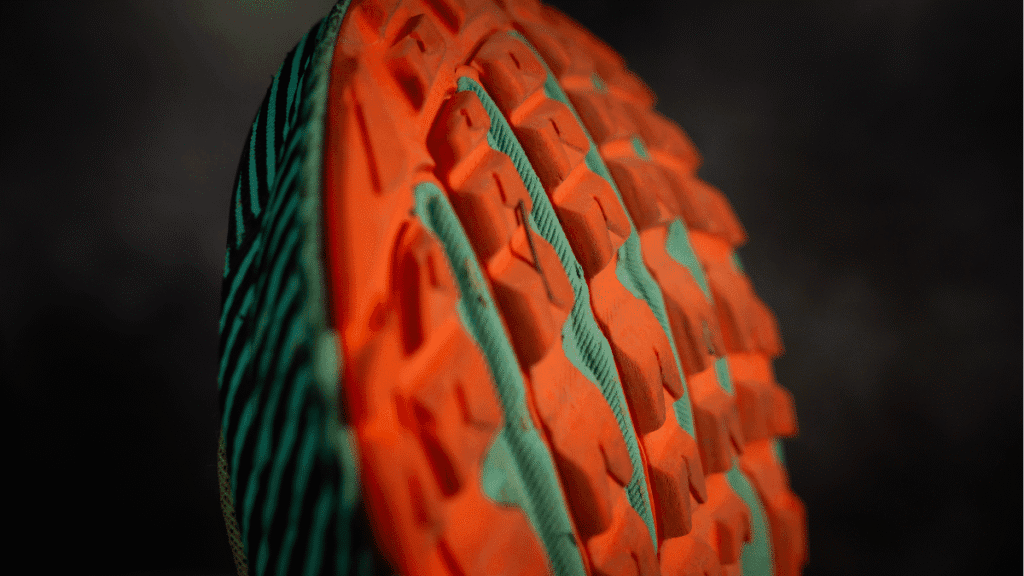
The clearest example of this came at the New River Gorge 50K. There was a steep, slick downhill section where a group of hikers had actually stopped and were waiting to watch us descend before they tried it themselves. You could see slide marks from earlier runners in the dirt.
I stepped onto it and my foot didn’t move. I basically just walked down it casually with no issues while the hikers watched. That’s what this outsole does.
2. Comfort that holds up deep into long days
Most shoes I’ve run in over consecutive long efforts start to feel flat. The cushion compacts down from repeated pounding, the bounce disappears, and you just feel it underfoot. That’s a natural thing that happens with a lot of shoes.
With the Olympus 275, that didn’t happen.

Whether I was doing back-to-back long runs or running longer races, the cushion held. The bounce that it gives you is still there, even after the kind of mileage and pounding that normally causes shoes to flatten out and lose their pop until you give them a rest.
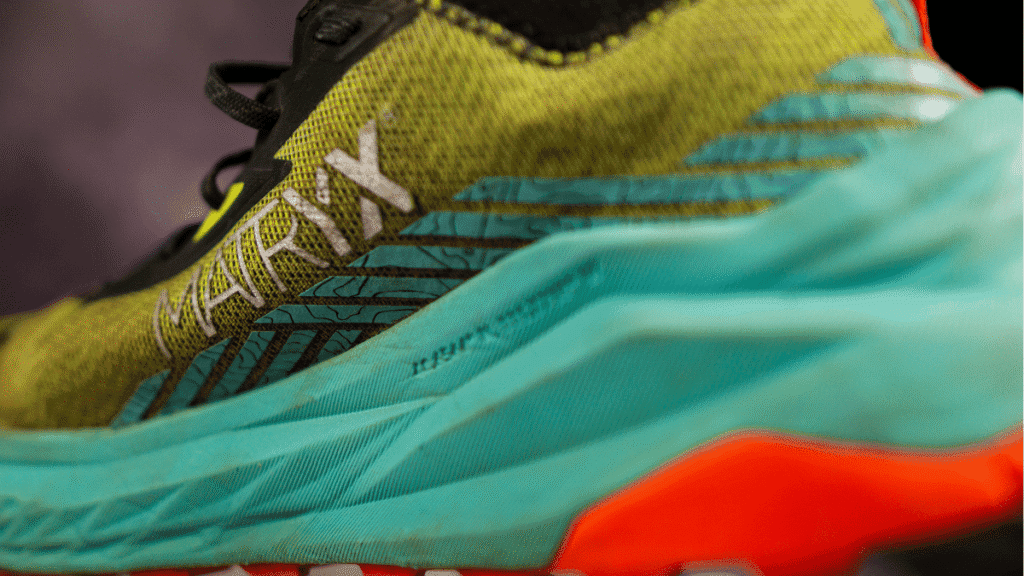
I’m over 300 miles in these now, and that’s continued to hold true. I’m still reaching for the Olympus 275 when I’m running a 50K or a long training run, even though they’re starting to show some wear and tear on the outside. The cushion has held up, and I’m happy to report it does have some real longevity to it.
3. The fit: Roomy up front, secure in the heel
One thing I’d always heard about Altra was the FootShape toe box and how much it changes how your feet can splay out. I was eager to test it, and I get the hype now.
I’ve always been able to run in narrower shoes. I know a lot of people have complaints about Salomon’s narrow fit, but my feet have typically been fine in them. Even still, the amount of room the Olympus 275 gives you is on another level. I can completely splay all my toes and still probably not be hitting the edges of the shoe.
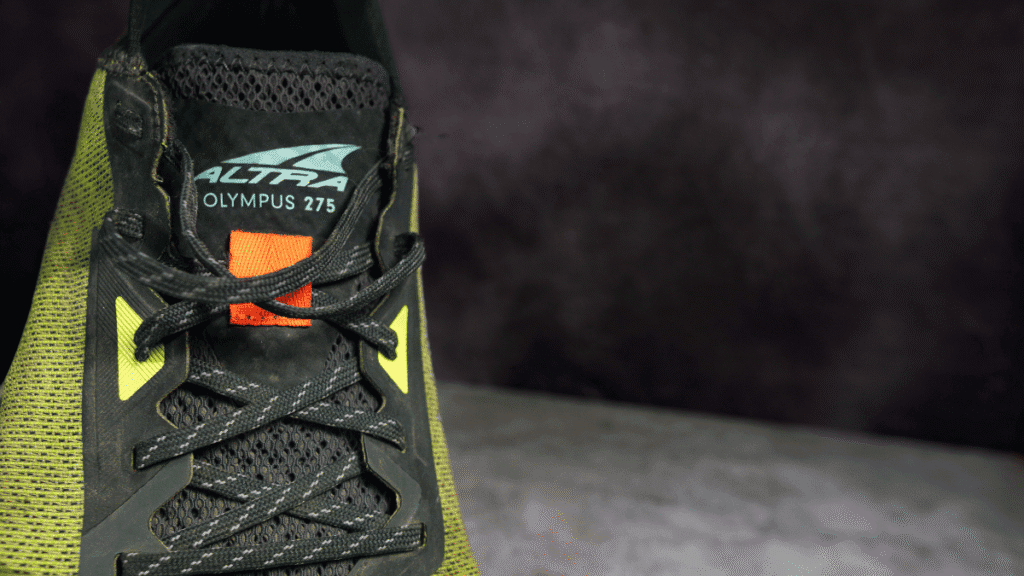
But here’s the thing that worried me: with all that room, are you actually getting the lockdown you need?
That ended up being one of my favorite things about the shoe. From the heel through the forefoot, once I lace it up and get everything in order, my foot stays locked down the whole time. No sliding, no shifting, no second-guessing. It delivers on the roominess and it doesn’t give up the security to get there.
I wasn’t sure both could coexist in the same shoe. With the Olympus 275, they do.
Best comparison I can give: it’s like taking the roominess I liked in Hoka and combining it with the heel lockdown I’m used to from Salomon. And it’s a beautiful combo.
4. The scree sleeve is actually useful
The scree sleeve wasn’t something I was paying particularly close attention to going in. Compared to the other features of the shoe, it just wasn’t on my radar. But over time it started to show itself.
With a lot of my other shoes, especially ones with a similar stack height, I’d find myself stopping fairly regularly to pick out rocks, little twigs, or other debris that had worked its way down under my foot or along the side. On a short run it’s just annoying. On a long race it’s a potential blister, or at minimum a nuisance you just don’t need. So you stop, you empty the shoe, you keep moving.
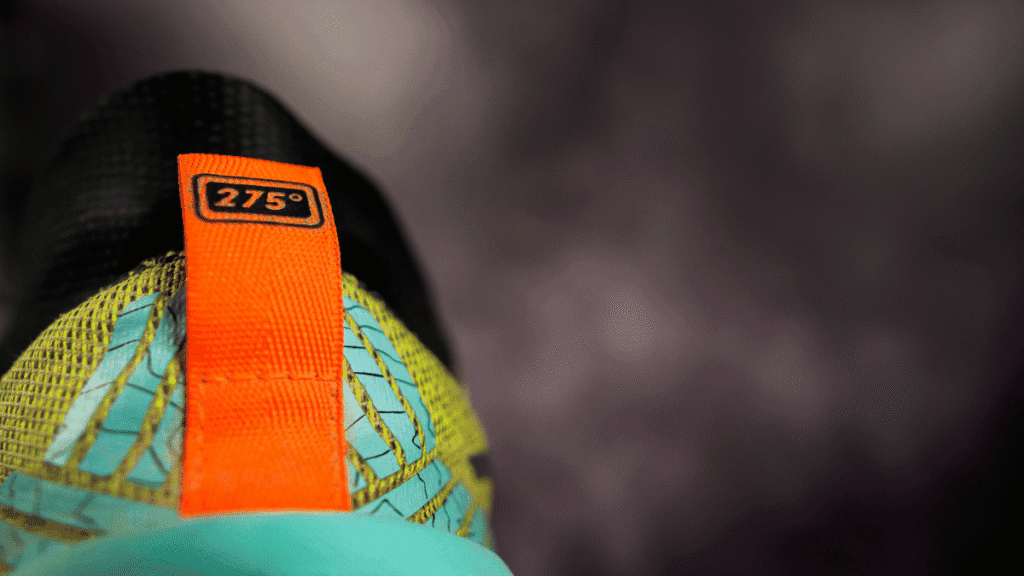
I slowly started to realize I wasn’t doing that nearly as much in the Olympus 275.
It wasn’t a conscious thing at first. I just started to notice I wasn’t stopping to dig rocks or debris out of my shoe very often. Once I actually looked at how well the scree sleeve was hugging my ankle, it made sense. It does a really good job of keeping most of that stuff out. Not everything, there were still times I pulled something out, but nothing close to the extent I’ve experienced in other shoes.
It’s a small detail, but not having to stop and empty your shoe goes a long way, especially when you’re running long distance or racing.
What I Don’t Like About The Olympus 275
1. The stack height is a lot
The stack height was the first thing that made me nervous about this shoe. When I see a cushion platform this big, my immediate thought is ankle rolls, especially on technical terrain.
And honestly, that concern hasn’t gone away entirely.
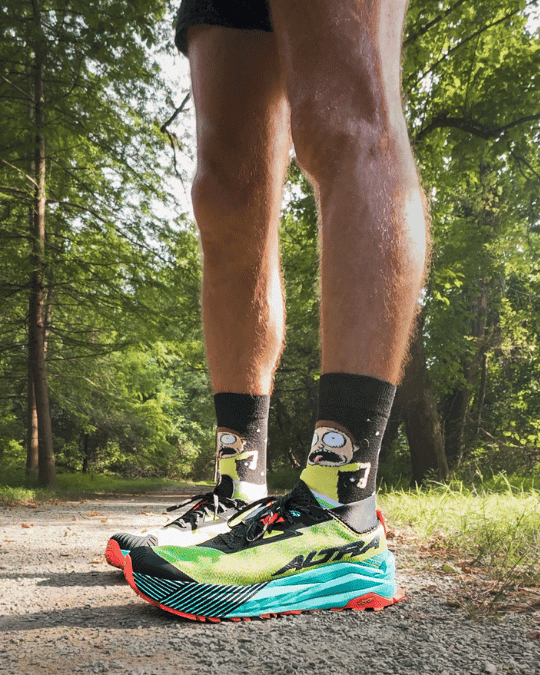
That said, it performed better than I expected. At the Beluga Ultra Trail 30K, there were plenty of spots where I could have easily rolled my ankle: rocky downhills, jagged uneven surfaces, lots of opportunities for things to go wrong. The Olympus 275 held up fine. The platform does a good job of keeping you stable and upright even with that much shoe underneath you. I can’t complain about how it actually performed.
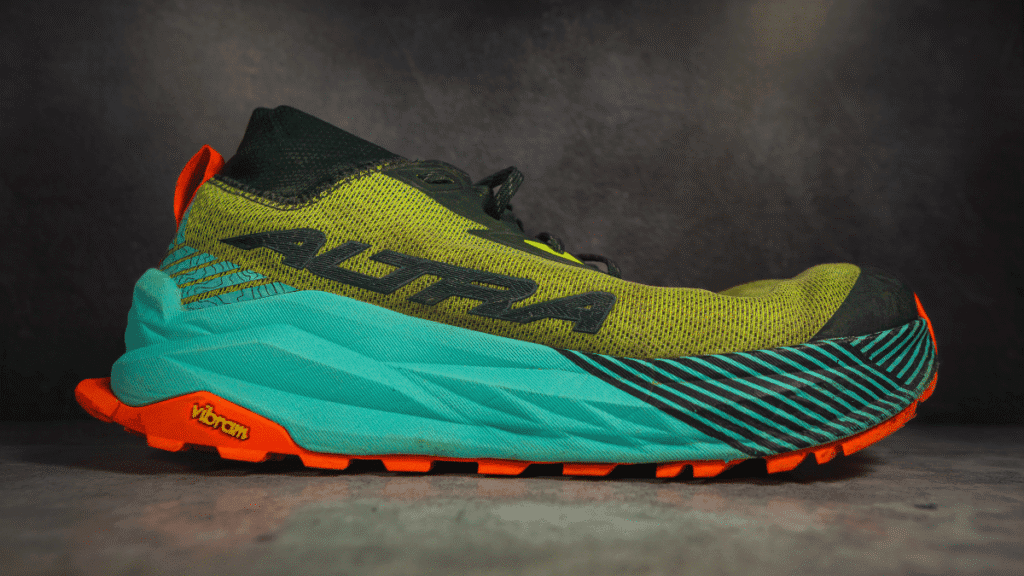
My issue is more of a personal preference thing. I’m not a max-cushion runner by nature. I like a little ground feel with some cushion underneath me, and this shoe sits on the opposite end of that spectrum. So while it hasn’t done a bad job on technical terrain, I’m still more cautious in it than I would be in a lower-stack shoe, and I probably wouldn’t reach for it on the most technical courses I run.
If max cushion is your thing, the stack height is a feature, not a tradeoff. For me, it’s the one thing I’d change if I could.
2. Zero-drop takes some getting used to
The zero-drop platform is listed as a con here, but it’s more of a warning than an actual complaint. The longer I’ve run in these, the more my legs have adapted to it, and honestly I’ve come to like it. But initially? It was not something I was enjoying.
If you’re new to Altra, this is going to be the thing you’ll need to ease into. If you immediately make these your daily trainer or start running in them four or more times a week right out of the gate, you’re likely going to run into some Achilles soreness or worse.
That’s exactly what happened to me. I transitioned into them a bit quickly, partly because I was trying to get enough miles in to review them for you. I was also alternating between the Olympus 275 and the Altra Experience Wild 2, so I had two zero-drop shoes eating up a big chunk of my weekly mileage at the same time. My Achilles paid for it.
So the reason this makes the cons list is simple: if you’re new to zero-drop, you need to build into it gradually. One run a week, then two, then three. Let your legs adapt before you go all in. Do that, and you’ll probably be fine. Skip that, and you’re likely going to be dealing with some soreness that could have been avoided.
Would I Recommend Buying the Altra Olympus 275?
Yes, with one condition: if you don’t like max stack height or big, plush cushion underfoot, this shoe probably isn’t for you.
For me, I love lacing these up for long days on trail. Between the cushion and the grip, I often just forget the shoe is even on my foot, which is honestly one of the best things I can say about any shoe. When I’m not thinking about my footwear or my traction or any of that, I can just get into the flow of the run without the distractions. That’s what this shoe does on a long day.
But at the end of the day, whether this shoe works for you comes down to one thing: how you feel about max stack height. That’s going to make or break it.
This is The Travel Runner, so the real question is: Pack It, Test It, or Skip It?
My verdict: Test It, leaning Pack It if you know you love max cushion.
- PACK IT if you’ve run in max-cushion shoes before and know you like them. The grip and comfort combo on long days is hard to beat.
- TEST IT if you’re on the fence about max stack height or you’ve never run in a shoe this plush. Try before you commit.
- SKIP IT if you hate big cushion platforms, want ground feel, or prefer a low-stack shoe.
![5 Best Travel Running Shoes [Light & Travel-Tested]](https://www.thetravelrunner.com/wp-content/uploads/2025/06/brooks-hyperion-max-300x169.png)

Leave a Reply