
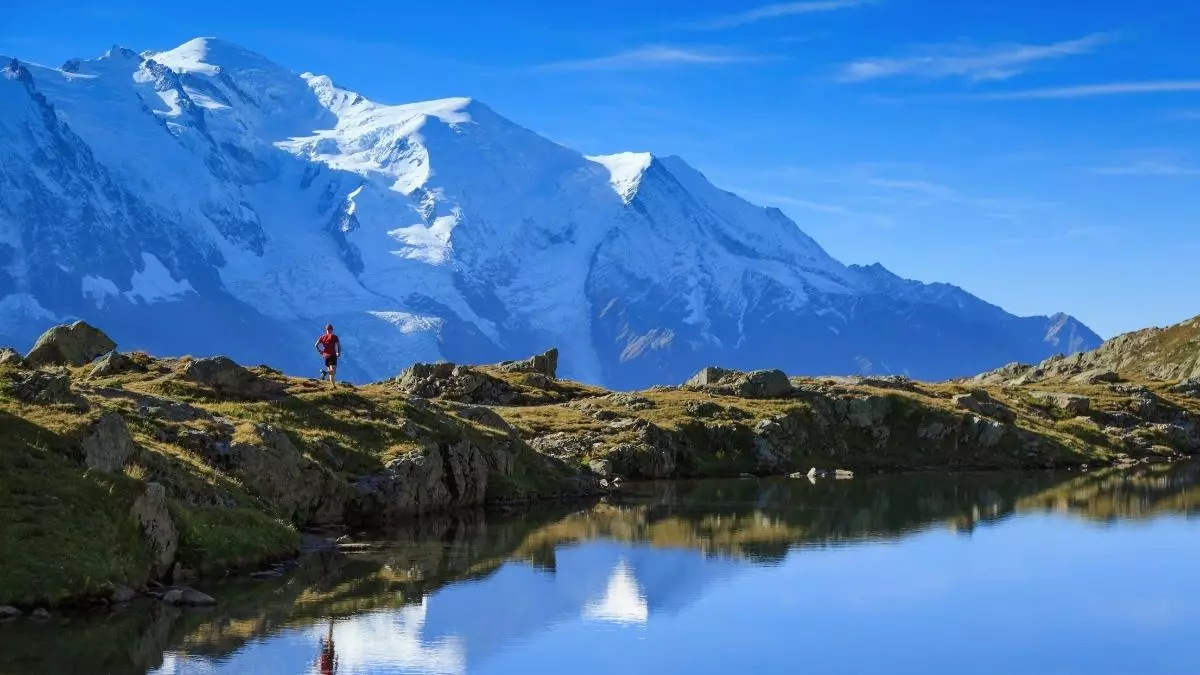
Every August, the population of Chamonix, France doubles.
Trail runners flood into this small alpine town sporting muddy shoes, running packs, and hiking poles. They’re here for the UTMB World Series, some of the most difficult and prestigious trail races in the world.
I’ve been chasing a spot at UTMB for years now. I ran the Canyons Endurance Run 100 Mile back in 2023 (DNF’d around mile 67) in an attempt to earn some Running Stones, the currency you need to enter the UTMB lottery. And in 2026, I completed the Rothrock by UTMB 50K and will run the Grindstone 100 Mile to keep building toward that goal.
But here’s the thing: the UTMB qualification system confuses a lot of people. Running Stones, index races, the lottery, it’s not exactly straightforward. So let’s break it all down.
What is UTMB?
If you’re new to trail running, think of UTMB as the Super Bowl of ultrarunning. But honestly, that comparison doesn’t do it justice.
The flagship race, the Ultra-Trail du Mont-Blanc, is a 106-mile course that loops around the highest mountains in France, Switzerland, and Italy. You’re looking at 33,000 feet of elevation gain through the Alps. And that’s not even accounting for the weather. Snow, rain, windstorms, and all the risks that come with running through high mountain passes.
But UTMB isn’t just one race. It’s actually an entire week-long running festival with multiple races spanning different distances and difficulty levels. Some are more accessible; others are absolutely brutal.
The UTMB Race Series: Which Races Are There?
There are six major races in the UTMB Mont-Blanc series (plus a youth event). Let’s focus on the primary ones most runners target, then touch on the others briefly.
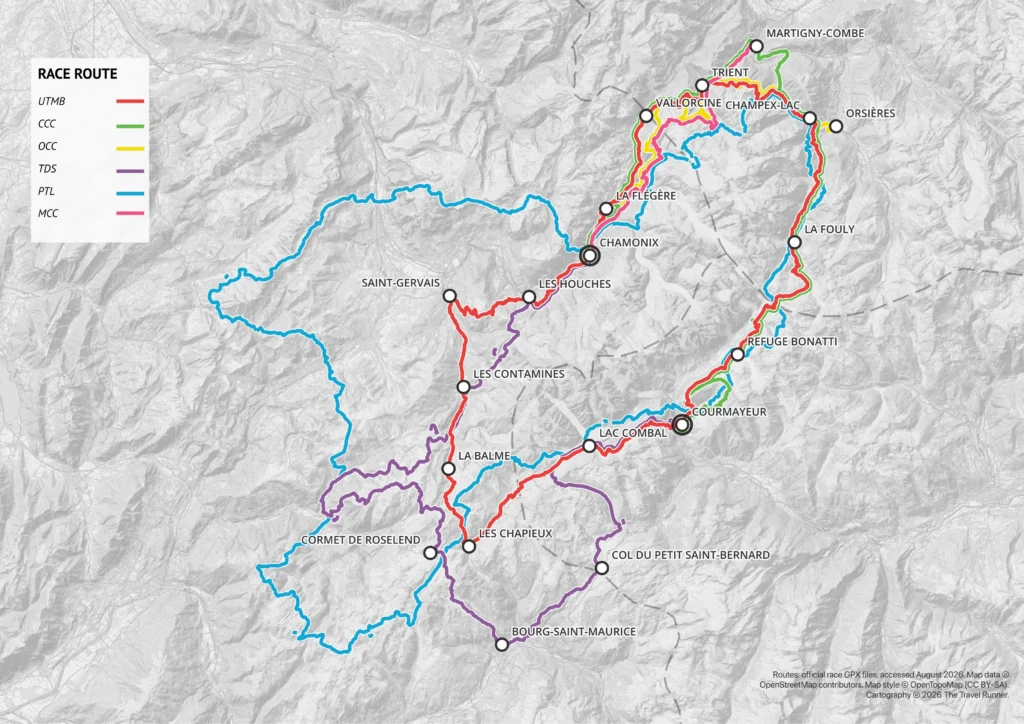
Ultra Trail du Mont Blanc (UTMB)
- 106 miles (170 kilometers)
- 33,000 feet (10,000 meters)
UTMB map
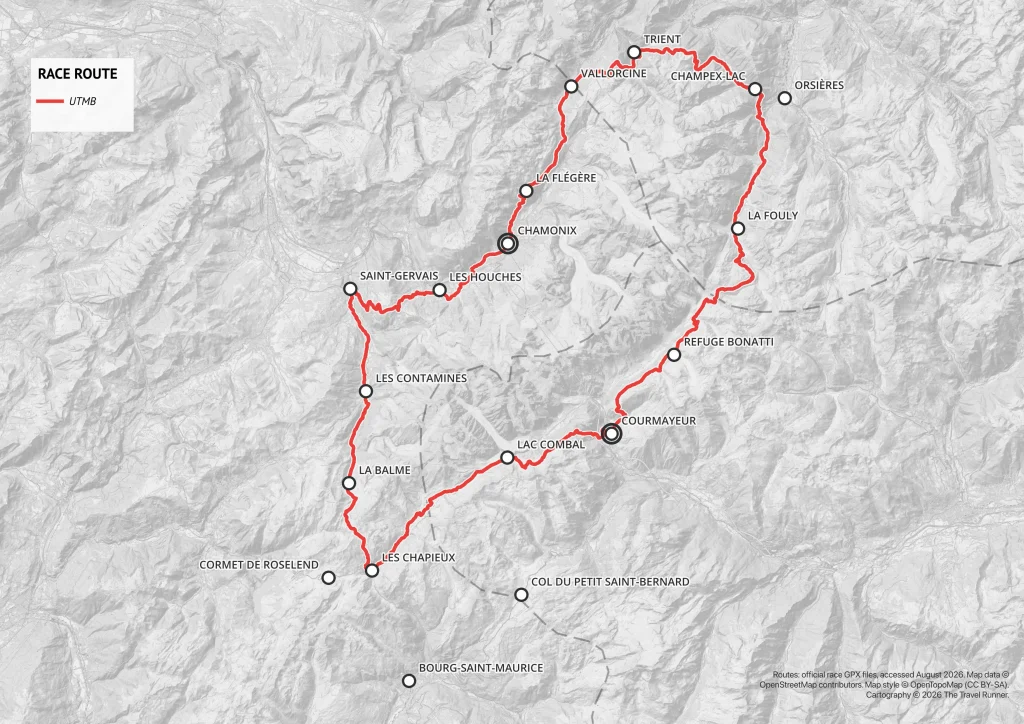
UTMB elevation profile

Sur les Traces des Duces de Savoie (TDS race)
- 90 miles (145 kilometers)
- 30,000 feet (9,100 meters) elevation gain
- Started in 2009
TDS map
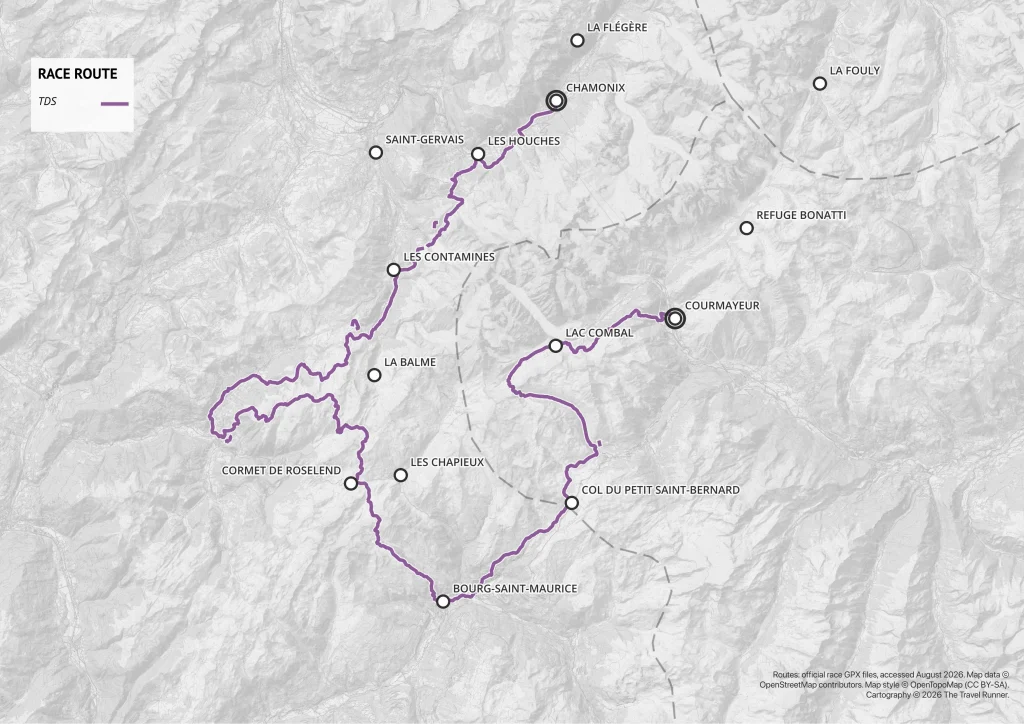
TDS elevation profile

Courmayeur-Champex-Chamonix (CCC race)
- 63 miles (101 kilometers)
- 20,000 feet (6,100 meters) elevation gain
- Started in 2006
CCC map
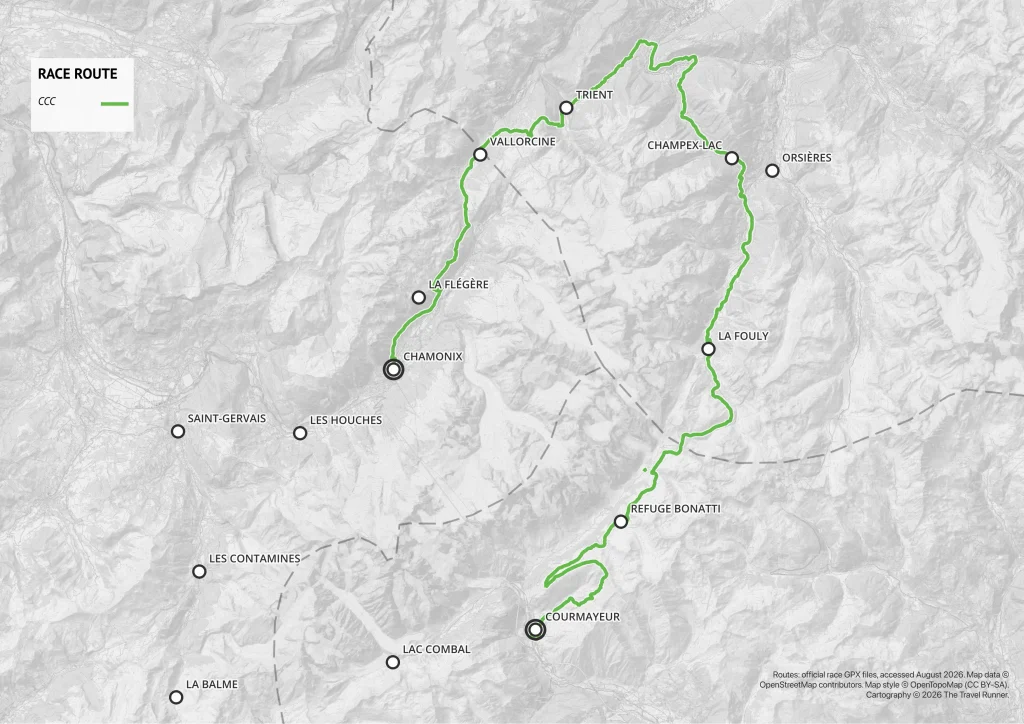
CCC elevation profile

Orsieres-Champex-Chamonix (OCC race)
- 34 miles (55 kilometers)
- 11,500 feet (3,500 meters) elevation gain
- Started in 2014
OCC map
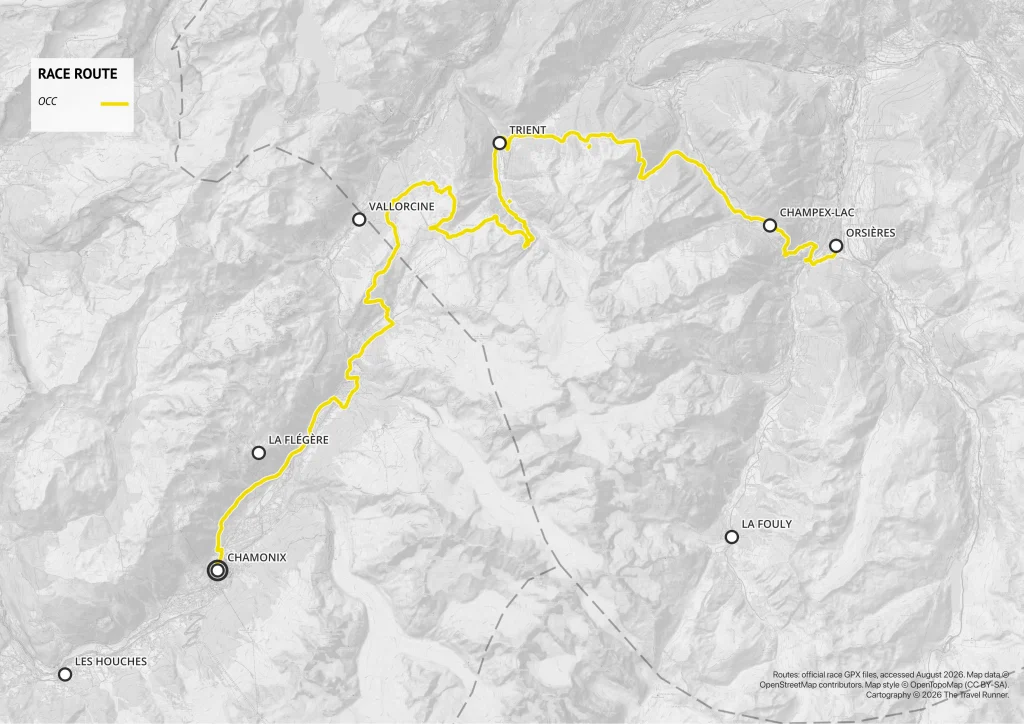
OCC elevation profile

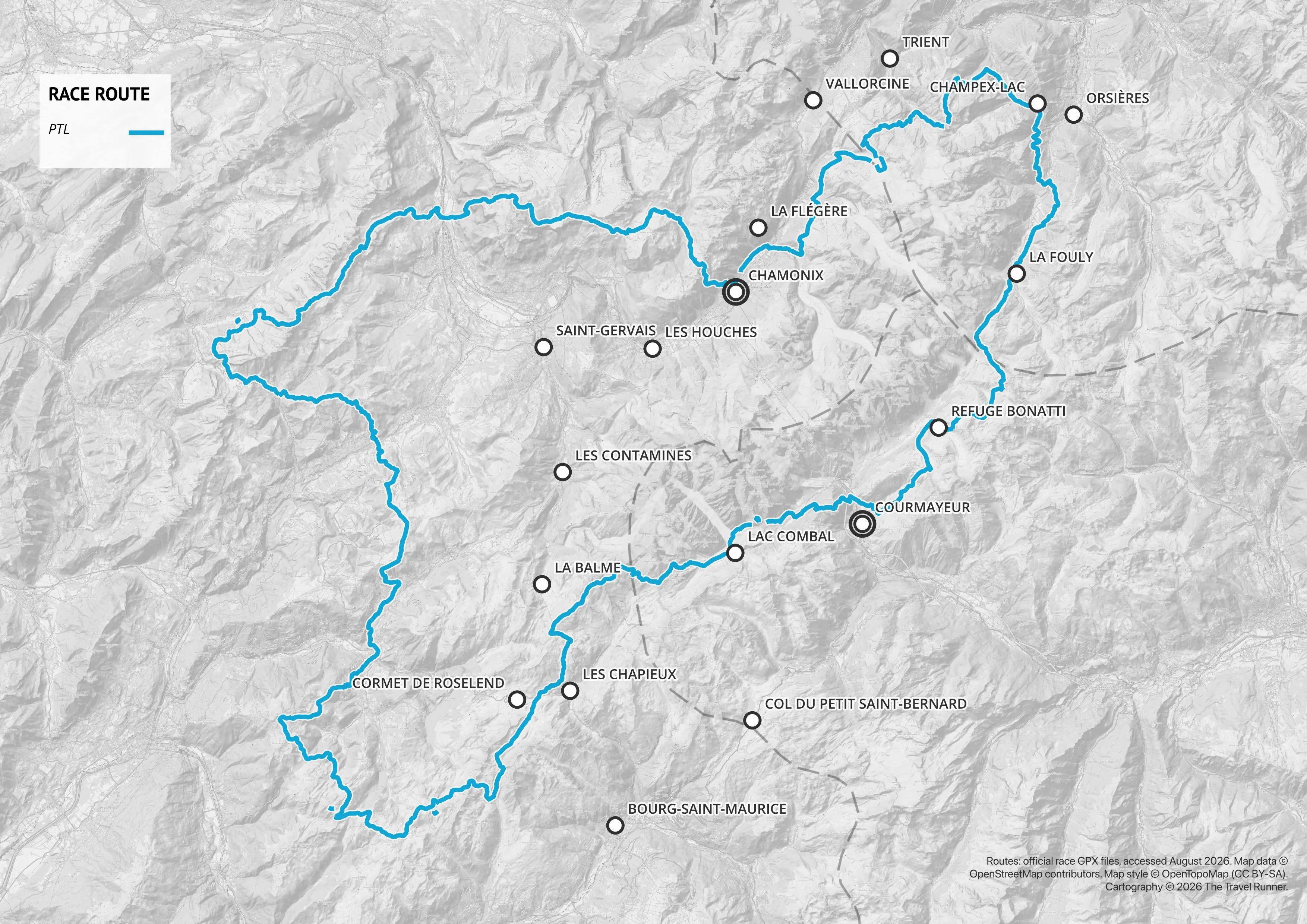
Petit Trotte a Leon (PTL race)
- 186 miles (300 kilometers)
- 82,000 feet (25,000 meters) of elevation gain
- Team-based
- No waymarkers and a different route each year
- Orienteering skills are essential
- Started in 2008
PTL map
De Martigny-Combe a Chamonix (MCC race)
- 25 miles (40 kilometers)
- 7500 feet (2,300 meters) elevation
- For locals and volunteers
- Started in 2018
MCC map
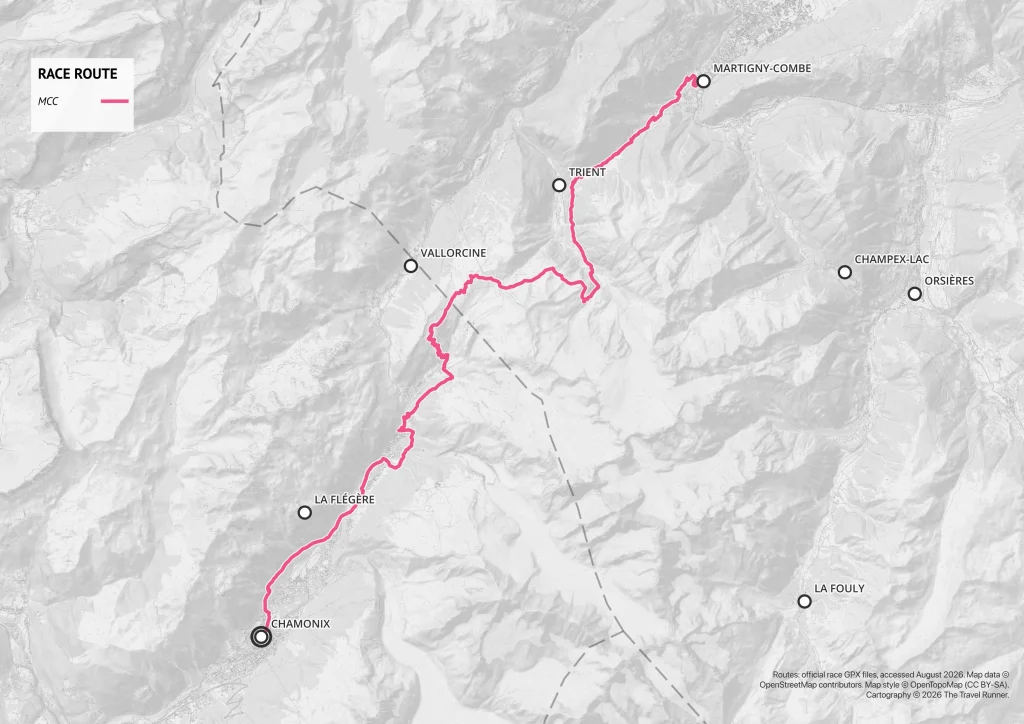
MCC elevation profile

How hard is it to qualify for UTMB races?
Here’s where things get confusing for a lot of runners — and honestly, UTMB hasn’t done a great job making this easy to understand (putting it lightly).
The qualification system used to be based on “ITRA points,” where you needed a certain number of points to enter a race. That system is gone. Now, it’s all about Running Stones.
What are Running Stones?
Running Stones are essentially lottery entries. One Running Stone = one entry into the UTMB World Series lottery.
You earn Running Stones by running UTMB Index races (basically races that are part of the UTMB World Series ecosystem). These races exist all over the world, from North America to Europe to Asia.
The number of Running Stones you earn depends on the distance and difficulty of the race:
- 20K races: Earn fewer stones
- 50K races: Earn moderate stones (like Rothrock, which gives 2 stones)
- 100K races: Earn more stones
- 100-mile races: Earn the most stones (often around 4)
How do you actually enter the UTMB lottery?
This is the part that trips people up.
To enter the lottery for any of the major UTMB Mont-Blanc races (UTMB, TDS, CCC, OCC, MCC, PTL), you need:
- At least one Running Stone
- A valid UTMB Index
Wait, what’s a UTMB Index?
Your UTMB Index is basically proof that you’re an active trail runner. You get this by participating in a UTMB World Series race (either a Major, Event race, or Index race) within the last two years.
So here’s the process:
- Run a UTMB Index race to earn Running Stones
- Make sure you’ve run at least one UTMB-affiliated race in the last two years (to keep your Index valid)
- Use your Running Stones to enter the lottery
- If you’re selected, your Running Stones disappear
- If you’re not selected, the stones return to your account
Running Stones don’t expire, but you must have earned at least one within the last two years to enter the lottery.
Got it? Good. Because honestly, it’s more complicated than it needs to be, at least in my opinion.
Where do I find Running Stone races?
This part they made especially easy (shocker, right?).
They have a page specifically dedicated to UTMB World Series Events. Using this search, you can filter by location, category, or date to narrow down your race search.
UTMB Course Records: How Fast Can You Actually Go?
If you’re curious what the top runners in the world are capable of on these courses, here are the current records:
Men’s UTMB Record:
Jim Walmsley (USA) set the course record in 2023 with a time of 19:37:43, becoming the first American man to win UTMB. He beat Kilian Jornet’s 2022 record by nearly 12 minutes. That’s averaging just over 11 minutes per mile for 106 miles and 33,000 feet of climbing. Absolutely wild.
Women’s UTMB Record:
Katie Schide (USA) set the course record in 2024 with a time of 22:09:31, breaking Courtney Dauwalter’s 2021 record by 21 minutes. Schide dominated from start to finish and also won Western States just two months earlier, one of the most impressive doubles in ultrarunning history.
Both of these times are mind-blowing when you consider the terrain and elevation involved. And it’s worth noting that American runners currently hold both records, which is pretty incredible given UTMB’s European roots.

Leave a Reply