
Destinations
The Highline Trail in Glacier National Park is a trail runner’s dream (well, at least one without a fear of heights)
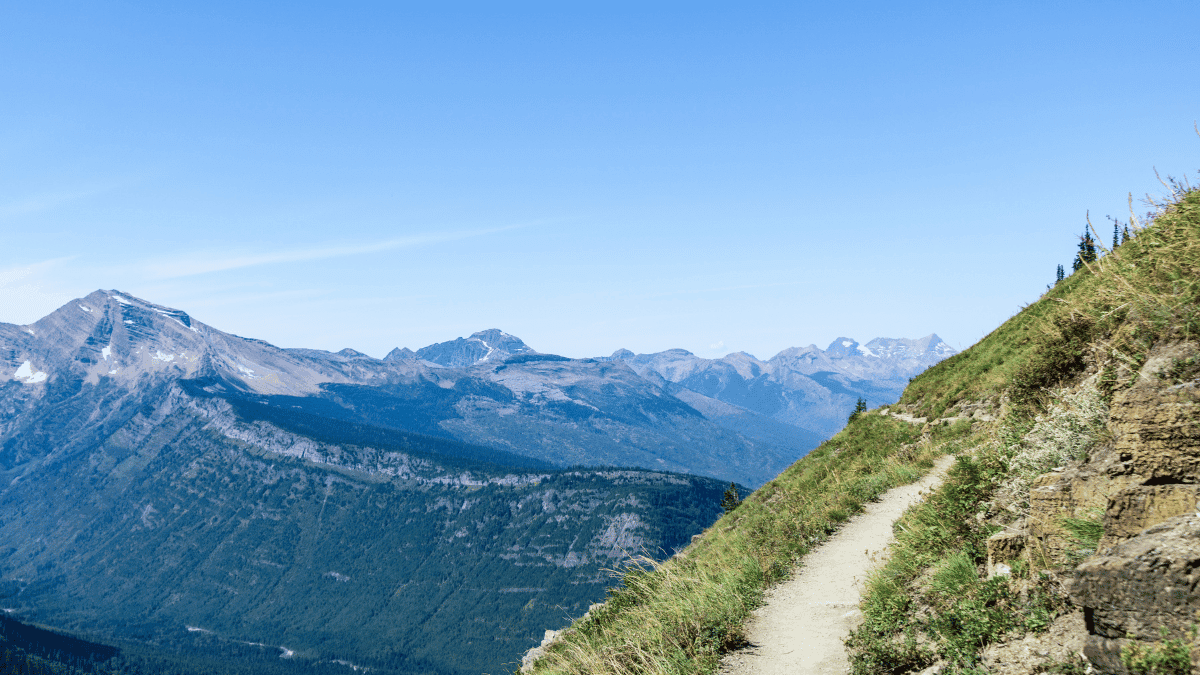
Narrow paths give way to wildflower-covered cliffsides. And sweeping mountain views that look straight out of a painting give that slight bit of a danger that you might fall over the edge while staring at them.
It’s perfect.
The trail starts at Logan Pass, and within the first mile, you’re on those dramatic edges above Going to the Sun Road that I mentioned. The final two miles to Haystack Pass are where the trail truly shines, with the dark green mountains sitting off in the distance with a far lower chance of death on the wider trail.
For my run, we decided to turn around at Haystack Pass to keep things manageable and to have more time to explore other parts of the park. While we missed out on the Grinnell Glacier Overlook and Granite Park Chalet, the out-and-back route gave us the best of the Highline Trail’s scenery without needing to shuttle back (more on this in a bit).
So, I’ve brought you this guide.
I’ll break down what to expect from the Highline Trail, share tips on the best route options for runners, and how to plan your own adventure. Whether going out-and-back like us or pushing on to complete the loop and boarding your Champion’s Chariot (the shuttle) back to the Logan Pass Visitor Center, this post has you covered.
Let’s jump in.
Overview of the Highline Trail in Glacier National Park
The Highline Trail is one of Glacier National Park’s most popular and scenic routes, offering trail runners a unique mix of thrilling cliffside paths and expansive mountain views.
Whether you’re tackling a shorter out-and-back or going the full distance, this trail promises an unforgettable experience.
- Trail Start: The trailhead begins at Logan Pass (6,646 feet) on the Going-to-the-Sun Road.
- Total Distance: For runners looking for a more manageable option, a 7-mile out-and-back to Haystack Pass is perfect, giving you a taste of the best views without needing to rely on the shuttle. For those up for the challenge, the full trail stretches over 15 miles from Logan Pass to The Loop. This includes using the Granite Park trail.
- Terrain and Elevation: The trail offers a gradual elevation gain of about 800 feet to Haystack Pass. You’ll navigate narrow, cliffside paths early on, but the trail becomes wider and more runnable as you approach Haystack Butte.
What to know before you run the Highline Trail
Running the Highline Trail is an unforgettable experience, but it’s important to be well-prepared. Here are the key things to keep in mind before lacing up your shoes.
1. Get to Glacier National Park early
The Highline Trail is one of Glacier National Park’s most popular trails, and the parking lot at Logan Pass fills up quickly — often by 8 a.m. I’ve even seen reviews on AllTrails reporting 75% full at 6:30 a.m.
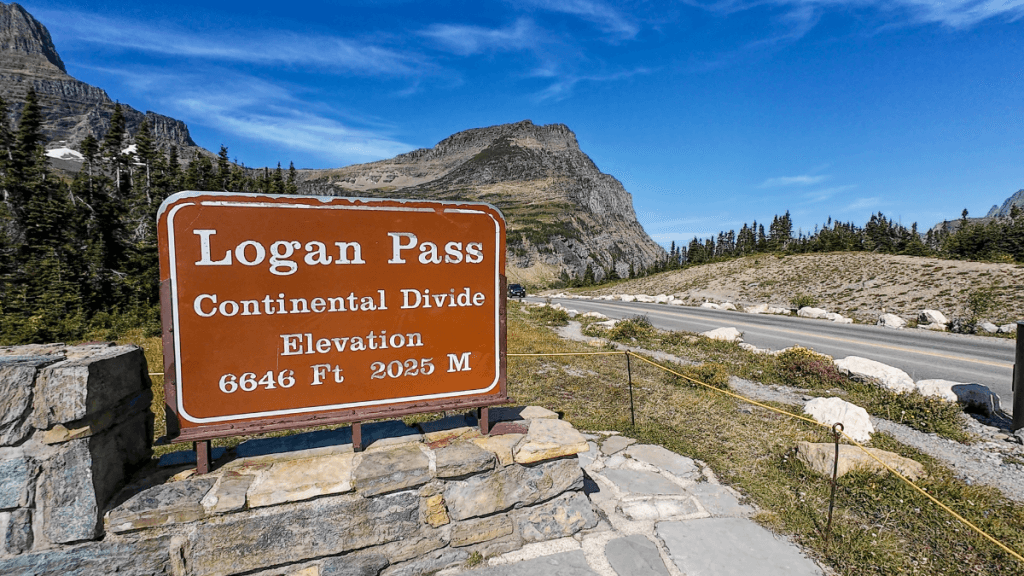
Starting early not only helps you avoid the crowds and others doing the Highline Trail hike. The Logan Pass parking lot is also the parking lot for the visitor center and Hidden Lake. Also popular options for people beyond just those doing the Highline Trail hike. If you plan to run the trail out-and-back to Haystack Pass, an early start will also help you beat the afternoon heat.
I can’t emphasize this one enough: START EARLY.
2. Shuttle or out-and-back?
Decide ahead of time whether you’ll be doing the out-and-back route (like we did) or if you’ll run point-to-point.
The out-and-back to Haystack Pass is a great 7-mile option, but if you’re continuing to Granite Park trail to the Chalet and on to frinish the loop, you’ll need to catch the park shuttle back to Logan Pass. Be sure to time your run carefully — the last shuttle typically leaves between 5-6 p.m.
3. Prepare for wildlife
Glacier National Park is the has the densest population of grizzly bears in the lower 48. And its home to over 1,000 bears when you include black bears.
So carrying bear spray is a must. And I saw far too many hikers not carrying it.
Always keep it easily accessible on your run. I kept mine in one of my water bottle pockets on my Salomon Active Skin 8. It also helps to make noise periodically. You’ll look like you have schizophrenia, but it’s better than surprising a bear.
If you can run in a group, that’s also a better option. Stick to groups whenever possible. But, this is a fairly popular hike so there are also plenty of people to scare bears off depending when you go.
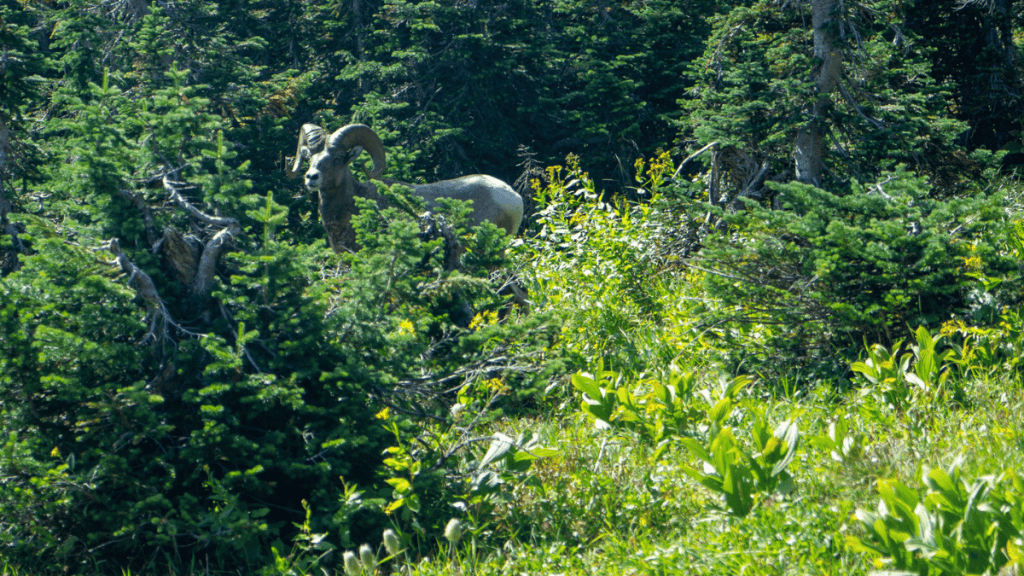
If you’re lucky, you’ll see a Bighorn Sheep, some marmots, and other wildlife along the way. Maybe a bear, but preferably from a distance.
4. Hydration and nutrition
There are no water sources on the Highline Trail, so bring enough water to last your entire run.
For the 7-mile route, 1.5 to 2 liters should be good. But if you’re running the full trail to The Loop, bring at least 3 liters.
It’s also a good idea to pack snacks like energy gels or bars to keep your energy up. Realistically anything to keep the spirits from dipping so you can enjoy everything this run has. And it’s a lot. If you need some additional tips, check out my post on the best travel nutrition tips to help out.
Plan your next runcation without overthinking it
A free, runner-tested weekend kit with:
- A simple trip-planning framework
- A packing checklist that actually works
- A quick decision guide for short travel runs
5. Monitor the weather
Weather in Glacier can be unpredictable, especially at high elevations.
Even in the summer, temperatures can drop quickly, and storms can roll in without warning. Dress in layers and bring a light windbreaker or rain jacket just in case.
Always check the weather forecast and trail conditions before heading out. Which this is a general trail running safety tip to follow, not just on the Highline Trail.
6. Trail conditions
The trail can be narrow and exposed, especially in the early sections near the Garden Wall.
Take extra care on these cliffside paths, particularly if the trail is wet or icy. Trekking poles can be useful for stability, but they’re not a necessity for most runners. You will see plenty of hikers carrying trekking poles regardless.
7. Respect the trail
Stay on marked paths to protect the fragile alpine environment and avoid unintentional harm to plants and wildlife.
Glacier National Park’s trails are part of an ecosystem that relies on minimal human impact, so practicing Leave No Trace principles is a must. Just don’t be “that guy”, and you’ll be fine. We all know who I’m talking about.
How to run the Highline Trail in Glacier
Logan Pass to Haystack Pass
As mentioned, the trail starts at the Logan Pass parking lot where you head north across Going-to-the-Sun road.
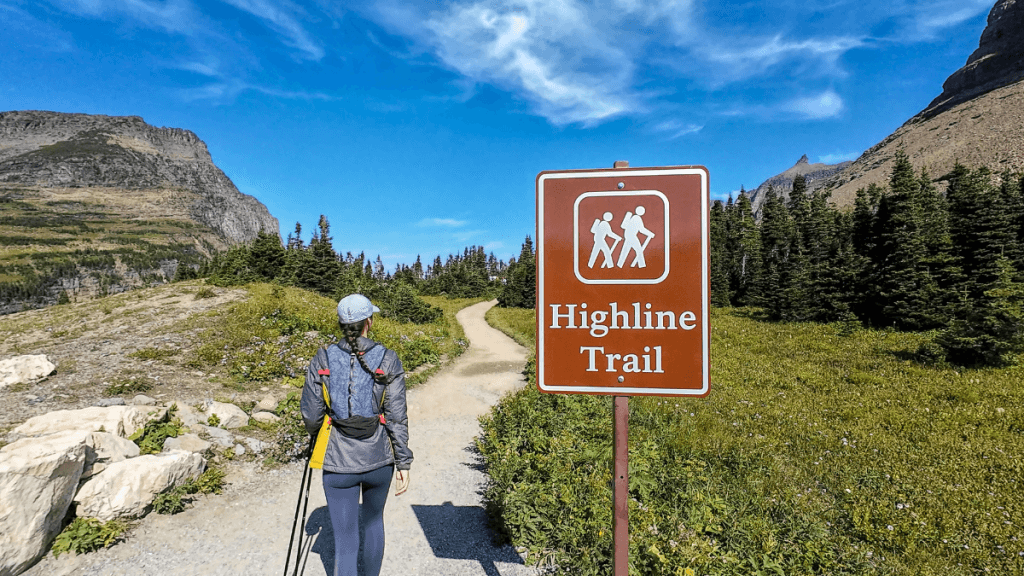
And get ready, the views come within the few steps. The trail drops around 200 feet over the next half mile or so. But in the distance, the valley stretches out with giant mountains (Mount Oberlin). And while you’re mesmerized by those views, you won’t even realize you’re running on the slopes of Pollock Mountain and Mount Gould. It’s a pretty epic run.
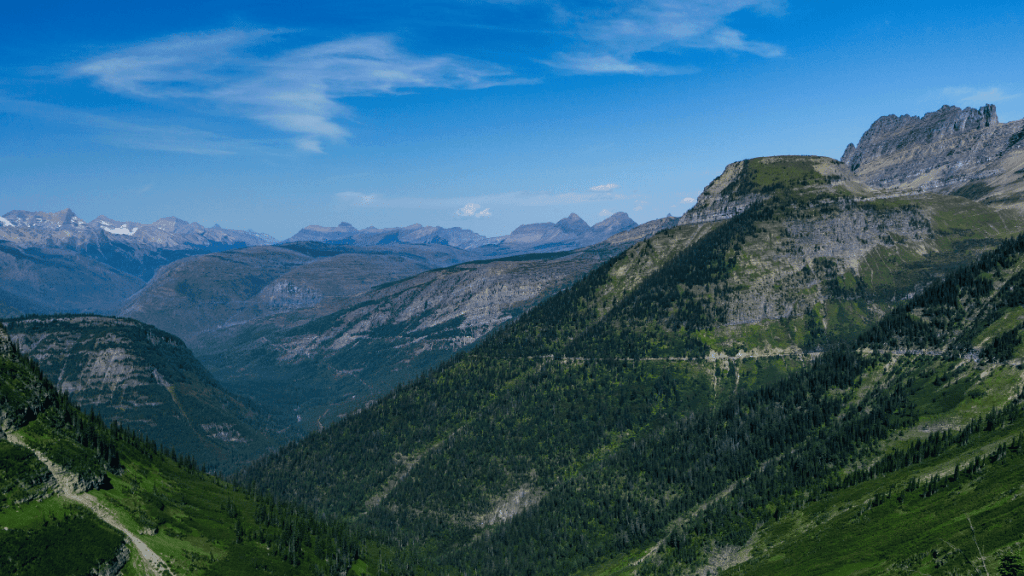
But the beginning is also where the most dangerous part starts.
There’s a straight dropoff on the left-hand side with a narrow trail running along a vertical wall. So it’s best to take your time in this area. There’s also a chain on the wall to hold on to while you go through.
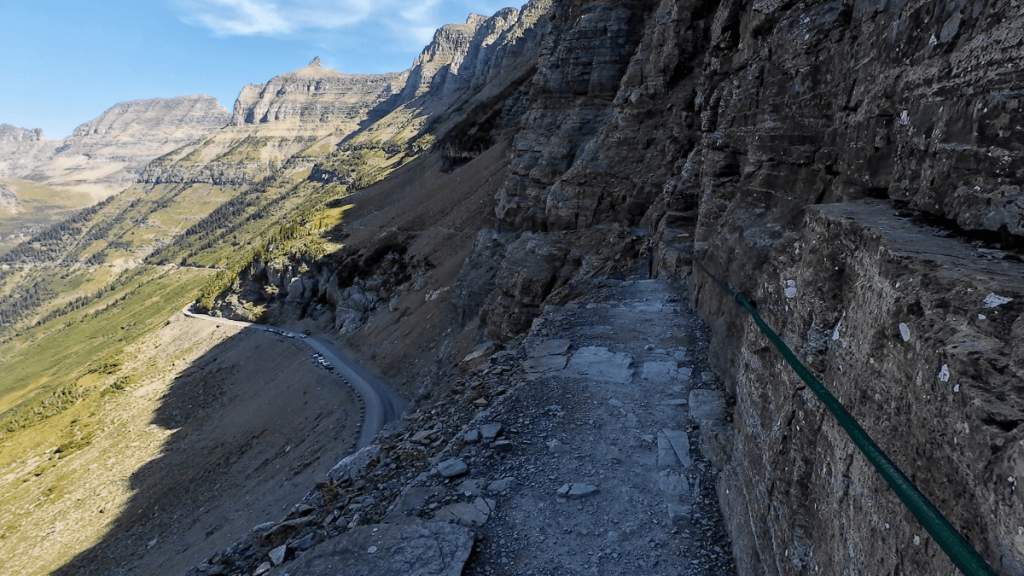
We took our time through this part to, y’know, not die. And there are also other hikers coming the opposite way so it helps to take it slow and let them pass.
That ends around the mile mark. The Garden Wall Trail widens, the hill slopes down on the left side, and you feel everything loosen up a bit. This is where the run can start typically.
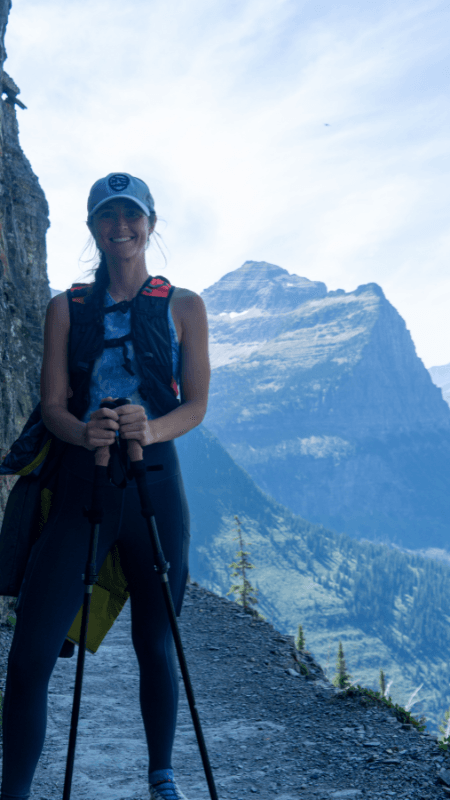
For the next mile, the trail slowly climbs. Along the way you’ll see small waterfalls, pop in and out of tree-covered areas, and have another narrow path with a pretty steep dropoff. Oh, and you’ll get better and better views of the mountains and valley in the distance. I kept stopping to snap some pictures, but they’d only get topped by the ones I’d take about a half mile down the trail…and so on.
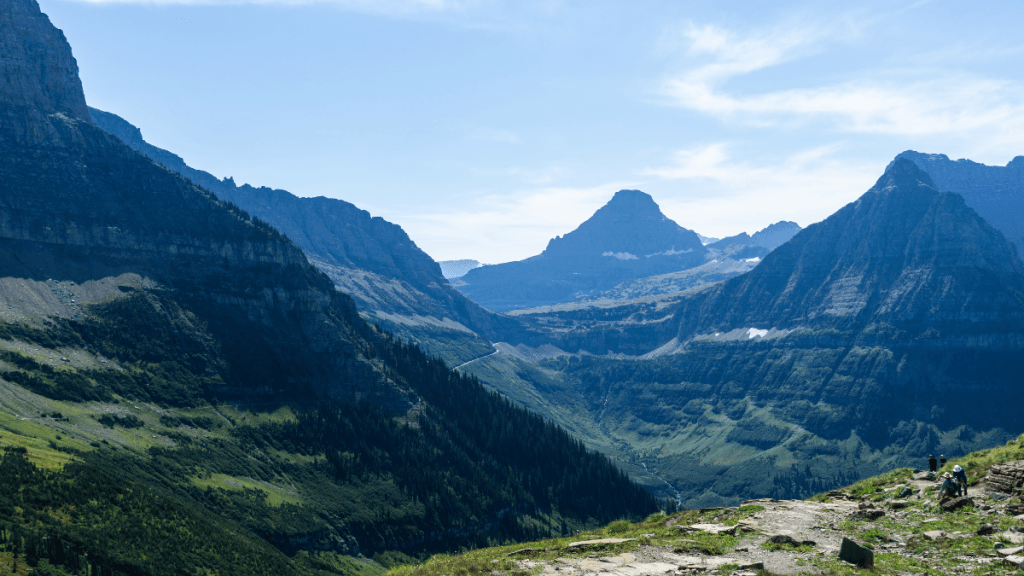
Around mile three, everything widens and you can really open up on this section. We had initially hiked a lot of the first half, running where Kaitlyn felt most comfortable.
This is also where the trail starts to get steeper toward Haystack Pass. So if you enjoy hills, then you’ll love the steady climb up to Haystack Butte.
Turning Back at Haystack Pass
We paused for a break at Haystack Pass, ate some Clif Blokz, and hydrated. There’s a great view from the Pass as well (shocker), so we just took the time to enjoy it and rest up before the 3.5 miles back.
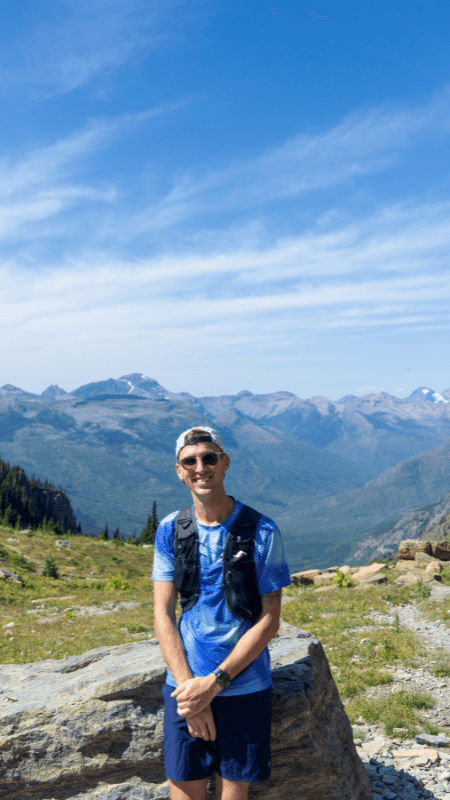
So this is where you can make the decision to continue on to the end or turn around.
If you continue, you’ll get to see the Granite Chalet, Grinnell Glacier Overlook, and more. So it’s not a bad choice. You’ll also pass people hiking in the opposite direction.
If you turn back, you get similar views, but now they’re all in front of you.
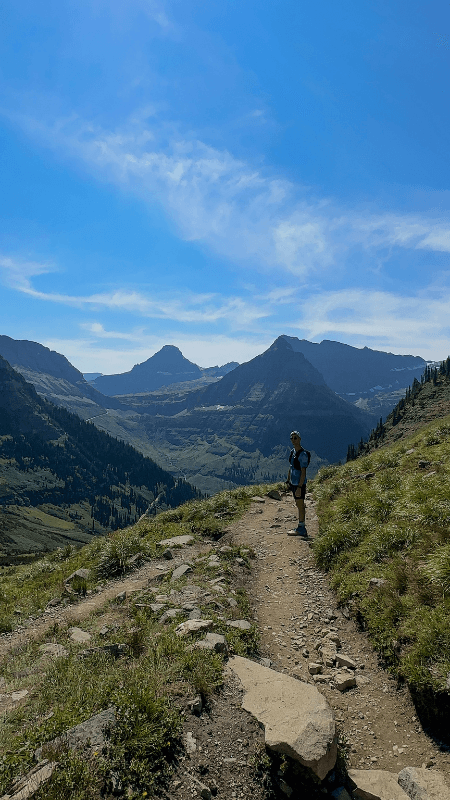
I was honestly happy we decided to turn around. The run down from Haystack was a blast. I could finally let go and let gravity take me while running downhill, and that’s some of my favorite time running.
Plus, besides looking at the trail, I had a perfect view of the mountains and down into the valley.
Optional Extensions for Adventurous Runners
For those looking to extend their run and take on a more challenging route, the trail offers two noteworthy options:
- Grinnell Glacier Overlook: About 0.9 miles beyond Haystack Pass, you’ll find the turnoff for Grinnell Glacier Overlook. While it’s a short distance, the climb is steep but the reward is one of the most iconic views in Glacier National Park.
- Granite Park Chalet: If you’re up for a longer run, continuing to the Granite Park Chalet adds 3.5 more miles from Haystack Pass. This historic chalet is a great place to rest, grab snacks, and take in more views. From here, you can either turn back to Logan Pass for a longer day (14.9 miles total) or continue to The Loop, where you’ll catch a shuttle back to Logan Pass.
Enjoy the Highline Trail in Glacier National Park
Whether you’re running the full length of the Highline Trail or opting for the scenic out-and-back to Haystack Pass, this trail has some of the most breathtaking views in Glacier National Park. Hell, I’d even say of all national parks. It was total unexpected for me, and that made it even better.
So, if you’re looking for more, check out the best national parks for trail running to get your runcation started.
Kyle Cash | Trail Journal
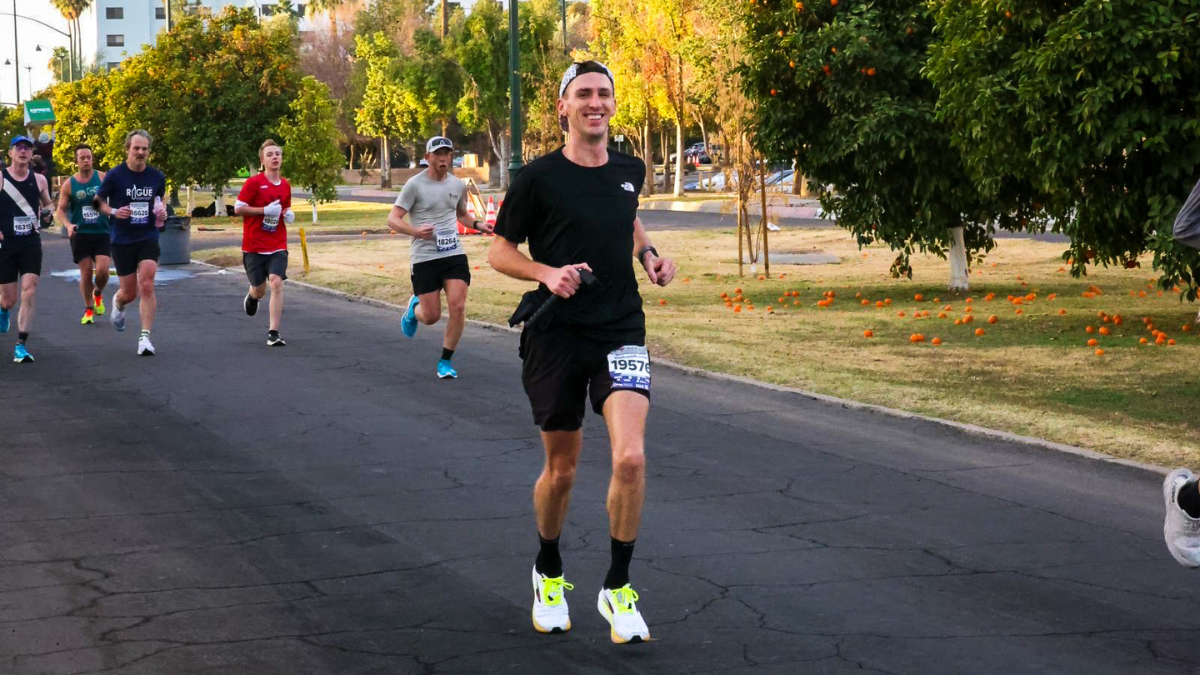
I’m Kyle — the runner behind The Travel Runner. I run trails all over the world to bring you stories, tips, and gear that actually works. From national parks to forgotten paths, I’ve got mud on my shoes and too many snacks in my pack.
Let’s go find new ground.
Leave a Reply