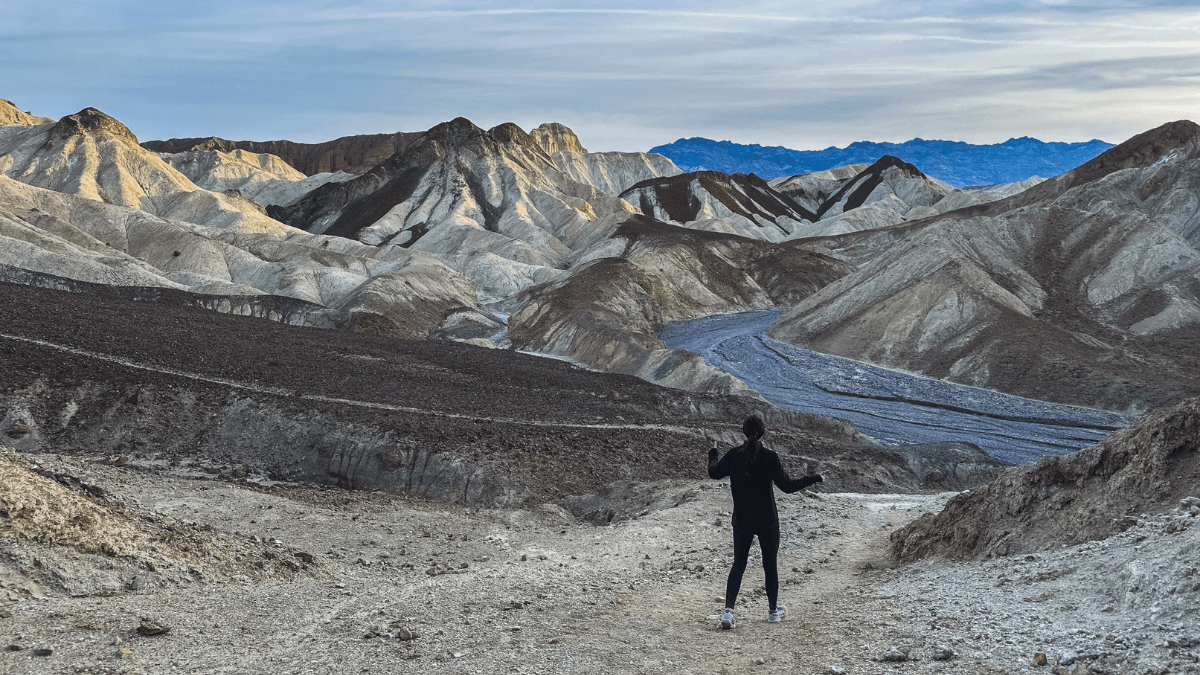
Golden Canyon isn’t just one trail, it’s a small network of route options, and the Gower Gulch Loop is the roughly 4 to 5-mile version that links Golden Canyon, Manly Beacon, and the Gower Gulch wash into one loop. This review covers the full loop, started and finished at the Golden Canyon trailhead.
Expect badlands scenery for nearly the whole route, minimal technical terrain, and about 800 feet of climbing concentrated mostly in the push up to Manly Beacon.
Gower Gulch Loop at a Glance
- Route type
- Loop
- Start → finish
- Golden Canyon Trailhead → same trailhead
- Highest point
- Near Manly Beacon · approximately 499 ft
- Terrain
- Hard-packed canyon, loose wash and small rocky drops
- Exposure
- Open desert with essentially no shade
- Water
- No water sources · carry more than you expect to need
- Route
- Golden Canyon → Manly Beacon → Gower Gulch wash
- Best season
- October through April · avoid summer heat
For a complete list of trails, be sure to check out my Trail Running Route Database where I add, review, and recommend every trail I’ve run around the world.
Should you run it?
Honestly, this one’s an easy recommend if you’re already in Death Valley. It’s short, it’s genuinely runnable, and the badlands around Manly Beacon deliver some of the strangest scenery you’ll run through anywhere in the National Park system. The only real catch is the heat. Outside the cooler months, this trail goes from a great run to a risky one fast.
Run the Gower Gulch Loop if you:
- Want a genuinely runnable trail. Most of this loop is hard-packed wash, not scrambling.
- Want scenery that looks nothing like the rest of your trail log. The badlands around Manly Beacon are incredible.
- Are short on time in Death Valley and want a high payoff for a moderate 4 to 5-mile effort.
Skip the Gower Gulch Loop if you:
- Are looking for technical terrain or a real climbing challenge. This is not that trail.
- Are running in summer. Death Valley heat makes this loop dangerous outside the cooler months.
- Need shade. There’s essentially none for the entire route.
Gower Gulch Loop Trailhead directions
The trailhead for both Golden Canyon and the Gower Gulch Loop sits along Badwater Road in Death Valley National Park. From Furnace Creek, the nearest developed area in the park, head toward Badwater Road and turn right onto it. Drive about three miles and watch for the well-marked Golden Canyon turnoff, then turn left into the parking area, which doubles as the trailhead for both Golden Canyon and the Gower Gulch Loop.
The lot is large but fills fast during peak season, so arrive early to guarantee a spot and beat the heat. Death Valley doesn’t run a shuttle to trailheads, so you’ll need your own vehicle to get here. If you’re using GPS, the coordinates are 36.4208° N, 116.8463° W. Cell service in the park is spotty, so download your maps or directions ahead of time.
The route
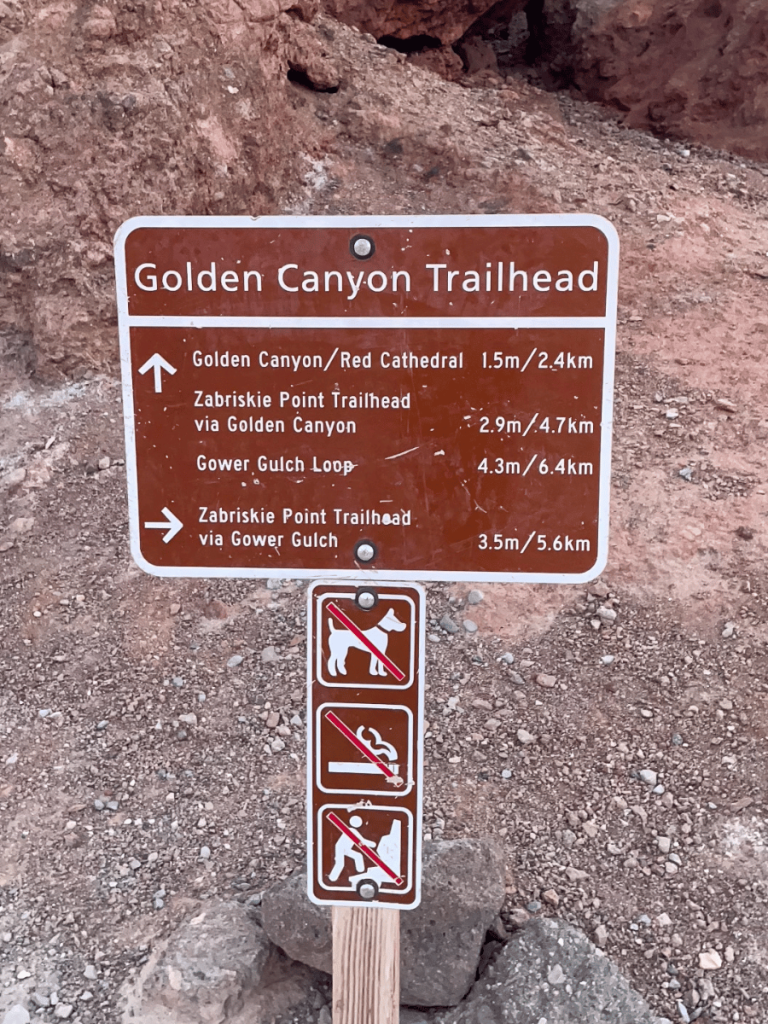
- Start at the Golden Canyon trailhead and head into the narrowing canyon toward the Red Cathedral / Gower Gulch split (~1 to 1.5 mi)
- Take the marked turnoff toward Gower Gulch and climb to Manly Beacon (~0.5 mi)
- Continue past the Zabriskie Point split and begin dropping toward the Gower Gulch wash (~0.5 mi)
- Follow the wash back down through Gower Gulch to the parking area (~1.5 mi)
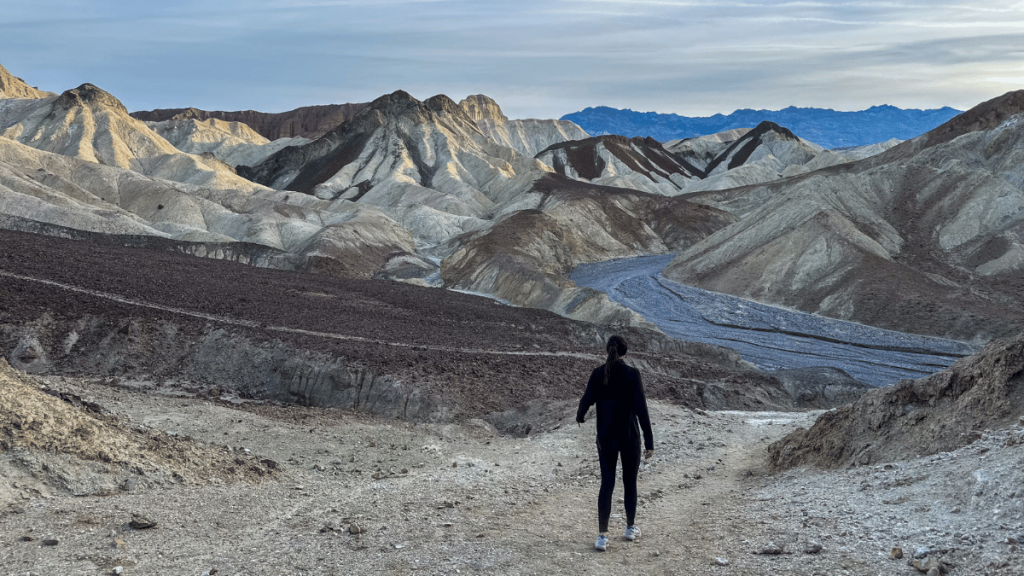
Golden Canyon to the Gower Gulch turnoff: From the parking lot, head left into the canyon and follow the trail as it narrows for about a mile. Around the mile to mile-and-a-half mark, the trail splits. One option is a short detour to Red Cathedral, which I skipped due to time. The other is the marked turn toward the Gower Gulch Loop, which kicks off a steep ascent to Manly Beacon.
- Liked: the narrow canyon walls early on set up a real sense of scale before the trail opens up
- Watch for: the Red Cathedral split. If you have the time, take it. I didn’t, and I regret it.
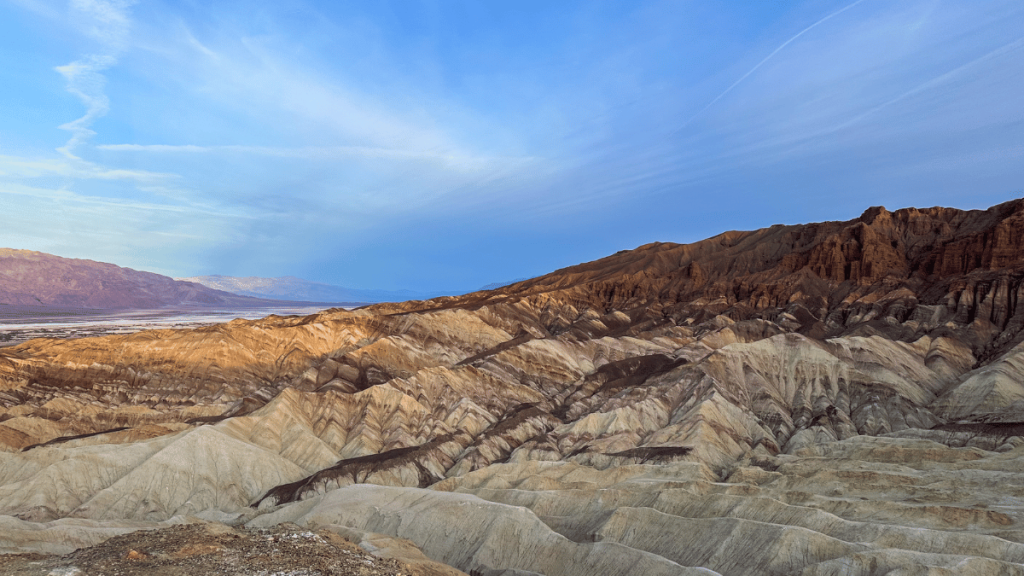
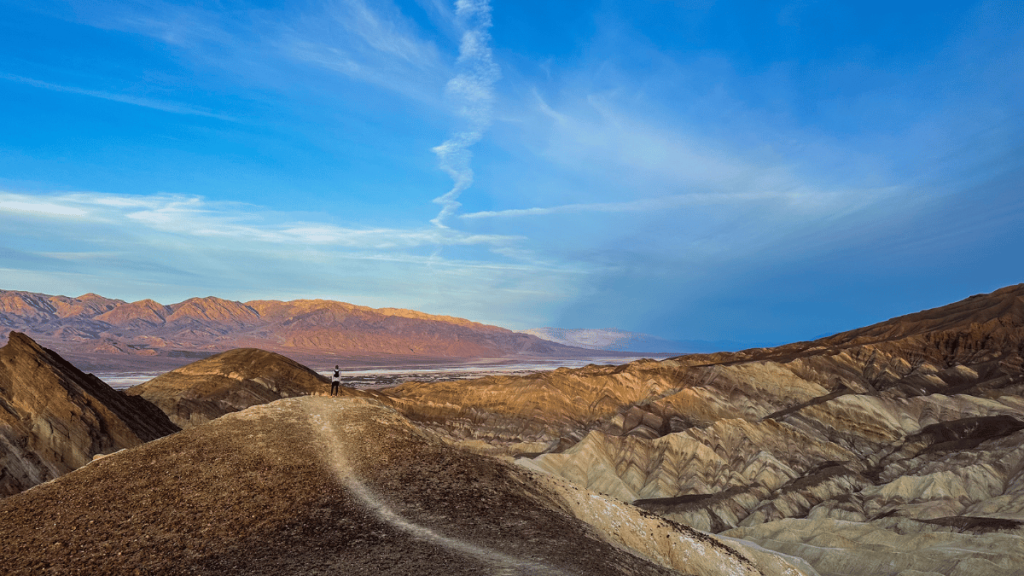
Manly Beacon: Manly Beacon delivers the best views on the route, looking out over the surrounding badlands. It’s named for William L. Manly, who helped rescue the ’49er emigrant party stranded in Death Valley in 1849 to 1850. There’s a 0.3-mile out-and-back extension here that pushes further out onto the ridge for even better badlands views.
- Liked: this is the visual highlight of the run, worth the steep push to get up there
- Watch for: the extension spur is easy to miss. Follow the trail past the main viewpoint if you want it.
Zabriskie Point detour and the drop into Gower Gulch: Near the 2-mile mark, a second detour branches off toward Zabriskie Point. I skipped this one too, both for time and because I’d already caught sunrise there the previous morning. It’s a 2-mile loop on its own, so factor that in if you take it. Past the split, the trail drops toward the Gower Gulch wash.
- Liked: having the option there without it being mandatory kept the main loop efficient
- Watch for: this adds real mileage. Don’t take it if you’re tight on time or water.
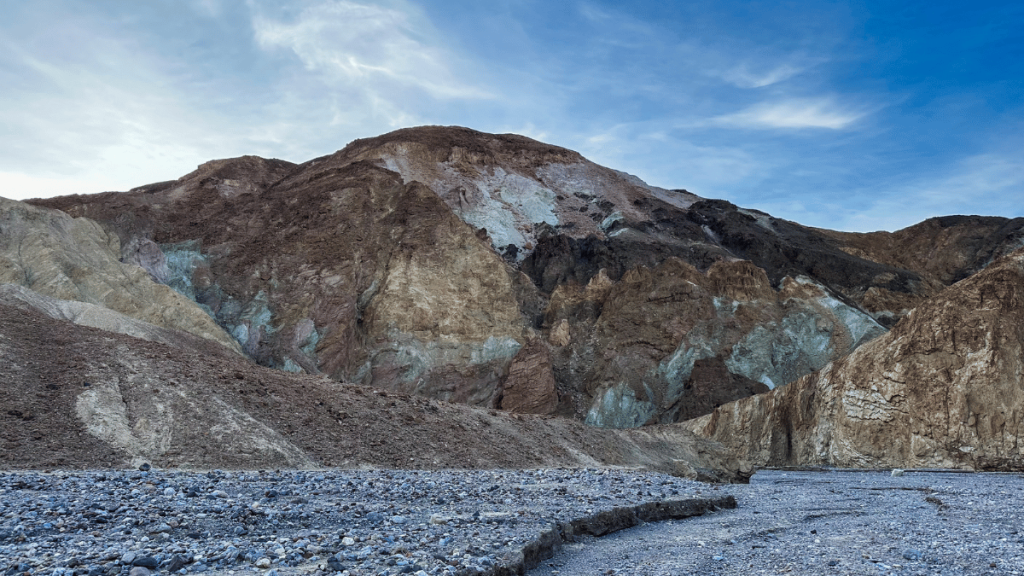
Running through Gower Gulch: From here, you follow the old river path for about a mile and a half, dropping down some small rocky sections, until the canyon opens up toward the valley and Badwater Road. The final stretch back to the parking area is flat and straightforward, a good cooldown after the climbing earlier in the loop.
- Liked: the flat, relaxed final mile is a nice contrast to the technical sections higher up
- Watch for: this stretch is the least scenic part of the run. Use it to recover pace, not to expect more badlands views.
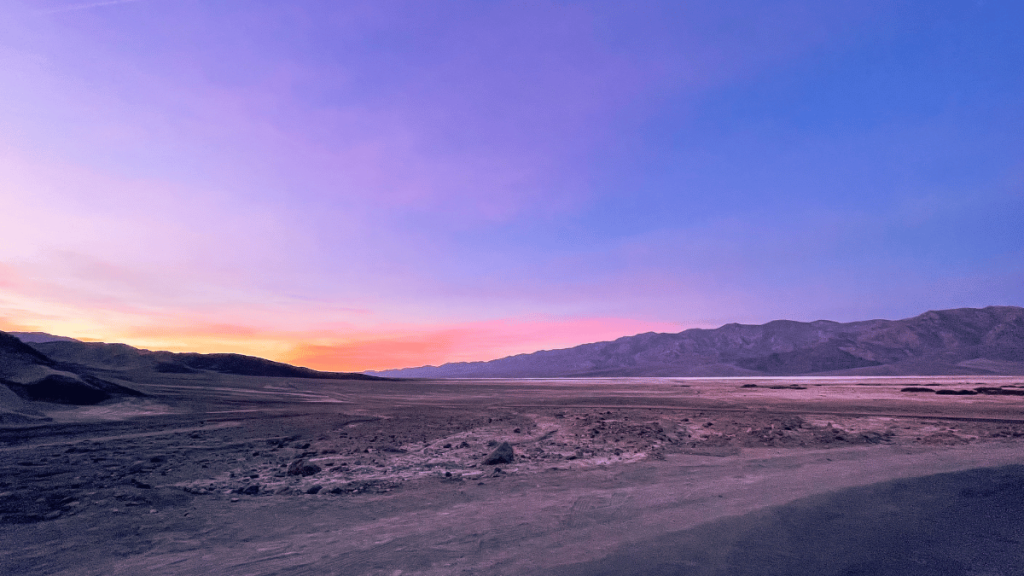
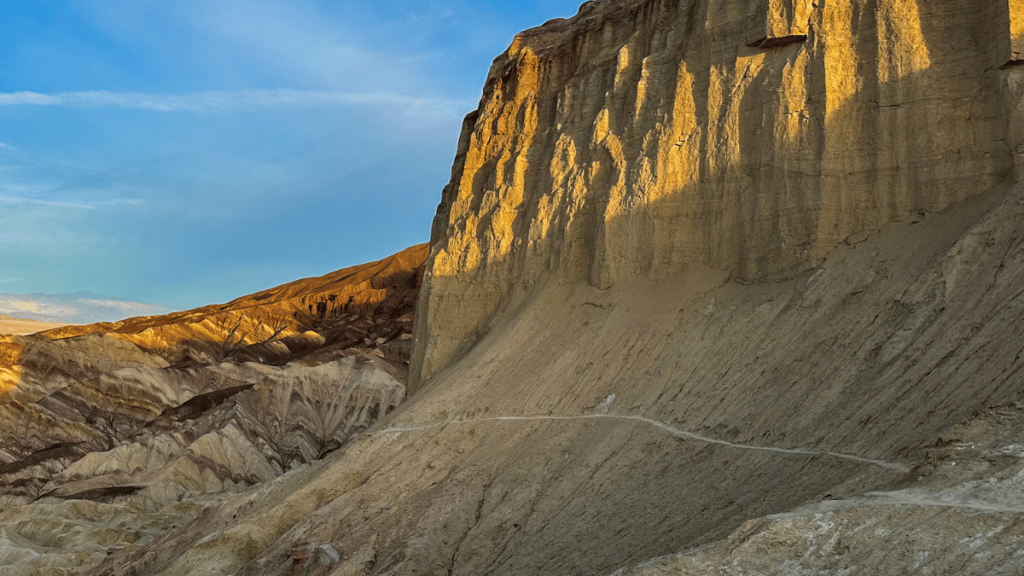
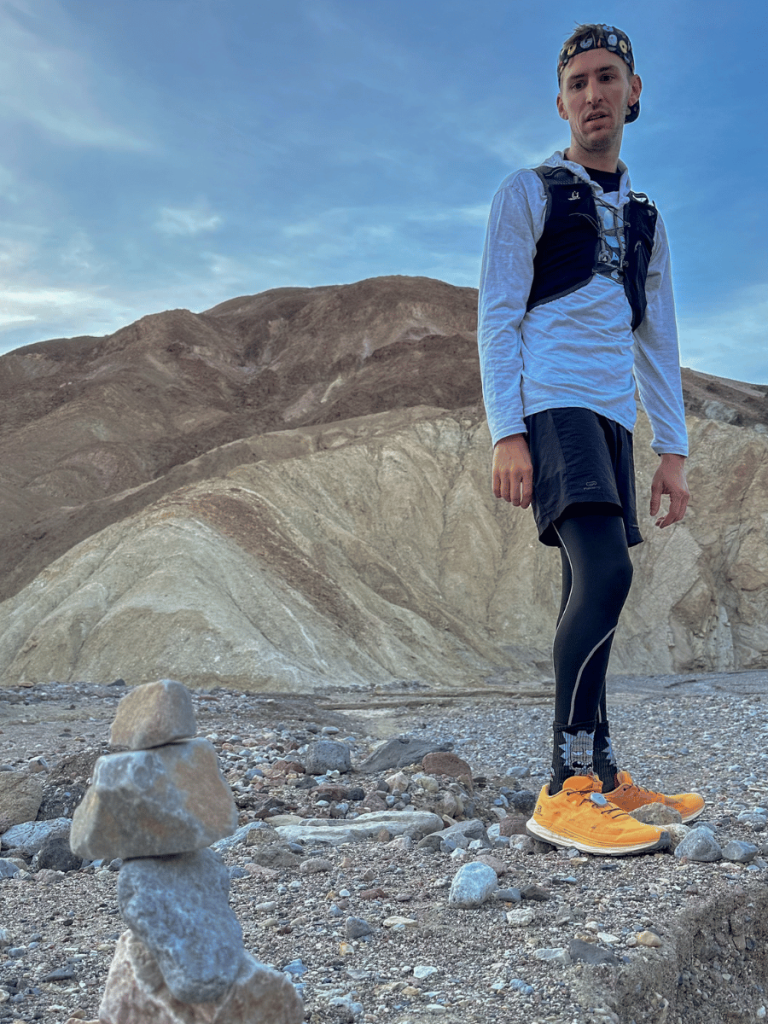
Photos from the trail
Gower Gulch Loop Trail logistics
- Run early morning or late afternoon. Midday heat in Death Valley is no joke even in cooler months, and the lighting is better at those hours anyway.
- Stick to October through April. Summer temperatures regularly clear 100°F and make this route genuinely dangerous.
- Carry more water than you think you need. There’s no water source on the trail and minimal shade.
- Wear real trail shoes. The wash sections and rocky drops in Gower Gulch aren’t technical, but loose footing adds up over 4 to 5 miles.
- Stay on marked trails, especially through the gulch, where it’s easy to wander off the main path.